

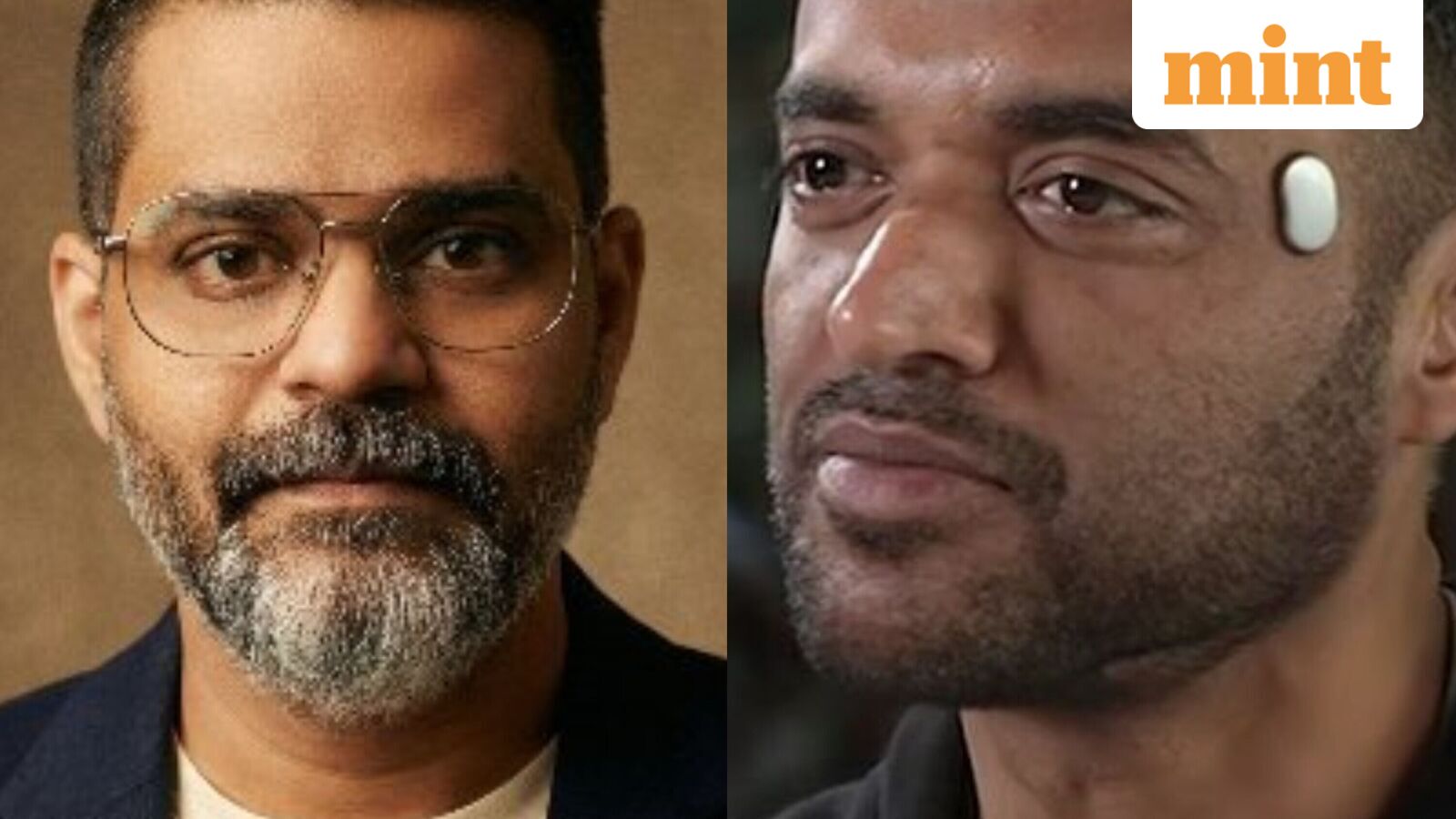
Dr Cyriac Abby Philips, popularly known online as The Liver Doc, has reignited debate around unverified wellness claims after reacting to a viral podcast clip featuring Deepinder Goyal, in which the tech founder spoke about losing respect for the doctor.
In a long post on He said the product had no scientific basis and likened it to “a fat band-aid stuck to the temple”, warning against misinformation being repackaged as wellness innovation.
“Doctors and scientists, including me, call it out and warn people about misinformation packaged as ‘wellness’,” Dr Phillips wrote.
Public disagreement spills online
Dr Philips said that scientists had publicly questioned the aging theory much before the podcast episode went viral. According to him, following the criticism, Goyal had reached out to him privately and invited him for a one-on-one discussion over Zoom — an invitation he declined.
“I said it was a waste of time to discuss this one-on-one. If there is evidence, it should be presented publicly so everyone can benefit,” he wrote.
Dr Philips added that Goyal later appeared on a podcast and claimed he had “lost respect” for him. Responding to the remarks, the hepatologist drew parallels with extreme longevity experiments in the US, warning that India could be heading down a similar path of questionable wellness narratives.
“The future of wellness is cooked. Never delivered. Definitely not in 10 minutes,” he said, in a pointed reference to food delivery culture.
What Deepinder Goyal said on the podcast
The reaction came after Goyal’s appearance on the Raj Shamani Podcast, where the Zomato founder said he had once tried to reach out to Dr Philips to discuss his views on ageing. Goyal claimed that the doctor dismissed the conversation, adding that he subsequently lost respect for him.
Following the episode, Dr Philips shared clips from the podcast on
What is the ‘Gravitational Theory of Aging’?
The disagreement traces back to November 2025, when Dr Philips publicly challenged Goyal’s proposed “Gravitational Theory of Aging”.
The theory suggests that human aging is primarily driven by the lifelong impact of Earth’s gravitational pull (1G) on the upright human body. According to the hypothesis, gravity supposedly reduces cerebral blood flow over time — particularly to regions such as the hypothalamus — making it the dominant driver of aging, above genetics, molecular biology, lifestyle or environmental factors.
Dr Philips strongly rejected this idea, calling it “reductionist, mono-causal and scientifically untenable”.
“All the hypotheses discussed on your website have already been proven wrong through rational scientific approaches,” he wrote, arguing that the theory conflicts with the well-established, multi-factorial understanding of aging.
‘Category error and flawed evidence’
According to Dr Phillips, the theory makes a basic scientific mistake by treating gravity — a physical force — as if it were a biological mechanism of aging. He said examples cited in support of the theory, including astronaut health data, bat longevity and correlations related to human height, rely on misinterpreted data and logical fallacies.
“Aging is driven by intertwined cellular, molecular and genetic processes, not a single dominant cause,” he noted, adding that existing physiological and molecular evidence directly contradicts the gravity-based model.
Call for evidence-based research
The Liver Doc urged Goyal to redirect his interest and resources toward established areas of aging research. He pointed to widely accepted “hallmarks of aging” such as genomic instability, telomere attrition, epigenetic changes and protein homeostasis as more meaningful and testable avenues.
“I suggest you invest your hard-earned money in proper, effective and satisfactorily testable theories of aging,” Dr Phillips wrote, emphasizing that genuine progress in longevity science depends on rigorous, reproducible research — not speculative ideas marketed as wellness solutions.

