

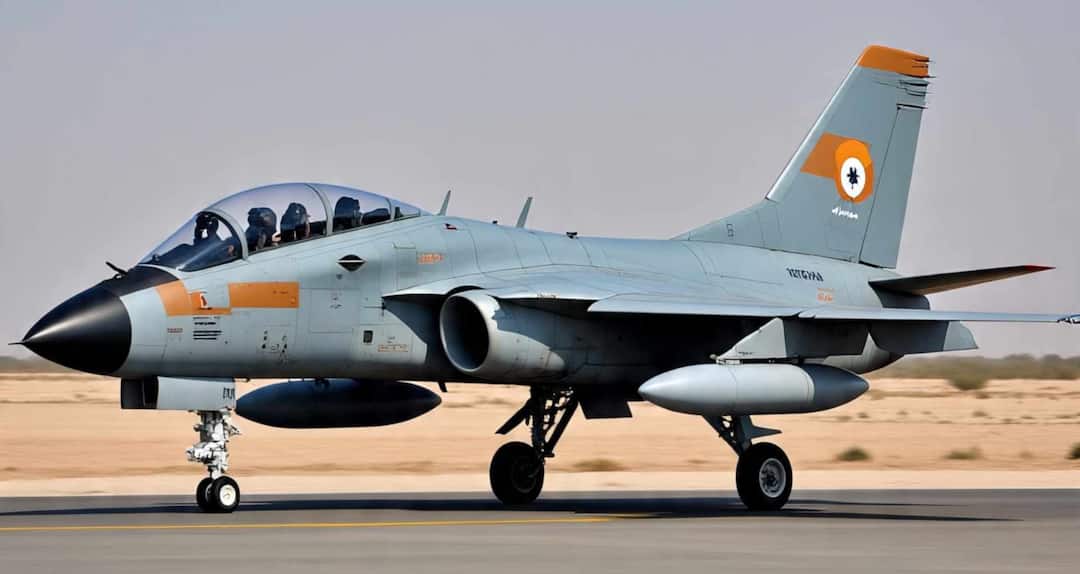
Mirage 2000: Indian Air Force (IAF) Headquarters is seriously considering inducting the indigenous Astra Mk 1 Beyond Visual Range Air to Air Missile (BVRAAM) in the upgraded fleet of Mirage 2000 fighter aircraft. This decision can play an important role in bridging the capability gap of the Air Force till the arrival of foreign next generation missiles.
Currently, the Indian Air Force’s Mirage 2000 aircraft rely on MICA IR and MICA RF missiles, whose effective strike range is said to be around 80 kilometers. According to defense sources, this range is now considered less than the long-range missile systems available with regional rivals, which may impact air combat capability.
Work continues on MICA NG
According to the report of idrw.org, European defense company MBDA is working on the next generation MICA NG (New Generation) missile, whose estimated range will be 150 to 160 kilometers. This missile has been confirmed to be compatible with India’s upgraded Mirage 2000 5 aircraft. However, its delivery is expected by the end of 2028-29, while full operational clearance may take an additional 3 to 4 years due to the testing and integration process.
Upgraded Mirage 2000 equipped with RDY 2 radar
Thales RDY 2 all-weather synthetic aperture radar has been installed in the upgraded Mirage 2000 aircraft of the Indian Air Force. This radar is capable of tracking fighter targets with 5 square meter radar cross section from a distance of 120 to 140 kilometers. Earlier Mirage variants had Thomson CSF RDM radar, but the RDY 2 is now considered more capable for multi-mode and BVR warfare. If the Astra Mk 1 is approved for inclusion in the Mirage 2000, it will require technical collaboration with Thales. With this, an accurate data link can be established between the RDY 2 radar and the Astra missile, so that the fire and forget capability and guidance of the missile remains fully effective. Astra Mk 1 has already been successfully operationalized on Su 30MKI and Tejas fighter aircraft.
Strategic benefits will come soon from indigenous option
While MICA NG may have to wait until the early 2030s for full deployment, Astra Mk 1 appears to be a timely, cost-effective and indigenous interim solution. The deployment of Astra Mk 1 with the strong detection capability of the RDY 2 radar can quickly increase the striking range and lethality of the Mirage 2000 fleet.
Self-reliant India will get a big boost
The decision to include Astra Mk 1 in Mirage 2000 will strengthen the Self-reliant India initiative. This will not only lead to widespread use of indigenous missile systems, but will also reduce dependence on foreign upgrades. Additionally, it will help keep the Mirage 2000 aircraft relevant in future challenging air combat scenarios.

