

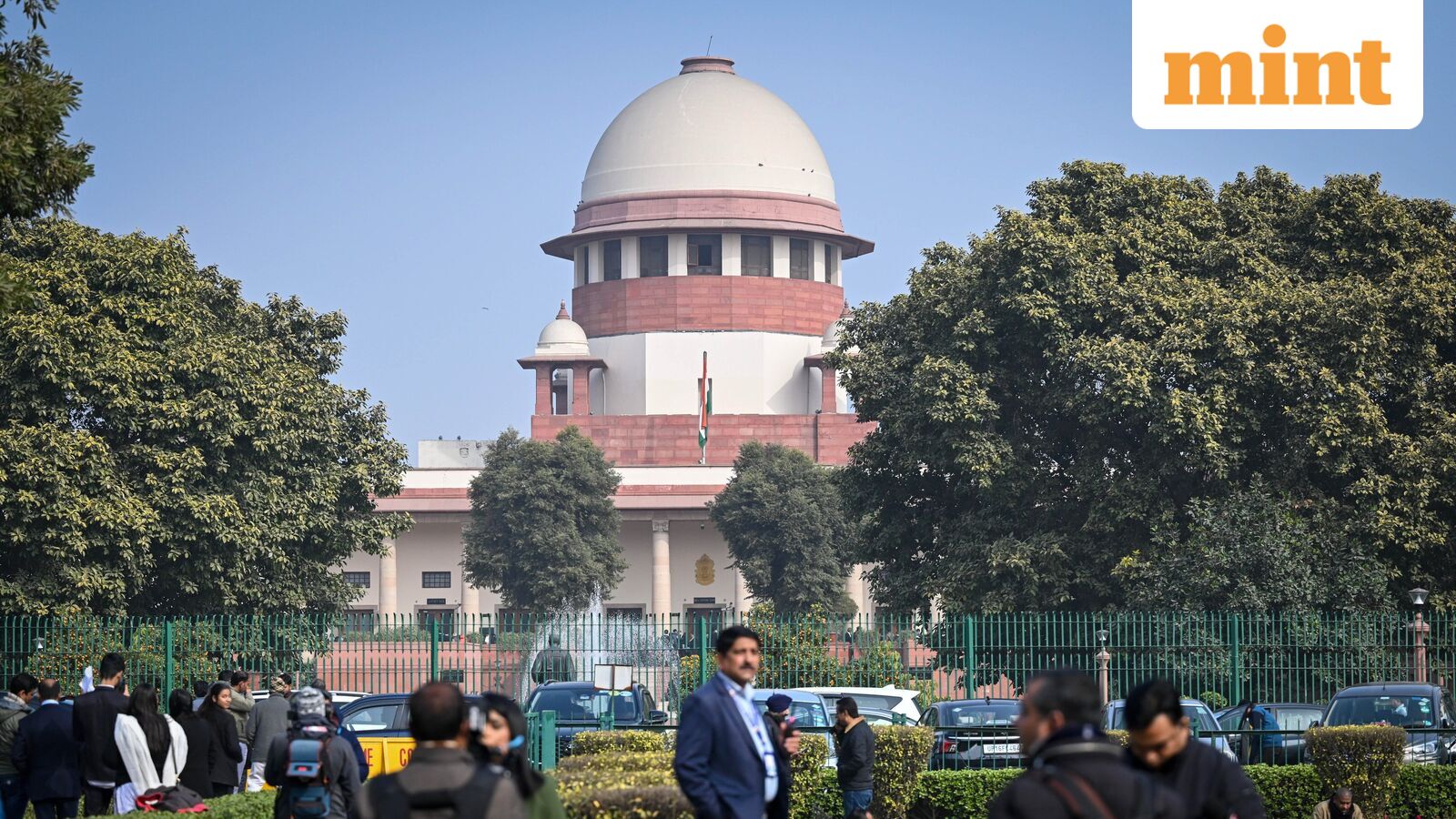
The Supreme Court of India on Thursday agreed to examine the curative petition filed by Mohammad Arif, a Lashkar-e-Taiba (LeT) operative sentenced to death for his role in the 2000 Red Fort terror attack that killed three Indian Army soldiers, and issued notice to the Delhi government.
Curative plea admitted after earlier rejections
A special bench headed by Chief Justice Surya Kant, along with Justices Vikram Nath and JK Maheshwari, took note of submissions citing subsequent Supreme Court judgments delivered after Arif’s appeal and review petition had been dismissed.
“Issue notice,” the Chief Justice said, formally setting the stage for consideration of the curative plea—the final legal remedy available after a conviction and sentence have been upheld by the apex court itself.
The Supreme Court had earlier dismissed Arif’s review petition on November 3, 2022.
Death sentence upheld at every judicial stage
Arif, also known as Ashfaq, was awarded the death penalty by a trial court in October 2005. The Delhi High Court upheld the sentence in September 2007.
He subsequently challenged the verdict before the Supreme Court, which in August 2011 affirmed the death sentence, concluding the ordinary appellate process. With the dismissal of both his appeal and review petition, the curative plea represents his last remaining judicial recourse.
What a curative petition entails
A curative petition is an extraordinary remedy evolved by the Supreme Court to prevent miscarriage of justice. It can be entertained only in rare circumstances, typically where a petitioner can demonstrate gross procedural error or violation of principles of natural justice in earlier judgments.
Such petitions are heard by senior judges of the court and are subject to a stringent threshold before being admitted for detailed consideration.
The 2000 Red Fort terror attack
According to the prosecution, on the night of December 22, 2000, armed intruders entered the Red Fort complex in Delhi, targeting the area where soldiers of the 7 Rajputana Rifles unit of the Indian Army were stationed.
The assailants opened indiscriminate fire, killing three Army jawans. The attack, carried out at one of India’s most prominent historical and security-sensitive locations, had triggered widespread outrage and led to a prolonged investigation culminating in Arif’s conviction.

