

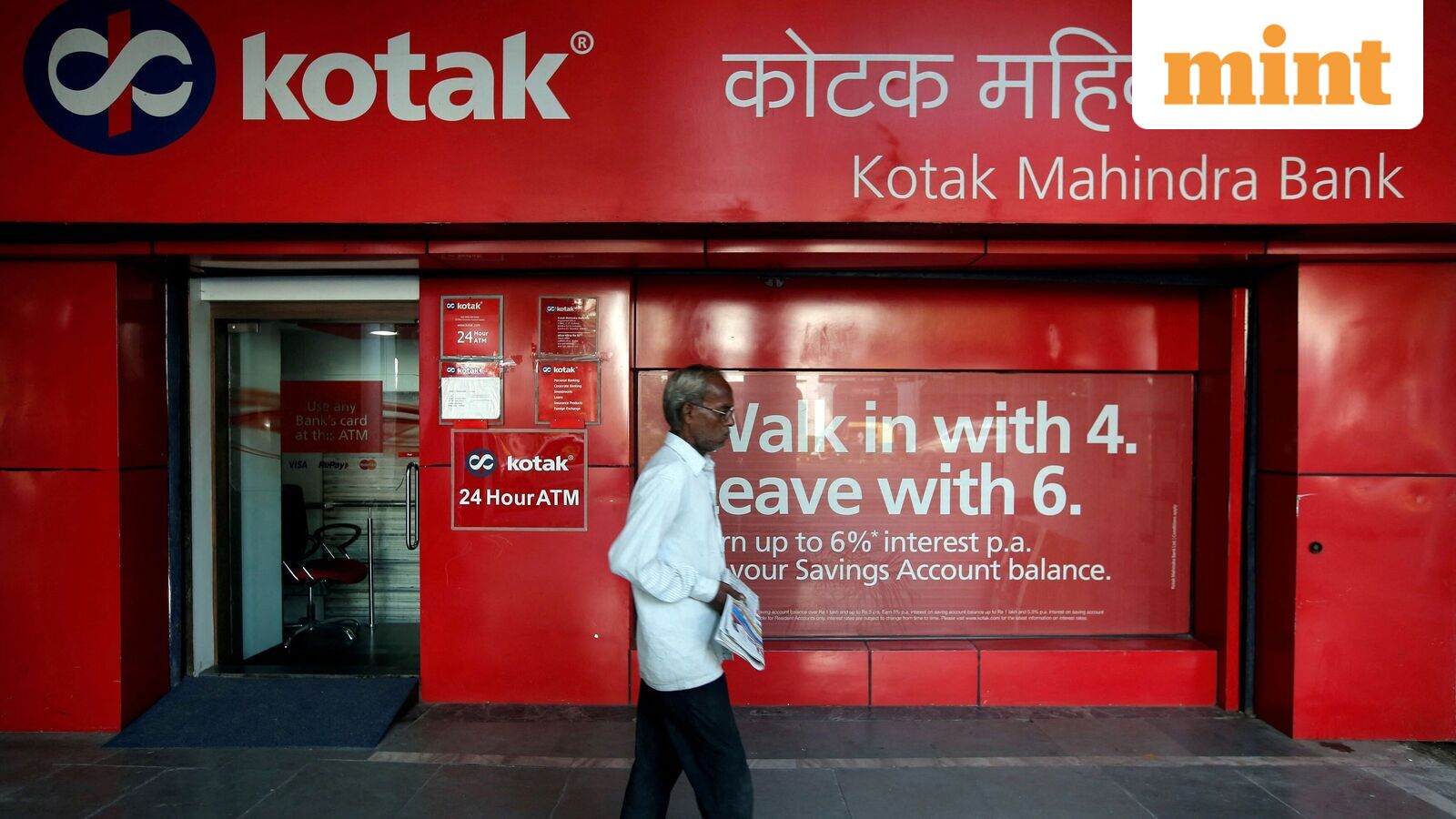
After almost a year of being stuck in a range, the stock of Kotak Mahindra Bank Ltd has received two triggers in quick succession.
While the 1:5 share subdivision on 14 January was meant to enhance liquidity in the stock, it has failed to lift sentiment. However, the bank’s December quarter (Q3FY26) earnings raise hopes. Robust growth in deposits and advances, along with improvement in asset quality, has taken some of the pressure off profitability.
Kotak has fared better than its fellow large-cap peers in a competitive deposit environment. Its 15% year-on-year deposit-growth was hot on the heels of its 16% growth in advances. Even as the bank pushed the pedal on consumer lending amid the GST recast-powered festival demand spike, the growth in its savings deposits (including sweep deposits, or ActivMoney) kept up pace. This has allowed Kotak to keep a lid on the credit-deposit ratio, which was maintained at a healthy 88.6%.
It also inspires confidence that, unlike peers, Kotak was not hit by the RBI’s mandated additional provisions towards misclassified priority sector loans. In fact, the bank’s provisions declined to ₹810 crore, from ₹947 crore in the September quarter. Reflecting the industry-wide trend of improving asset quality, Kotak’s gross non-performing assets (NPAs) inched 9 basis points (bps) lower quarter-on-quarter to 1.30%, while net NPA slid down by one basis point to 0.31%. A basis point is one-hundredth of one percentage point.
The stressed credit-card and retail microcredit portfolios, which had seen write-offs since FY25, remained stable sequentially. This, along with the 16bps drop in credit costs to 0.63%, points to an apparent bottoming of the stress-cycle. As collection efficiencies improve and stress subsides, the management expects credit costs to mellow further.
Profitability expectations
But profits have left investors wanting. Net interest margin (NIM) plateaued sequentially at 4.54%, due to an unfavorable loan mix tilted away from unsecured loans, and deployment of IPO-related funds at low yields. With NIM contracting from 4.93% in the year-ago period, net interest income (NII) grew just 5% on-year to ₹7,565 crore, falling short of estimates.
Profit after tax (PAT) grew even slower at 4% to ₹3,446 crore, weighed down by an 8% growth in operating expenses, led mainly by a one-time impact from the new labor codes. Excluding this, operating expenses growth would have been milder at 6%, despite persistent focus on branch expansion—the picture of cost discipline and operating leverage.
There is room for margin expansion ahead. While the 25bps repo rate cut implemented on 5 December will completely flow through only in the March quarter, margin tailwinds, including continued deposit repricing and migration towards ActivMoney, are likely to take the driving seat thereafter.
The management remains committed to the long-term credit-growth guidance of 1.5-2x nominal GDP growth. Rising demand for urban housing, calibrated rebuilding of its credit card portfolio, and working-capital lending to mid-market corporates are expected to support growth. Meanwhile, the bank’s board has approved plans to bulk up its balance-sheet resilience through private placement of non-convertible debentures (NCDs) worth ₹15,000 crore, slated for FY27.
The stock has corrected over 2% in FY26 so far, sharply underperforming the private bank index’s 9% gain. The margin trend and stress in the construction equipment and retail commercial vehicle segments need monitoring, and valuation at 2.9 times FY27 book value estimates, also gives investors pause. Moreover, news reports that Kotak is a likely bidder for IDBI Bank acts as an overhang for the stock.

