
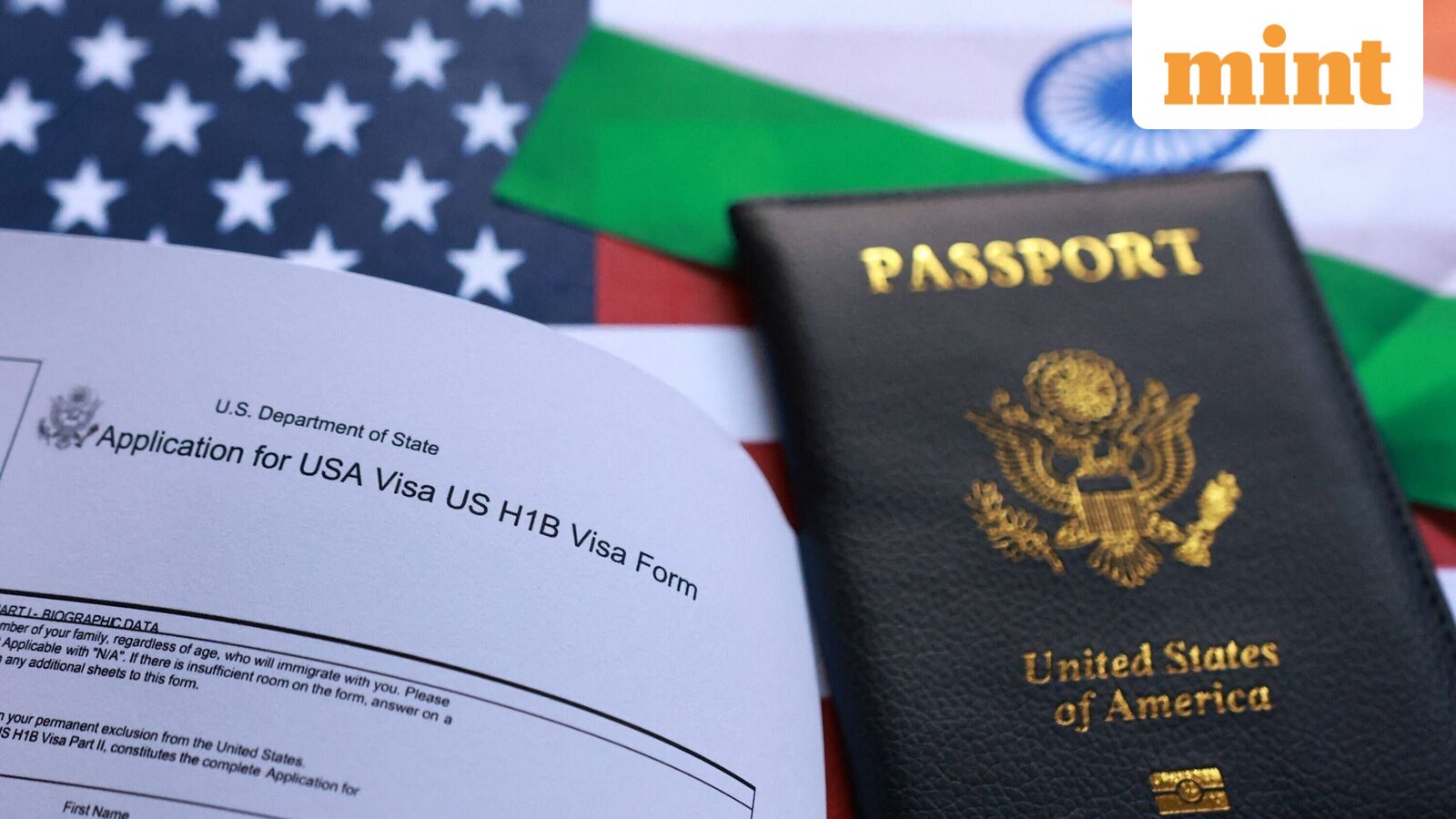
Several reports claimed that the US consulates in India have extended H-1B visa stamping interview appointments until 2027.
Visa offices in Delhi, Mumbai, Chennai, Hyderabad and Kolkata reportedly have no visa interview slots available till next year, according to reports in NDTV, money control and Times of Indiaamong others.
The delays in H-1B visa appointments began in December 2025, when consulates rescheduled appointments set for the month to March 2026. Those interviews were later moved to October 2026. Many dates have now been pushed into 2027.
What’s causing this delay in HB visa interview dates?
The delays are mainly due to the Trump administration’s tightened scrutiny and “vetting” of H-1B visa applicants. The enhanced scrutiny has significantly slowed the process.
With the “America first” vision, the US government under Trump has ramped up scrutiny in “an effort to address abuse of the H-1B program while still permitting companies to hire the best of the best temporary foreign workers”.
In December last year, the US Embassy in India Had encouraged applicants to apply as early as they could and “anticipate additional processing time for these visa classifications”.
Notably, India accounts for the majority of global H-1B demand. According to Statisticsin fiscal year 2024, as many as 283,397 Indian nationals received H-1B visas, or around 71% of all H-1B approvals.
The H-1B program is dominated by the IT sector and other industries that rely heavily on college graduates.
Changes to the H-1B visa regime
The US Citizenship and Immigration Services (USCIS) released revised rules for the 2027 fiscal year.
In December 2025, the US Department of Homeland Security (DHS) announced a rule under which a weighted selection process will be carried out to favor allocating H-1B visas to “higher-skilled and higher-paid aliens.”
However, the annual quota remains capped at 85,000 visas — including 20,000 reserved for applicants with US postgraduate degrees – for fiscal year 2026.
This final rule is effective 27 February 2026, and will be in place for the FY 2027 H-1B cap registration season.
The electronic registration process and whopping $100,000 H-1B visa fees (implemented on 21 September 2025) are other key changes introduced by the Trump administration last year.
The USCIS may require H-1B beneficiaries to provide biometrics (fingerprints, photograph, signature) to verify identity, often via a Request for Evidence (RFE) for address updates or security screening.
Furthermore, the US Department of State mandated enhanced social media vetting for all H-1B and H-4 dependent visa applicants starting 15 December 2025.
How does it impact Indian professionals?
The fate of Indian professionals who aspire to work in the US on an H-1B visa hangs in the balance.
The US consulates across India, by deferring H-1B visa-stamping interviews until 2027, have upended travel schedules and employment plans for thousands, Moneycontrol reported.
It added that the State Department has withdrawn the facility that allowed Indian nationals to seek visa stamping in third countries. As a result, all applications are now funneled back to Indian missions.
Meanwhile, immigration attorney Emily Neumann told the Times of India that H-1Bs in the US should not even try to get an appointment for visa stamping in India.
“They are not in any hurry to give you a visa. They are trying to deny visas whenever they can. It is a completely different world from what we saw during the Biden administration. This administration does not want to give you a visa,” Neumann was quoted as saying in the report.
This delay is creating significant problems for Indian professionals working in the United States.