

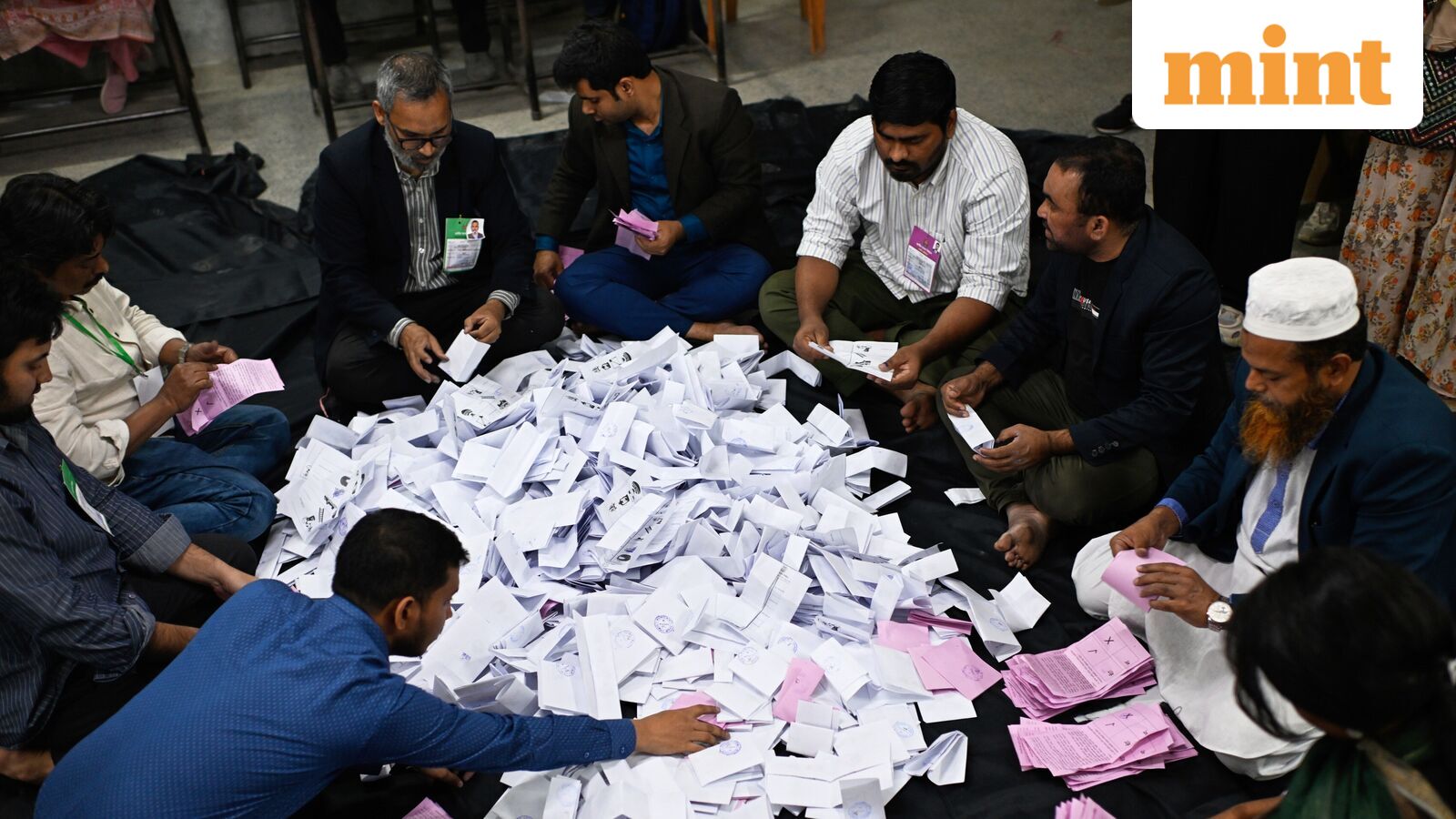
Bangladesh Elections: The Bangladesh Nationalist Party (BNP) and the Islamist Jamaat‑e‑Islami were locked in a tight race, according to early trends, as counting continued after Bangladesh held a pivotal national election on Thursday.
Counting began at 4:30 pm at most booths, immediately after polls closed, with clear trends expected around midnight and results likely to be clear by Friday morning, according to reports quoting. Election Commission officials.
The election was the first since the 2024 student-led uprising that toppled Sheikh Hasina after fifteen years of Awami League rule.
The election is seen as a direct contest between Tarique Rahman’s Bangladesh Nationalist Party (BNP) and a coalition of 11 parties, led by the resurgent Jamaat-e-Islami party’s chief, Shafiqur Rahman. Chief Advisor Muhammad Yunus‘The interim government barred Sheikh Hasina’s party – the Awami League – from contesting the polls.
BNP ahead on 10 seats
The BNP was leading in 10 seats and Jamaat in seven of the nearly 20 seats for which early trends were available, Reuters cited from local TV news stations. Bangladesh’s parliament, the Caste Sangsadhas 300 seats, with 151 required for a simple majority. A candidate in one of the seats passed away, leaving the contest for 299 seats.
While opinion polls suggest Tarique Rahman, the BNP chairman, as a frontrunner for the prime minister, the Jamaat-led alliance, which includes the National Citizen Party (NCP), formed by student leaders behind the 2024 uprising, could spring a surprise, a poll predicted.
Parliament comprises 350 lawmakers: 300 elected directly from single-member constituencies and an additional 50 reserved for women. Elections were held for 299 seats due to the death of a candidate.
Referendum was also held alongside the polls
A referendum on political reforms, including prime ministerial term limits, stronger checks on executive power and other safeguards preventing parliamentary power consolidation, was also held.
Local media reported that more than 60% of registered voters were expected to have cast ballots. There was, however, no official word on the final voter turnout.
both prime ministerial candidates – the BNP’s Tarique Rahman and Jamaat chief Shafiqur Rahman said they were confident of winning.
This election is a turning point for Bangladesh; the people are eager for change.
“I am confident of winning the election. There is enthusiasm among the people about the vote,” Tarique Rahman told reporters, while Jamaat’s Shafiqur Rahman called the election a “turning point” for Bangladesh and said the people were eager for change.

