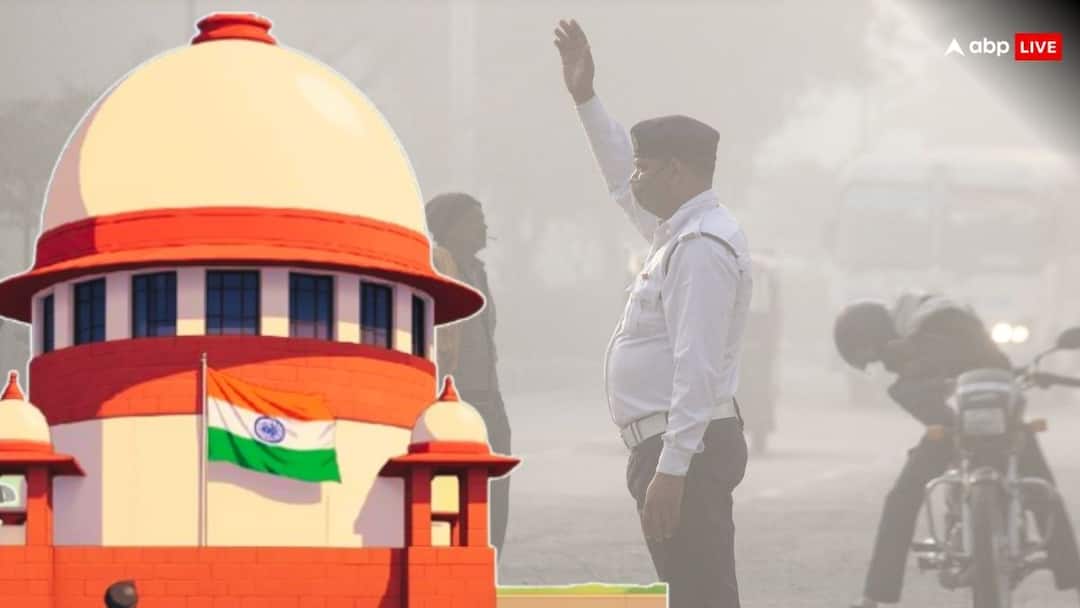
In view of the inclement weather conditions and deteriorating air quality in the country’s capital, the Supreme Court has advised members of the Bar and the public to appear for the matters listed before the apex court in hybrid mode, wherever convenient. In a circular issued by the Supreme Court Registry, it has been said that this advisory has been issued on the instructions of Chief Justice of India Surya Kant, in which an appeal has been made to use video-conferencing if convenient.
This circular has been sent for wide circulation to the Supreme Court Bar Association, Supreme Court Advocates-on-Record Association, all notice boards and other concerned authorities. Earlier this month, a bench led by CJI Surya Kant had expressed deep concern over Delhi’s toxic air and made it clear that it cannot remain a ‘silent spectator’ while lakhs of people in the national capital are breathing polluted air.
CJI led bench had given warning
Hearing a public interest litigation on controlling air pollution in Delhi, the bench directed the Commission for Air Quality Management to submit a report on the recurring air crisis. Justice Joymalya Bagchi was also included in this bench. The bench led by CJI Surya Kant had also cautioned against oversimplifying the causes of pollution by isolating only stubble burning and stressed that multiple factors, including construction activity and vehicle exhaust, contribute to the problem.
Long-term solution needed
The Supreme Court had said, ‘We do not want to comment on stubble burning, because it would be wrong to burden those people who have very little representation in the court.’ In an earlier hearing, the Supreme Court had stressed the need for a ‘long-term strategy’ to deal with the recurring air pollution crisis in Delhi-NCR instead of short-term answers every winter. The CJI-led bench had told the Centre, ‘You can give suggestions, but they cannot be for two days, one week or three weeks. We need a long-term solution so that this problem gradually reduces every year.