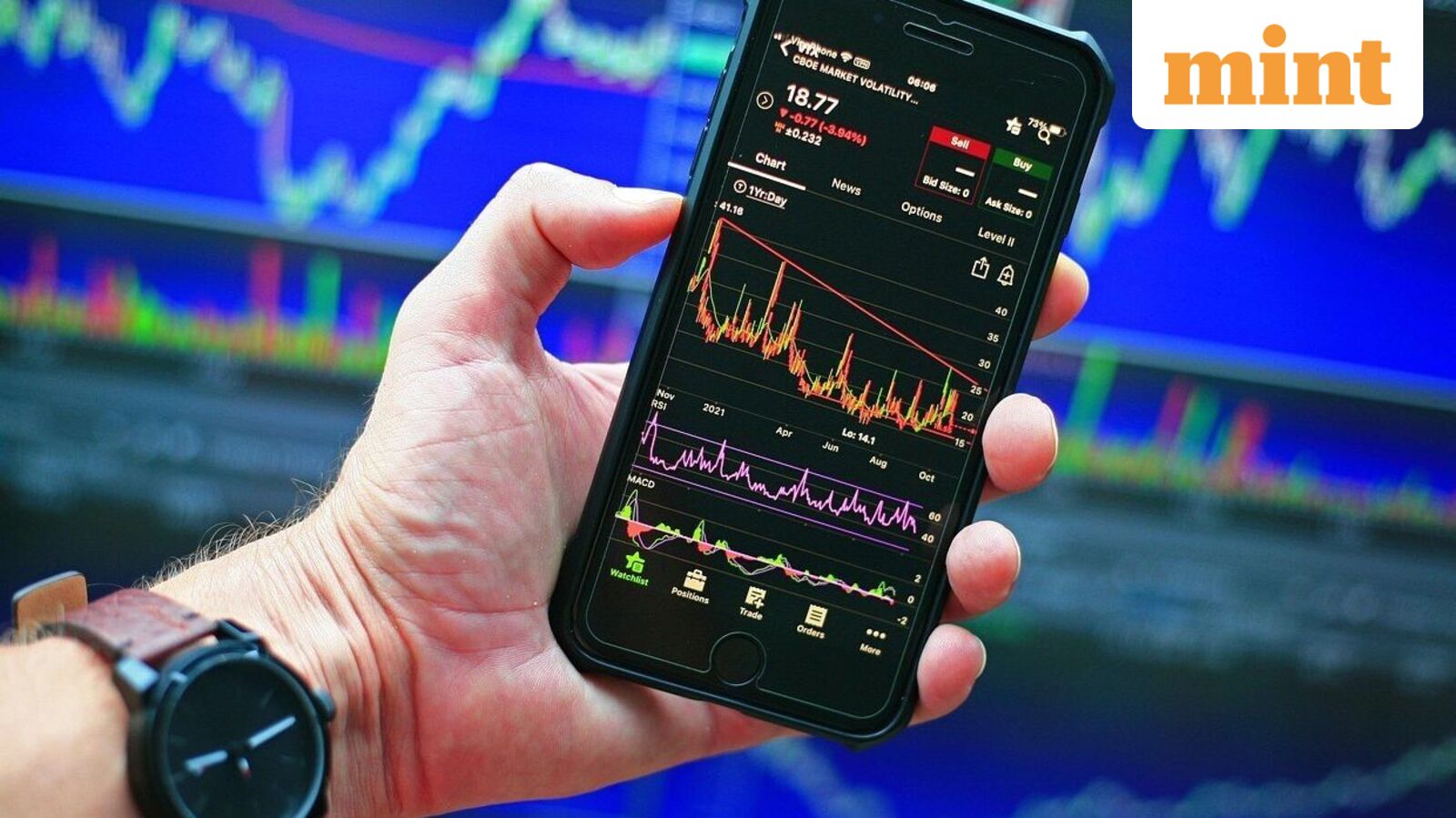
India VIX: Stock market volatility is often felt before it is fully understood. Sharp intraday swings, sudden corrections, and nervous reactions to global cues usually show up first in derivatives data — before they are reflected in headline indices – Nifty 50 and Sensex.
This is where India VIX, commonly referred to as the market’s “fear gauge,” becomes critically important for investors and traders alike.
India VIX measures the market’s expectation of volatility over the near term and provides insight into how uncertain or confident participants are about future market movements. In periods of heightened volatility, tracking India VIX helps investors interpret whether sharp price moves are driven by panic, positioning, or structural risk.
What is India VIX and what does it indicate?
India VIX full form stands for India Volatility Index. The India VIX is a volatility index calculated by the NSE from the order book of NIFTY options. India VIX reflects investors’ perceptions of market volatility in the near term, i.e. it portrays market volatility over the next 30 calendar days. The higher the India VIX number, the greater the predicted volatility, and vice versa.
One must note that tt does not predict market direction — instead, it measures how much the market expects prices to fluctuate, regardless of whether the move is upward or downward.
A rising India VIX indicates increasing uncertainty and fear in the market. This often coincides with sell-offs, geopolitical risks, macroeconomic shocks, or major policy events. Conversely, a falling VIX suggests complacency, confidence, and stable market conditions, typically seen during sustained bull phases.
As a broad rule of thumb:
Low India VIX (below 12–14) signals calm markets and lower perceived risk
Moderate VIX (15–20) indicates rising caution
High VIX (above 20–25) reflects stress, fear, and elevated volatility.
Extremely high readings often occur near market bottoms, while very low readings are sometimes seen close to market tops.
Formulas for Volatility Calculation
Yearly Volatility:India VIX percentage/100
Example: If India VIX is 15, the expected annual volatility is 15%
Monthly Volatility: Annual VIX/square root of 12
Example: If VIX is 15, then 15%/3.464 = 4.33% monthly volatility
Daily Volatility: Annual VIX/square root of 365
Example: If VIX is 15, then 15%/19.1 = 0.78% daily volatility
Why India VIX becomes crucial during volatile markets
In volatile environments, price movements alone can be misleading. A falling market with a declining VIX may suggest controlled correction, while a falling market with a sharply rising VIX often signals panic and forced unwinding.
India VIX helps investors judge whether fear is increasing or easing. IT also aids in deciding position and risk exposure as well as identifying potential market bottoms when fear peaks.
For derivatives traders, VIX is even more critical. High VIX leads to higher option premiums, making option buying expensive and option selling more attractive (with proper risk management). Low VIX environments favor option buyers as premiums are cheaper.
What India VIX does not tell investors
While powerful, India VIX has limitations. It does not:
– Predict market direction
– Indicate exact tops or bottoms
– Guarantee reversals at extreme levels
VIX should be used as a risk indicator, not a standalone trading signal. It works best when combined with price action, volume, market breadth, and macro indicators.
How investors should use India VIX in practice
For long-term investors, India VIX is a sentiment compass. Extremely high levels may warrant staggered buying, while unusually low levels call for caution and disciplined allocation.
For traders, VIX provides guidance on strategy selection — whether to prefer spreads, hedges, or volatility-based trades.
Ultimately, India VIX reflects the collective psychology of the market. In calm phases, it fades into the background. In turbulent times, it becomes one of the most important indicators to watch.
Disclaimer: This story is for educational purposes only. Please consult with an investment advisor before making any investment decisions.