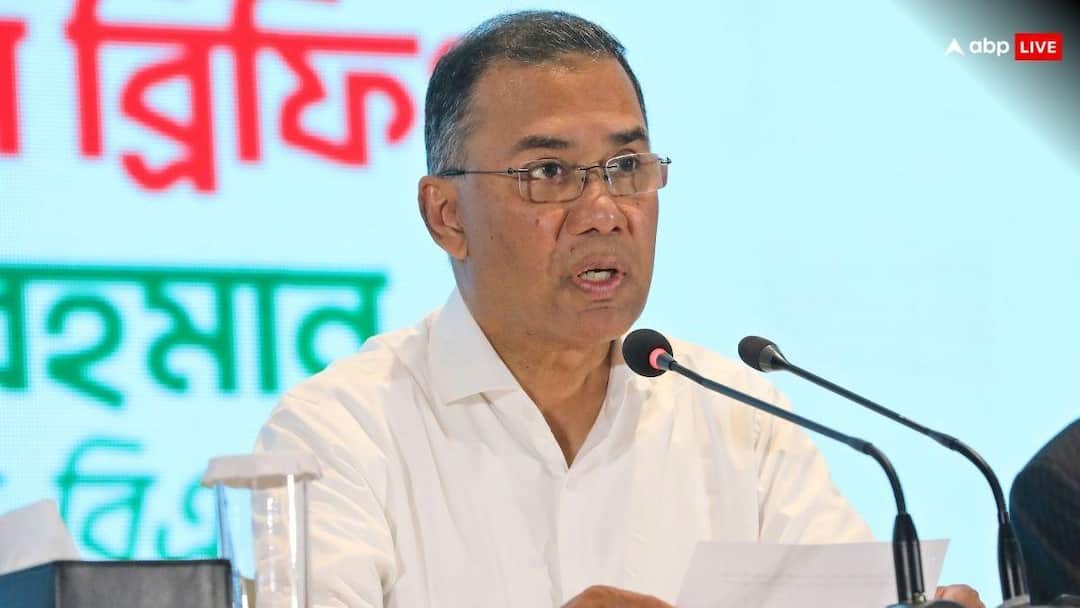
Tariq Rahman, son of Bangladesh Prime Minister Khaleda Zia, who was once a staunch opponent of India and head of Bangladesh Nationalist Party, is certain to become the new Prime Minister of Bangladesh. A big reason for his bumper victory is that India’s friend Sheikh Hasina and her party Awami League did not get a chance to contest these elections and all those supporters of India, albeit out of compulsion, went with Tariq Rehman. The question here is what is the benefit or loss to India from the victory of Tariq Rehman.
An even bigger question is what effect BNP’s victory will have on the assembly elections to be held in a few months in the two Indian states of West Bengal and Assam, which share borders with Bangladesh. An even bigger question is that what kind of success is Jamaat-e-Islami, which has lost in the Bangladesh elections, planning to bring to the neighboring states of India after its defeat? Today we will try to find clear cut answers to all these questions.
Bangladesh is a neighboring country of India which shares about 4 thousand kilometers long border with India. In such a situation, India’s interest also lies in the peace and stability of Bangladesh. Therefore, India is also trying to keep pace with the government of Bangladesh. That’s why Prime Minister Narendra Modi himself was among the leaders who congratulated Tariq Rehman on his victory, who congratulated Tariq Rehman by posting on social media platform X and wrote –
‘This victory shows that the people of Bangladesh have faith in your leadership. India will stand in support of a democratic, progressive and inclusive Bangladesh. I look forward to working with you to strengthen multi-faceted relations and advance shared development goals.
Not only this, India has also sent its delegation to the swearing-in ceremony of Tariq Rehman, headed by Lok Sabha Speaker Om Birla. This clearly shows that India is looking towards the leadership of Tariq Rahman with expectations, but whether Tariq Rahman is able to look towards India with equal warmth, the answer will be found only when the oppression of Hindus that started in Bangladesh after the overthrow of Sheikh Hasina will stop, for which Tariq Rahman has promised. Now he has to fulfill his promise and India is also waiting for the same.
The most important question at present is related to West Bengal and Assam, where the Muslim population is about 30 percent. BJP wants to win Assam again and Bengal is in its wish list. The oppression of Hindus taking place in Bangladesh at both places and the infiltration from Bangladesh have also been election issues in both these states of India. This has been made an election issue in Bengal by Bharatiya Janata Party leader Shuvendu Adhikari, who has always given a statement regarding the attacks on Hindus that he will not allow Bengal to become Bangladesh. To make his issue more effective and to further strengthen polarization, Shuvendu Adhikari had burnt the effigies of Mohammad Yunus in Bengal, marched to the Bangladesh High Commission in Kolkata and even surrounded the High Commission with hundreds of saints.
His statement was relevant as long as the command of Bangladesh was in the hands of Mohammad Yunus and under whose leadership Jamaat-e-Islami not only oppressed Bangladeshi Hindus but because of him Shuvendu Adhikari was also able to try to polarize Bengal. But now that Jamaat-e-Islami’s control over Bangladesh has completely ended and Tariq Rahman has given India a guarantee for the safety of Hindus, then it is natural that the issue of religious polarization will weaken. In such a situation, Shuvendu Adhikari also faces the challenge of finding a new issue through which he can polarize.
The situation is more or less similar in Assam also. Assam Chief Minister Himanta Biswa Sarma was not only worried about the attacks on Hindus in Bangladesh, but his concern was also the Bangladeshi infiltrators. And all this was when it seemed that the control of Bangladesh would come into the hands of Jamaat-e-Islami after Mohammad Yunus. But this did not happen. Jamaat remained ineffective in the politics of Bangladesh, being limited to 68 seats, less than 70. And when Jamaat did not have any impact on the people of Bangladesh, then it will remain ineffective in India and especially in Bengal and Assam. Therefore, the only hope is that being a neighbour, the politics of Bangladesh which always had an impact on the elections of Assam and Bengal, will not have an impact this time. The people of Bengal will vote on the issues of Bengal and the people of Assam will vote on the issues of Assam, because the people of Bangladesh have stopped the Jamaat from forming the government by voting on their issues.
But out of the 68 seats that Jamaat-e-Islami won even after being rejected, 51 were won in the districts bordering India. Jamaat has won four seats in Satkhira, a district bordering North and South 24 Parganas of Bengal. Sherpur’s border is with Meghalaya. There are other seats which directly affect India. Like in Kushtia also, 3 out of 4 seats went to the account of Jamaat. Jamaat showed a strong hold in Rangpur area also. In other border areas like Naogaon-2, Joypurhat-1, Sherpur-1 and Gaibanda-1 also, Jamaat or its allies were ahead. These victories of Jamaat are based on the mosque and madrassa network, where it has had local influence for a long time. These voters are not anti-urban, but from deep rural areas, where old memories of violence and religious networks are strong.
Therefore, the question remains whether Jamaat-e-Islami, which could not do anything special in Bangladesh, will be able to leave some influence in the districts bordering India. This question is also important because the newspapers and media of Bangladesh believe that the voters of Jamaat are those Muslims who have left India and especially West Bengal and gone to Bangladesh. Quoting Indian intelligence agencies, the report said that the growing political legitimacy of Jamaat will provide confidence, cover and local security to the radicals. Earlier infiltration was focused on numbers, but now infiltration is selective, including trained ideologues, fund couriers and digital handlers. Their numbers are certainly less, but their impact can be greater. The report clearly stated that the danger is not from immediate attacks, but from the formation of a radical ecosystem in the long run.
Therefore, even after the defeat in Bangladesh, the increased influence of Jamaat in the border areas of India cannot be ignored. Even if Jamaat remains ineffective in the elections of West Bengal or Assam, the increased strength of Jamaat is a matter of concern for the intelligence agencies. And this concern will go away when Prime Minister Tariq Rehman, unlike his mother Khaleda Zia, will try to deepen his relations with India, the initiative for which has already been taken.