

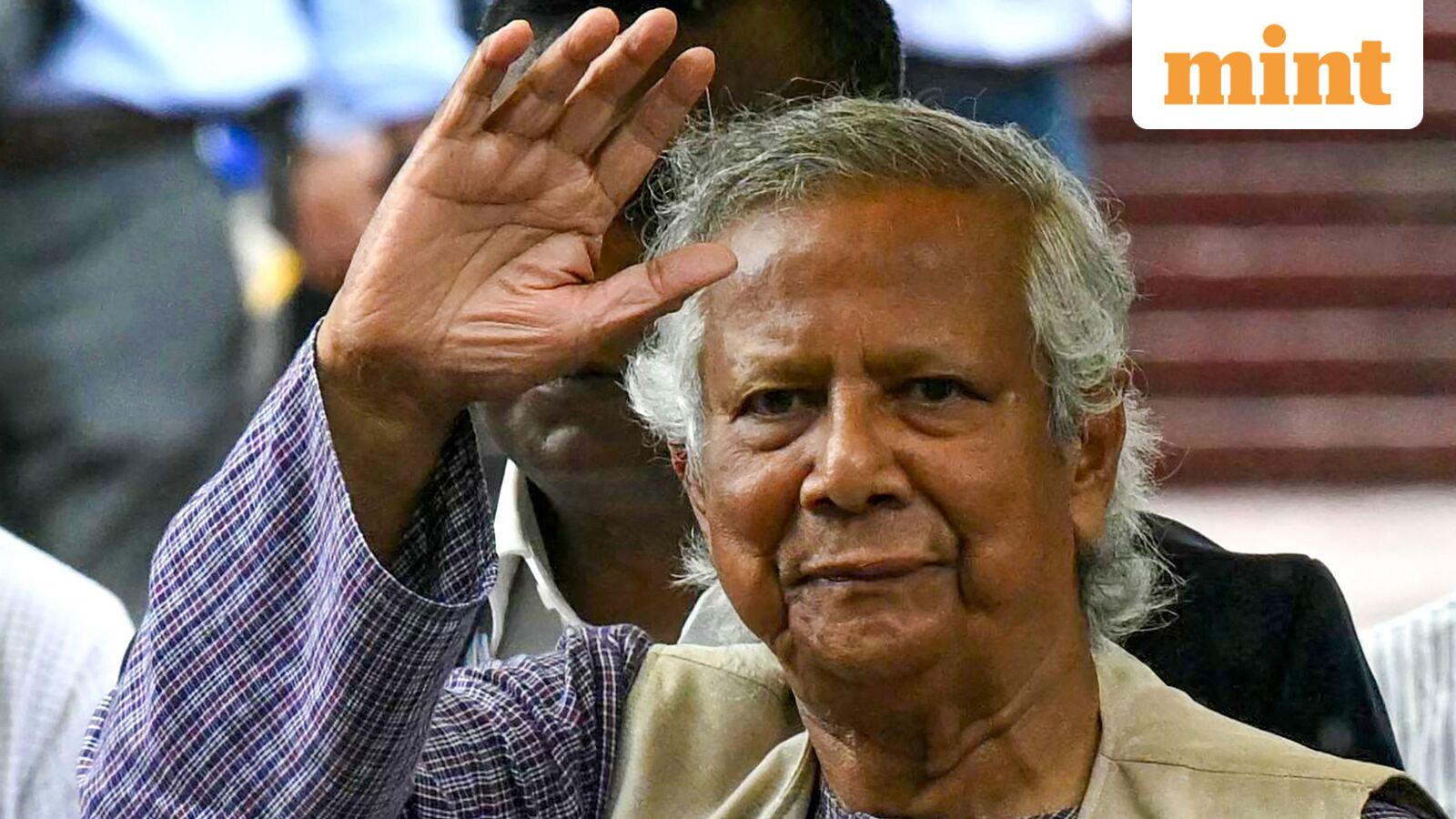
Bangladesh’s interim leader Muhammad Yunus, resigned on Monday and delivered a farewell address to the nation before transferring authority to a newly elected government, AFP reported.
“Bangladesh’s Muhammad Yunus announces resignation, end of interim government,” AFP reported, citing a statement.
“Today, the interim government is stepping down,” the 85-year-old Nobel Peace Prize winner said.
“But let the practice of democracy, freedom of speech, and fundamental rights that has begun not be halted.”
Yunus calls Hasina ‘devil’
Muhammad Yunus came back from self-imposed exile in August 2024, just days after the hardline administration of Sheikh Hasina was toppled in a student-led revolt, prompting her to escape by helicopter to India.
“That was the day of great liberation,” he said. “What a day of joy it was! Bangladeshis across the world shed tears of happiness. The youth of our country freed it from the grip of a demon.”
Tarique Rahman, 60, head of the Bangladesh Nationalist Party (BNP) and heir to one of the country’s most influential political families, is set to lead the South Asian nation of 170 million people.
The BNP-led alliance secured 212 seats, while the alliance headed by Jamaat-e-Islami won 77, according to the Election Commission.
Jamaat leader Shafiqur Rahman acknowledged defeat on Saturday, stating that his party would act as a “vigilant, principled, and peaceful opposition.” Lawmakers elected in the vote are scheduled to be sworn in on Tuesday, after which Tarique Rahman is expected to assume office as Bangladesh’s next prime minister, AFP reported.
Democratic reforms-“July Charter”
On the same day as the elections, Bangladeshi voters approved wide-ranging democratic reforms in a nationwide referendum—an essential part of Muhammad Yunus’s transition plan following the uprising.
The extensive proposal, dubbed the “July Charter” after the month when the movement that ousted Sheikh Hasina began, calls for limits on prime ministerial terms, the establishment of an upper chamber in parliament, expanded powers for the president, and enhanced independence for the judiciary.
“We did not start from zero — we started from a deficit,” he said, as reported by AFP.
“Sweeping away the ruins, we rebuilt institutions and set the course for reforms.”
The referendum noted that approval would make the charter “binding on the parties that win” the election, obliging them to endorse it.
However, several parties raised questions before the vote, and the reforms will still require ratification by the new parliament.
Jamaat chief Shafiqur Rahman conceded on Saturday, saying his Islamist party would “serve as a vigilant, principled, and peaceful opposition”.
Police records show that political clashes during the campaign period killed five people and injured more than 600.
However, despite weeks of turbulence ahead of the polls, voting day passed without major unrest and the country has responded to the results with relative calm.

