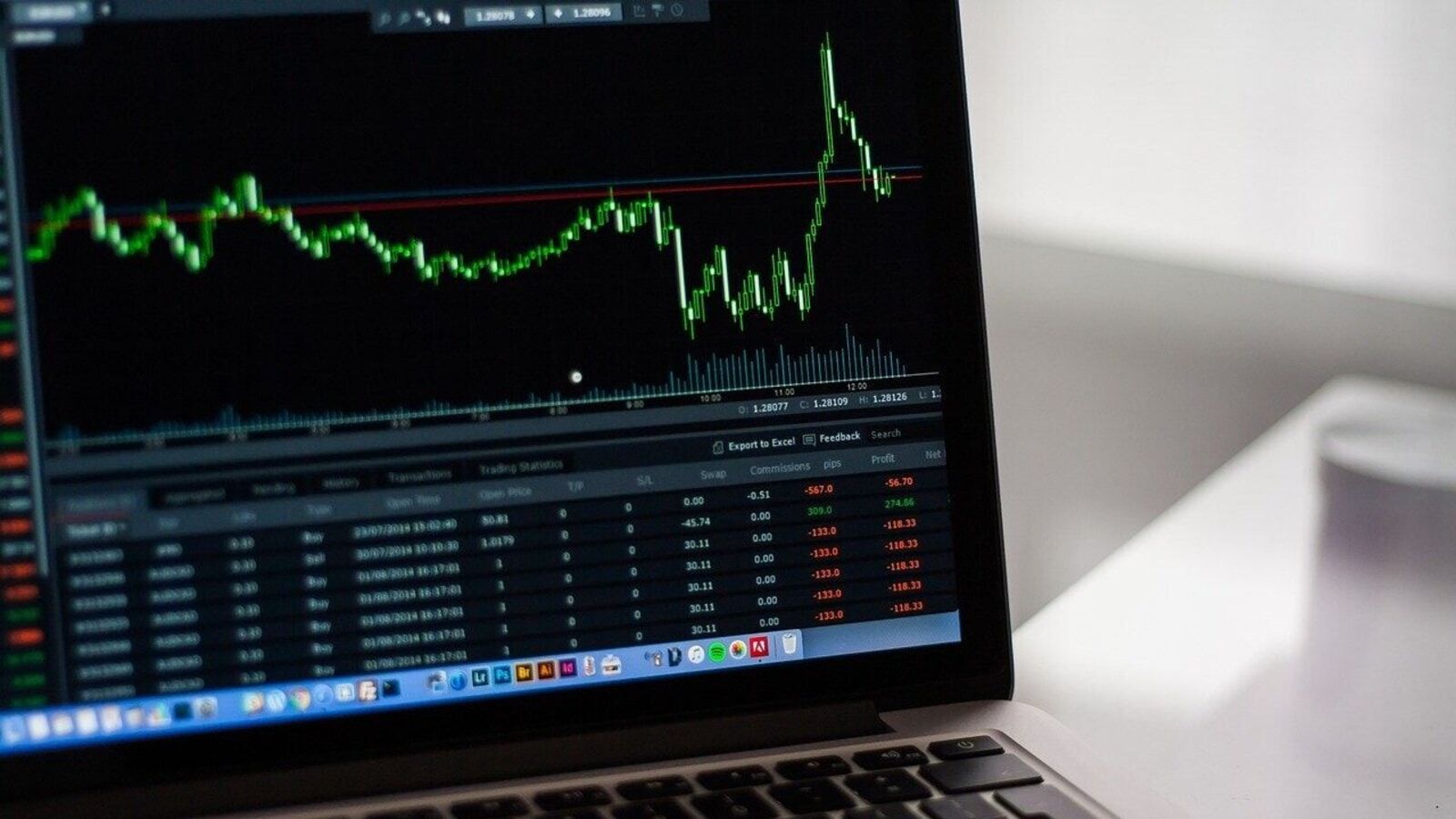
India VIX, the volatility index, slipped below the 12 mark during Tuesday’s intraday session, even as benchmark indices — Nifty 50 and BSE Sensex — traded largely flat with a positive bias.
India VIX, often referred to as the market’s “fear gauge,” measures the expected short-term volatility in the Indian equity market over the next 30 days. It reflects investor sentiment and the intensity of anticipated price fluctuations.
On Tuesday, India VIX traded at 12.80, down nearly 4% from its previous close of 13.33. The index opened at 13.33 and moved within an intraday range of 13.48 to 11.63.
The easing in volatility coincided with steady gains in equities. The Nifty 50 rose 66.50 points, or 0.26%, to 25,749.25, while the Sensex advanced 305.44 points, or 0.37%, to 83,582.59.
What is India VIX?
India VIX is a real-time volatility index derived from option prices of the Nifty 50. It measures the market’s expectation of volatility over the next 30 calendar days, based on the best bid-ask prices of near- and mid-month Nifty option contracts.
The index is expressed as an annualized percentage. For example:
If India VIX is 15, the implied annual volatility is 15%.
Monthly volatility is calculated as annual volatility divided by the square root of 12.
Daily volatility is calculated as annual volatility divided by the square root of 365.
At a VIX level of 15:
monthly volatility ≈ 4.33%
daily volatility ≈ 0.78%
Market Context and Interpretation
Analysts generally interpret VIX levels as follows:
Below 12–14: Calm market conditions, lower perceived risk
Above 20–25: Elevated stress and heightened volatility
Historically, India VIX tends to move inversely to the Nifty 50. A falling VIX often supports market stability or gradual upside, while a rising VIX signals increasing uncertainty and potential downside pressure.
At current levels near 13, volatility expectations remain subdued, suggesting that market participants are not pricing in sharp near-term swings.
What It Means for F&O Traders
India VIX has a direct bearing on option pricing, margin requirements, and derivatives strategies because it reflects implied volatility embedded in Nifty option premiums.
“For F&O traders, VIX is a strategic compass. When VIX rises, implied volatility expands, inflating option premiums regardless of index direction. This typically coincides with market declines, as VIX and Nifty share a strong inverse relationship. In such phases, option sellers may benefit from elevated premiums and potential volatility crush, but strict hedging and disciplined risk management become essential due to sharp price swings,” said Hitesh Taylor, Technical & Derivative Research. Analyst, Choice Broking.
Conversely, when VIX is low, option premiums tend to be relatively cheaper, which can favor option buyers and directional trades. Moderate VIX levels typically support range-bound strategies such as spreads or iron condors, he added.
Given that volatility is mean-reverting in nature, extreme VIX readings — whether reflecting excessive complacency or panic — often signal potential market turning points.
With India VIX hovering around 13, the market is signaling relative calm. For Nifty 50 call and put options:
> Option premiums may remain compressed
> Directional strategies could become attractive
> Range-bound strategies may continue to work if markets consolidate
Aggressive premium selling may offer limited edge unless volatility spikes
For F&O traders, tracking India VIX remains critical for adjusting position sizing, leverage, and strategy selection in line with prevailing volatility conditions.
Read all Stock Market News here
Disclaimer: The views and recommendations made above are those of individual analysts or broking companies, and not of Mint. We advise investors to check with certified experts before making any investment decisions.