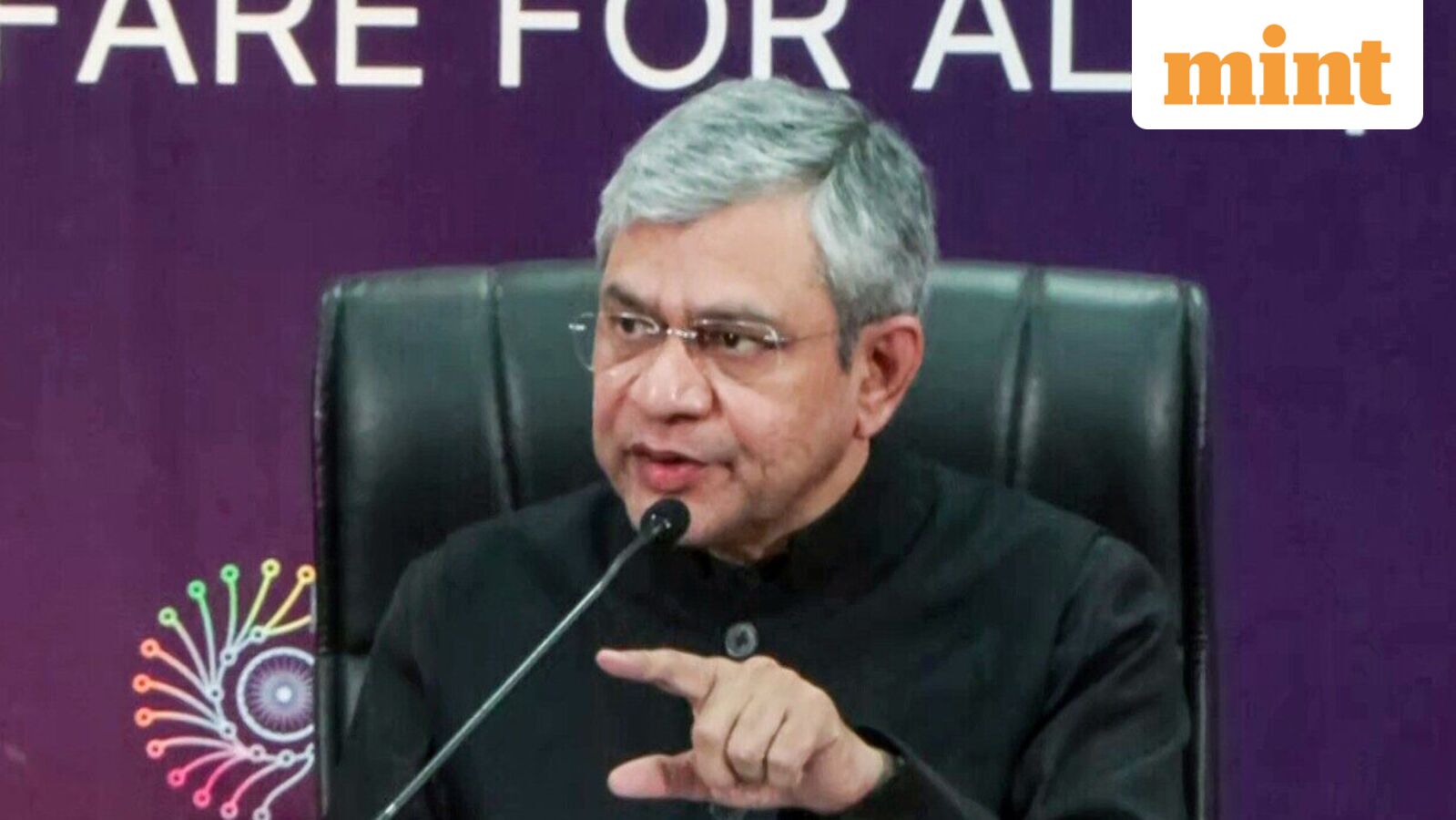
Union IT Minister Ashwini Vaishnaw on Tuesday said that the government is in talks with social media companies regarding age-based access controls and the growing challenge of deepfakes. He emphasized the need for tighter regulatory measures to protect children and, more broadly, society from online harms.
This comes after the Australian government said a planned ban on young children accessing social media will proceed next month as scheduled, despite a legal challenge from a rights advocacy group, as per AP.
The Sydney-based Digital Freedom Project announced that it had filed a constitutional petition in the High Court of Australia contesting the landmark law. The legislation, which came into force on 10 December, prohibits Australian children under 16 from creating accounts on designated social media platforms.
What did Vaishnaw say?
Vaishnaw stressed that all companies, including Netflix, YouTube, Meta, and X, are required to comply with India’s legal framework and the Constitution. He pointed out that the issue of deepfakes is escalating rapidly and underlined the need for stricter regulations, PTI reported.
He added that talks are ongoing with social media platforms to address concerns around deepfakes and age-based restrictions, with the aim of identifying the most suitable course of action.
“…and right now, we are in conversation regarding deepfakes, regarding age-based restrictions with the various social media platforms, and what is the right way, what is the right way to go,” Vaishnaw stated during the summit.
The minister underlined the urgent need for tougher regulations to address the growing threat of deepfakes, noting that the problem is worsening by the day. He stressed the importance of safeguarding children and society from the harms caused by such content and said that discussions with industry stakeholders have already begun to explore what additional regulatory measures may be required beyond the existing framework.
Vaishnaw, who also serves as the Minister for Information and Broadcasting, further pointed out that a parliamentary committee has examined the issue in considerable detail. He mentioned that building a broad consensus within Parliament would be essential to introducing significantly tougher restrictions on deepfakes to ensure adequate protection for society.
The minister further observed that several countries have acknowledged the need to implement age-based restrictions. He noted that such regulation had already been incorporated into India’s Digital Personal Data Protection (DPDP) legislation, which introduced age-based differentiation to control the types of content accessible to students and young users. He described the move as a forward-looking step taken at the time.
He also highlighted that countries such as France, Australia and the United Kingdom have either implemented or proposed age restrictions and stricter parental consent requirements to curb children’s access to social media platforms and strengthen online safety measures.
The Indian government’s Economic Survey last month suggested exploring age-based access to online platforms, along with reducing excessive online teaching, to curb digital addiction.
The Survey, which was tabled in Parliament, recommended that online platforms be held accountable for implementing age-verification mechanisms. It also proposed promoting simpler, child-friendly devices for accessing educational content, equipped with appropriate safeguards to tackle the growing issue of digital addiction.
The Survey had stated, “Policies on age-based access limits may be considered, as younger users are more vulnerable to compulsive use and harmful content. Platforms should be made responsible for enforcing age verification and age-appropriate defaults, particularly for social media, gambling apps, auto-play features, and targeted advertising.”
(With inputs from agencies)