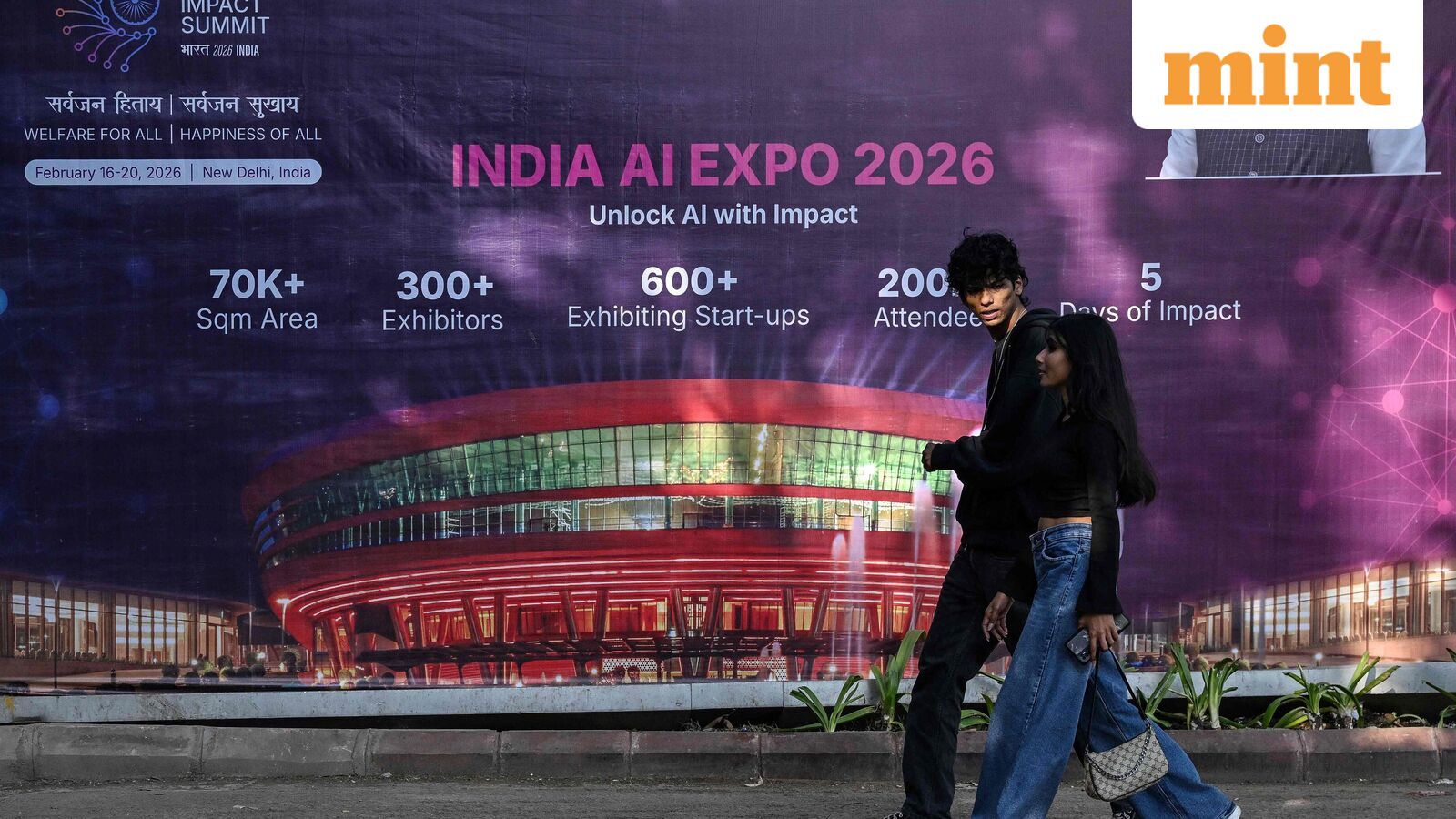
Over the past 12 months, companies have announced at least 50 senior AI-focused leadership hires—most notably chief AI officers (CAIOs)—across fintech, banking, manufacturing, logistics, media and enterprise technology, according to executive search firm Longhouse.
The pace has accelerated sharply over the past six months, with more than a third of these appointments announced between November 2025 and February 2026, data from Longhouse showed.
AI is increasingly becoming an operating layer across both tech startups and legacy firms, rather than a side initiative housed within engineering teams.
“Across India, companies are increasingly appointing CAIOs as AI moves from pilot projects to full-scale enterprise adoption,” said Anshuman Das, chief executive and co-founder of Longhouse. “AI is now a board-level priority, not just a technology initiative.”
On 17 July 2024, mint reported that several new-age firms, including food-delivery platform Zomato and fitness app Healthifyme, chose not to replace departing chief technology officers (CTOs). Others, such as food-delivery company Swiggy, e-two-wheeler maker Ola Electric Mobility, ticket-booking platform BookMyShow, and business-to-business e-commerce firm Udaan, redistributed technology mandates internally or left the role vacant, according to Longhouse’s earlier research.
These moves are early signals of how the top deck is shifting in the AI era.
AI integration
Among the 50-plus appointments tracked, at least 15 carried an explicit CAIO or clearly AI-first mandate, while many others embedded AI into expanded CTO, chief digital and information officer (CDIO) or transformation roles.
“We have converged AI and core technology leadership under the chief AI and technology officer. Rather than operating AI as a parallel or experimental function, we believe it must be embedded into the overall technology architecture and product roadmap from day one,” said Manu Awasthy, founder and CEO of digital private wealth management platform Centricity, which hired Kamal Kishore for the role in September 2025.
Fintech and banking, financial services, and insurance (BFSI) firms, including Motilal Oswal, Mirae Asset, IndoStar Capital and IndusInd Bank, alongside industrial groups such as Jindal Steel and Blue Star, lead the pack.
Media companies, including India Today and JioStar, and new-age firms such as Pocket FM have also created AI-native roles to reshape content production.
However, of the 50 appointments, only two are women—one at cybersecurity and data analytics firm Inspira Enterprises and one at life insurer Generali Central Life Insurance.
top dollar
Compensation reflects the weight of these new roles.
Das said the position now sits firmly in the CXO band. For leaders who can scale models, build robust data foundations and drive commercialization, “total earning potential can cross the $1 million mark”.
Globally, the direction appears durable.
An October study by the IBM Institute for Business Value found that 25% of Indian enterprises surveyed already have a CAIO, while 67% plan to appoint one within two years. Organizations with a CAIO reported a 10% higher return on AI investment.
India may not have seen the same hiring surge as the US, but the intent has hardened.
“The opportunity is significant,” Das said. “The companies that treat AI as an operating system, not a side project, will define the next decade.”
Investor push
Investors are also helping portfolio firms bring AI experts into their top ranks.
Across Elevation Capital’s portfolio, companies are moving from “AI experiments” to “AI as a core operating layer”, said Vartika Bansal, AI operations partner at the venture capital firm.
Titles vary from head of AI, AI product lead, or even CTO, but Bansal said the focus is centralized accountability for adoption, governance and measurable business outcomes.
“AI has entered core workflows beyond engineering; scattered pilots have created tool sprawl and compliance risks; and rising usage has sharpened focus on cost, data controls, and evaluation standards,” said Bansal, who joined Elevation in 2025 to guide AI penetration in portfolio firms.
The impact
Pocket FM, which appointed former Meta AI researcher Vasu Sharma as head of AI in January 2026, said more than 90% of its content is now AI-assisted, and localization timelines have shrunk from 18 months to under three.
“Germany is a good example: We entered that market entirely through AI and compressed what would have been an 18-month process to under three months,” said Prateek Dixit, co-founder for product, tech and AI at Pocket FM. “Those gains are a big part of why we turned profitable.”
The company is now building a unified Pocket LLM, a foundation model trained specifically on the narrative and emotional dynamics of long-form fiction, “that no general-purpose model can replicate”, Dixit said.
Similarly, since Kishore’s appointment, Centricity has moved from isolated pilots to building what Awasthy described as a “structured foundation”.
“Intelligence is now being integrated into advisory tools, client journeys and operational systems, rather than being treated as a standalone initiative,” Awasthy said. “Every AI initiative is aligned to clearly defined business outcomes, improving customer experience through personalization, enhancing advisor productivity, driving operational efficiency, and delivering measurable revenue impact.”
The focus is also on building auditable models. In fintech, which operates in a highly regulated environment, he said, AI must be “secure, explainable, and auditable by design”.