

The regimen and Iran’s military leadership are preparing for a possible war with the United States, which has been amassing troops and weaponry on its doorstep. The US strike threat comes on the heels of the Islamic Republic’s leadership surviving the biggest threat it has faced since the 1979 revolution.
Unlike in the past, the US is reportedly planning a major strike inside Iran, which could very well overthrow the theocratic regime of Ayatollah Ali Khamenei. But this is not the only existential threat Iran is facing right now – there is a silent, yet much larger crisis brewing in Iran.
Iran water crisis
Iran is running out of water! Yes, the biggest threat to Iran as a country is not from any external forces, but from Mother Nature.
Iran is currently in its sixth consecutive year of drought, with the 2024–2025 water year being one of the driest in recorded history, with rainfall 45 per cent below normal.
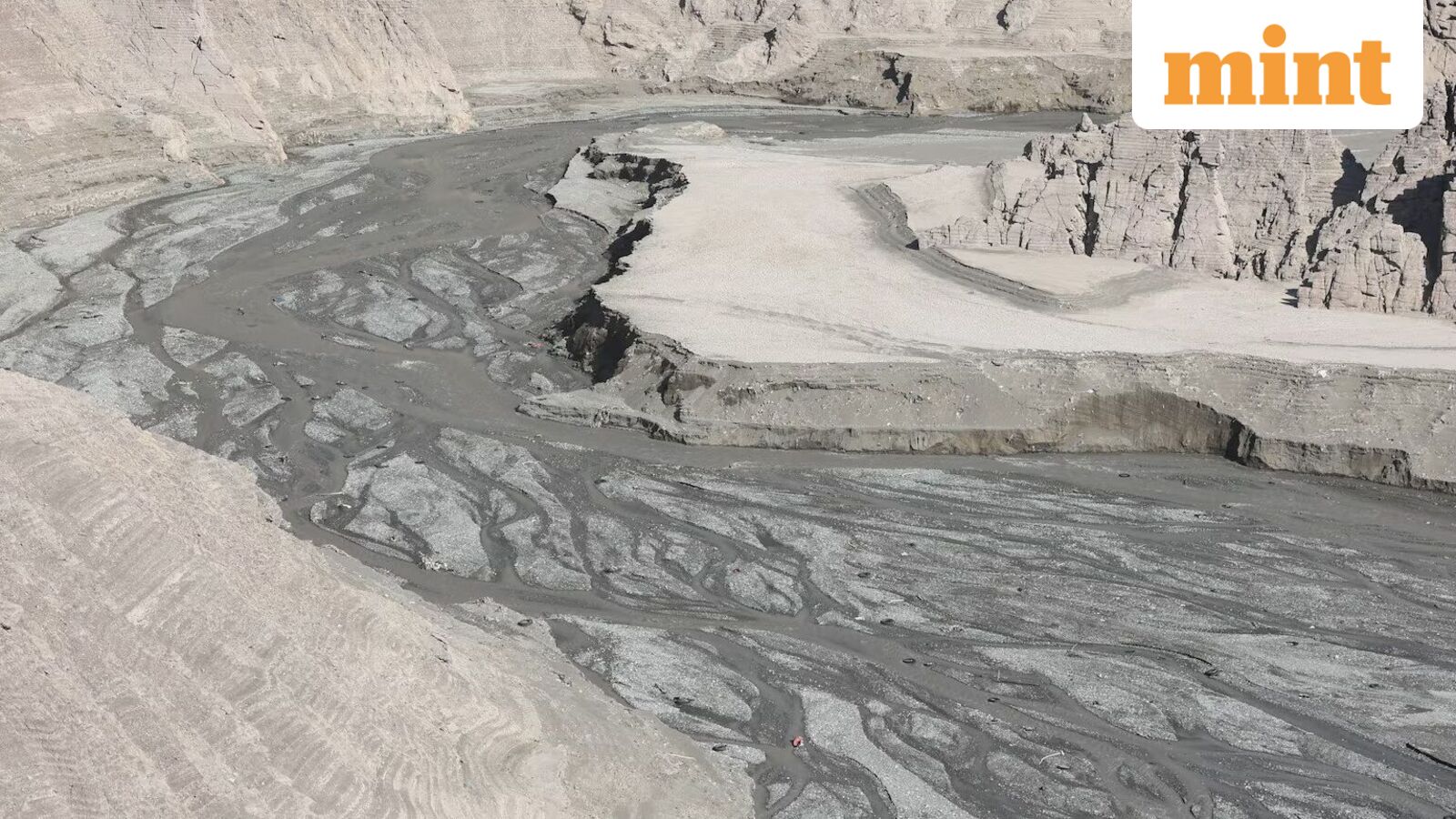
The successive years of drought have resulted in what many have been calling “water bankruptcy,” with water levels in many of the country’s most critical reservoirs reaching historic lows, with some close to running dry.
Tehran approaching zero day
The Greater Tehran Metropolitan Area, which is home to around 15 million people, roughly 20 per cent of the country’s population, is among the worst-affected regions.
Tehran is facing “day zero” scenarios, as the city could run out of water with reservoirs nearly empty due to years of drought and mismanagement.
The decades of over-extraction of groundwater have also resulted in parts of Tehran sinking by up to 30 centimeters per year.
Iran proposes to shift capital
Things have become so bad in Tehran to the point where, in late 2025, President Masoud Pezeshkian warned that the city might have to be evacuated.
According to Pezeshkian, the pressure on water, land and infrastructure had left the government with “no option” but to act.
“When we said we must move the capital, we did not even have enough budget. If we had, maybe it would have been done. The reality is that we no longer have a choice; it is an obligation,” he said in November 2025.
While there is no official word on where the new Iranian capital will be built, the southern Makran coastal region, around the port city of Chabahar on the Gulf of Oman, is said to be the likely location.
But building an entirely new capital city is not going to be cheap, and it is estimated to cost anywhere between $75-$100 billion, an amount the cash-strapped Iranian regime cannot afford.
How quest for food self-sufficiency cost Iran
While Iran is naturally arid and the successive years of low rainfall have contributed to the crisis, critics have pointed out that the current crisis is the result of years of mismanagement.
Despite being a water-scarce country, over the decades, Iranian authorities diverted up to 90 percent of the country’s water for irrigation, claiming that it was necessary for the Islamic Republic’s food self-sufficiency.
This includes water-intensive crops like rice and almonds.
Mismanagement of water distribution
The government controls all the water in Iran, both surface and groundwater, as it is deemed national wealth and public property managed by the state. But years of mismanagement have left the distribution system highly inefficient, resulting in around 25 percent of the water being lost to leakage or theft.
Key Takeaways
- Iran’s water crisis is largely due to government mismanagement and decades of over-extraction.
- The Greater Tehran Metropolitan Area is facing severe water shortages, risking a potential evacuation.
- The government’s failure to address the water scarcity could lead to significant political and social unrest.

