New Delhi: India’s core infrastructure sector grew 4% year-on-year in January, slowing from the revised 4.7% expansion recorded in December, as weakness in crude oil and natural gas capped gains in construction-linked segments.
The combined index of eight core industries stood at 180.8 in January 2026, up from 173.8 a year earlier and 177.3 in December, provisional data released by the commerce and industry ministry on Friday showed. That indicates sequential improvement despite a softer annual growth rate.
The eight core sectors—coal, crude oil, natural gas, refinery products, fertilizers, steel, cement and electricity—together account for 40.27% of the Index of Industrial Production (IIP), underscoring their direct influence on overall industrial growth.
On a cumulative basis, core sector growth during April–January FY26 stood at 2.8% over a year earlier, reflecting a sharp divergence between infrastructure-driven sectors and energy extraction segments.
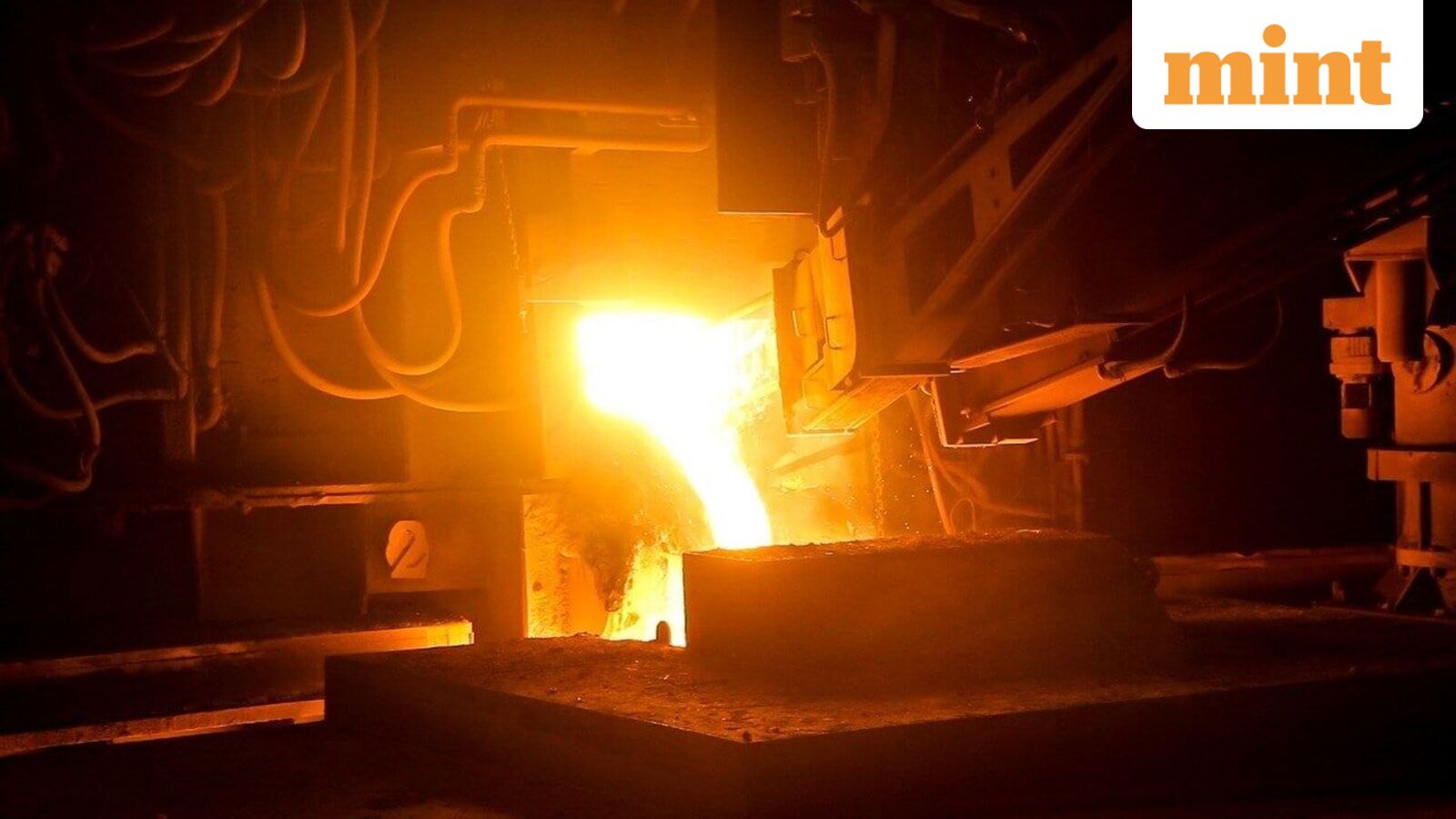
Among individual industries, steel production rose 9.9% year-on-year in January, while cement output expanded 10.7%, signaling sustained activity in housing and infrastructure projects.
Fertilizer production increased 3.7%, coal output grew 3.1%, and electricity generation rose 3.8% during the month, indicating steady agricultural and power demand in January.
The fertilizer output was largely driven by rabi crop sowing, while higher electricity generation reflected stable industrial and household consumption. Coal production growth suggests continued demand from thermal power plants, though the pace remained moderate.
However, crude oil production contracted 5.8% and natural gas output declined 5% year-on-year in January. Petroleum refinery products recorded no growth over a year earlier.
The drag from hydrocarbons remains visible in the cumulative data as well. During April–January FY26, crude oil output declined 2.1%, natural gas production fell 3.4%, and coal output edged down 0.3%. In contrast, steel production grew 9.8% and cement output rose 9.1%, cushioning the overall index.
diverging trend
The latest data points to a clear divergence within the core sector, with construction-linked industries supporting growth even as energy production remains under pressure, according to economists.
“The data show that construction activity is supporting industrial growth, while oil and gas production continues to remain weak,” said Abhash Kumar, assistant professor, economics, Delhi University. “Since core sectors have a direct impact on the IIP, the January numbers suggest overall industrial growth may stay stable, but it remains exposed to continued weakness in crude oil and natural gas output.”
According to the ministry, January figures are provisional and subject to revision as updated data are received from source agencies. The index for February 2026 will be released on 20 March.
Broader industrial activity in the country has shown signs of strain in core sectors recently, even as overall factory output bounced back strongly in late 2025. India’s industrial production accelerated sharply to 7.8% in December, the fastest expansion in over two years, after a strong 6.7% rise in November, government data showed. This suggests that while some core inputs remain weak, other parts of the industrial ecosystem have regained momentum.
The official Index of Industrial Production (IIP) data for January is scheduled for publication on 2 March 2026, according to the Ministry of Statistics and Program Implementation.
Private surveys suggest that manufacturing momentum has strengthened recently, after cooling late last year. The HSBC India Manufacturing Purchasing Managers’ Index (PMI) — a forward-looking indicator of factory activity — rose to 57.5 in February 2026 from 55.4 in January, signaling robust expansion and marking a four-month high in factory growth. A PMI reading above 50 indicates expansion in the manufacturing sector.
The strain on industrial activity has also coincided with external pressures, with Indian goods facing tariffs of up to 50% in the US. As a result, exports to the US declined to $6.58 billion in January from $7.01 billion in December, suggesting some moderation in shipments despite continued resilience under higher tariff conditions. Exporters faced pricing and margin pressures during the period of elevated duties, particularly in sectors such as textiles, jewelery and engineering goods.
However, offering some relief, the US administration withdrew the additional 25% punitive tariff imposed on 6 February over India’s purchases of Russian oil. The US has also agreed to reduce the 25% reciprocal tariff to 18% and an interim deal is expected to be signed soon.
Cumulative shipments to the US during April–January rose 5.8% year-on-year to $72.46 billion, reflecting steady growth even amid tariff uncertainty, showed the commerce ministry data.
Bilateral goods trade between India and the US stood at $116.39 billion during April–January, with India recording a trade surplus of $28.53 billion. In the corresponding period of the previous fiscal year, total trade was $112.51 billion, with a trade surplus of $27.41 billion.