Amid the Iran–US conflict, Iran’s Supreme Leader, Ali Khamenei, has issued directives to protect the Islamic Republic in the event of war or his assassination, according to a report by the New York Timeswhich cited six senior Iranian officials and members of the Revolutionary Guards.
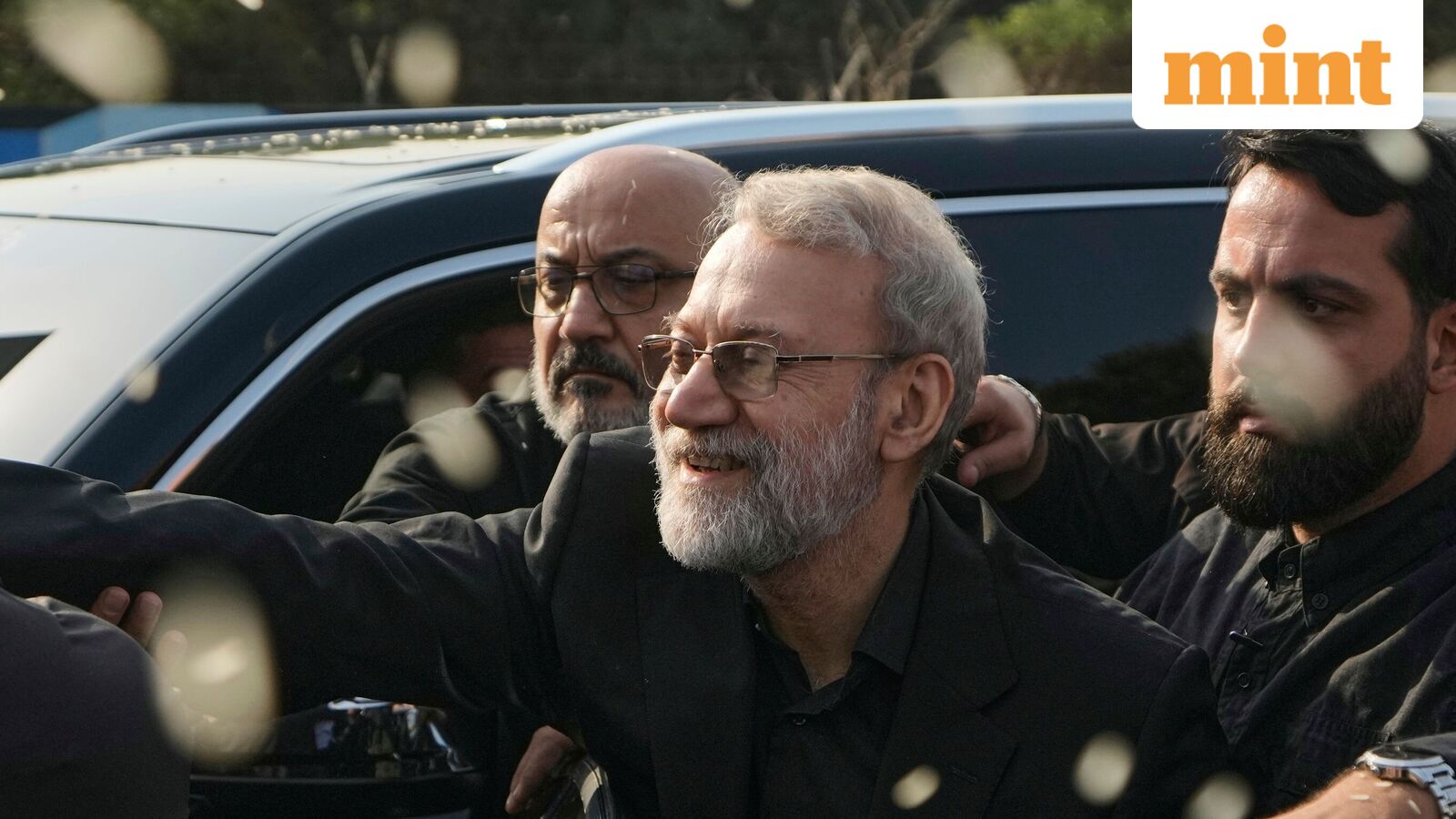
Officials quoted in the NYT report say Ali Larijani, a close ally of Khamenei who currently serves as secretary of the Supreme National Security Council, is widely considered the leading candidate to act as interim leader if Khamenei and other top officials are killed.
Larijani, 67, a seasoned conservative politician, former parliament speaker, and ex-Revolutionary Guards commander, was appointed to the SNSC in August 2025 by Iranian President Masoud Pezeshkian.
Supreme Leader Ali Khamenei has tasked him with safeguarding the Islamic Republic amid widespread protests, economic strains, and external threats, the NYT reported.
Who is Ali Larijani?
Ali Ardashir Larijani was born in 1957 in Najaf, Iraq, to Iranian parents from a famous religious family. His father, Ayatollah Mirza Hashem Amoli, was a senior cleric who had relocated to Najaf in 1931 due to persecution under Reza Shah but took the family back to Iran in 1961, according to reports.
He is a member of the influential Larijani family, with several brothers holding or having held major regime positions, such as judiciary leadership and advisory roles, contributing to perceptions of a political “dynasty”, according to a report by PBS Frontline.
Larijani’s early education
Larijani earned a bachelor’s degree in mathematics and computer science and later shifted toward philosophy, completing both a master’s and a PhD in Western philosophy at the University of Tehran.
Career
Larijani’s political career spans military service, media control, diplomacy, and legislative leadership, marked by unwavering loyalty to Supreme Leader Ayatollah Ali Khamenei. Larijani served as a commander in the Islamic Revolutionary Guard Corps (IRGC) during the 1980–1988 Iran–Iraq War, rising to the brigadier general level.
He held deputy ministerial posts in labor and information in the early post-revolution years.
From 1992 to 1994, under President Akbar Hashemi Rafsanjani, he was Minister of Culture and Islamic Guidance, enforcing strict cultural and media controls.
He then headed the Islamic Republic of Iran Broadcasting (IRIB), the state media monopoly, from 1994 to 2004, overseeing propaganda and programs targeting dissidents.
In 2005, under President Mahmoud Ahmadinejad, Larijani became Secretary of the Supreme National Security Council (SNSC) and Iran’s chief nuclear negotiator, resigning in 2007 amid policy clashes.
Larijani served as Speaker of Parliament (Majlis) from 2008 to 2020, the longest tenure in that role, including guiding legislation and supporting the 2015 JCPOA nuclear deal.
Disqualified from presidential runs in 2021 and 2024, he was reappointed SNSC Secretary in August 2025 by President Masoud Pezeshkian.
Ali Larijani comes from a prominent family, with his four brothers holding senior positions across Iran’s judicial, legislative, and security institutions, according to a report by Iranintl.
Major contributions
From the regime’s viewpoint, Larijani’s major contributions included advancing nuclear diplomacy (as negotiator defending enrichment rights and later supporting JCPOA ratification in parliament), providing long-term legislative stability as Speaker (managing key policies and factional balance), and demonstrating bureaucratic competence in high-stakes roles.
Iran-US tensions
US President Donald Trump is reportedly curious about why Iran has not yet “capitulated” and agreed to limit its nuclear program, even as the United States strengthens its military presence in the Middle East, according to Trump’s special envoy, Steve Witkoff, reuters reported.
“I don’t want to use the word ‘frustrated,’ because he understands he has plenty of alternatives, but he’s curious as to why they haven’t… I don’t want to use the word ‘capitulated,’ but why they haven’t capitulated,” Witkoff said during an interview on Saturday with Fox News’ “My View with Lara Trump,” hosted by the president’s daughter-in-law, as reported by reuters.
“Why, under this pressure, with the amount of seapower and naval power over there, why haven’t they come to us and said, ‘We profess we don’t want a weapon, so here’s what we’re prepared to do’? And yet it’s sort of hard to get them to that place.”
The United States is seeking for Iran to relinquish its enriched uranium—which Washington says could be used to produce a nuclear weapon—halt support for militant groups in the Middle East, and agree to restrictions on its missile program.
Tehran maintains that its nuclear program is for peaceful purposes but says it is open to some limitations if financial sanctions are lifted. However, it rejects linking these nuclear restrictions to other issues, such as missile development or backing armed groups.
(With inputs from agencies)