

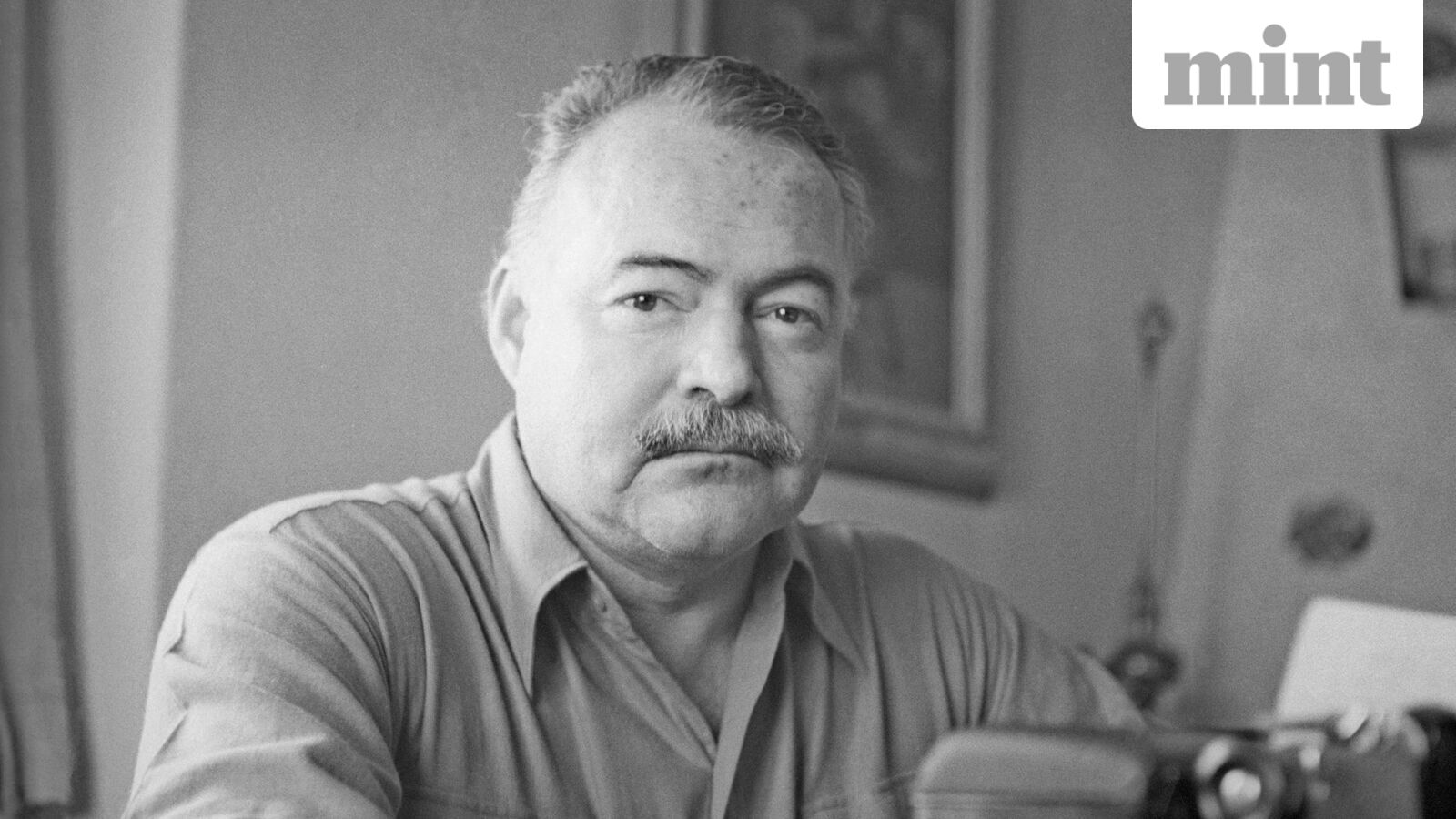
“The best way to find out if you can trust someone is to trust them.”
The words, often shared across social media and motivational columns, come from American writer Ernest Hemingway, one of the most influential literary figures of the 20th century. Though simple in phrasing, the quote reflects a deeper philosophy shaped by Hemingway’s life experiences, writing style and understanding of human relationships.
Hemingway, known for his direct prose and understated emotional depth, frequently explored themes of courage, loyalty and personal integrity.
What does the quote mean?
The quote captures his belief that trust is not something that can be proven in advance through suspicion or testing. Instead, it must begin as an act of faith. By choosing to trust first, a person allows relationships to reveal their true nature — whether they succeed or fail.
Literary scholars often connect this idea to Hemingway’s broader worldview, shaped by war, travel and personal hardship. Born in 1899 in Oak Park, Illinois, Hemingway worked as a journalist before serving as an ambulance driver during the First World War. His wartime experiences deeply influenced his writing and outlook, leading him to focus on how people behave under pressure and uncertainty.
The quote mirrors the emotional themes found in several of his works, including ‘The Sun Also Rises’ and ‘A Farewell to Arms’, where characters struggle with love, loyalty and betrayal against the backdrop of conflict. In these stories, trust often carries risk, yet it remains essential for meaningful human connection. Hemingway’s characters rarely find certainty; instead, they learn through action and experience.
More about Hemingway’s life and worldview
Experts suggest that the quote also reflects Hemingway’s journalistic training. As a reporter, he believed truth emerged from direct engagement rather than speculation. This approach later shaped his famous “iceberg theory” of writing — the idea that deeper meaning lies beneath simple surface language. In the same way, the quote uses plain words to express a complex emotional truth: trust cannot be measured without being given.
Psychologists today often interpret the line as an observation about human behavior. Trust creates vulnerability, but it also invites honesty. When someone is trusted, they are more likely to act responsibly; when they betray that trust, clarity arrives quickly. The quote therefore speaks not only about relationships but also about self-awareness — trusting others reveals who they are and teaches us about our own judgment.
Hemingway’s life itself was marked by intense friendships, marriages and professional rivalries. He lived in places ranging from Paris and Spain to Cuba, becoming part of literary circles that included prominent writers and artists of his era. In 1954, he received the Nobel Prize in Literature, recognized for his mastery of narrative art and influence on modern fiction.
Despite personal struggles later in life, Hemingway’s writing continues to resonate worldwide because of its honesty and restraint. His words often avoid elaborate explanation, leaving readers to confront emotional truths directly — much like this quote.
Today, “The best way to find out if you can trust somebody is to trust them” remains widely cited because it speaks to a universal dilemma. In an age shaped by caution and skepticism, Hemingway’s message suggests that trust is both a risk and a necessity. Without taking that first step, genuine relationships — whether personal or professional — may never truly begin.

