

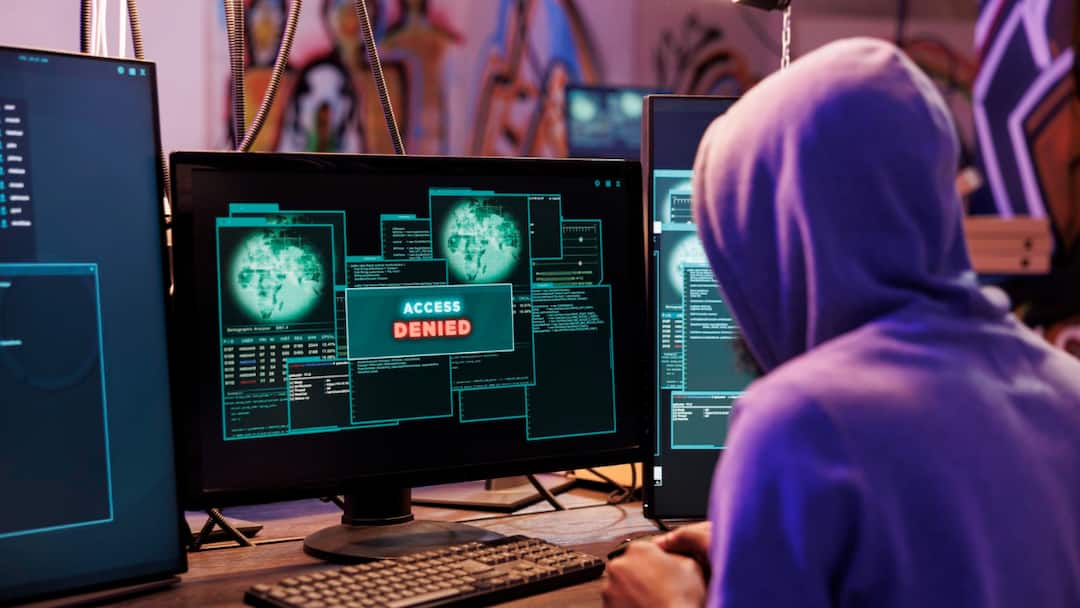
You must have heard the name of spyware. From time to time, mobile companies also issue alerts to protect their users from spyware. The threat of spyware is not only on mobiles. Any device can be infected with this and is usually used to steal passwords, banking details and digital identity. In recent years, many cases of spyware have come to light, which have affected people all over the world. In today’s explainer, we will try to answer all the questions related to spyware.
What is spyware?
Spyware is a type of malware, which enters your device and steals all your information and tracks online activities. These are so dangerous that they can copy your typed text as well as monitor the apps and websites you use and can also see what you are reading or doing on your device. Many spyware can secretly turn on your device’s camera and microphone and watch and record you. Spyware is a kind of virtual stalkers, which keep an eye on your every digital activity.
How many types of spyware are there?
Getting spyware onto your device is no longer a difficult task. It can be integrated with the malicious files and downloaded in your system. Apart from this, it can be installed in your device through missed call or even a simple text message. Talking about the way it works, once it enters the system, it starts silently recording your activities. There are many types of spyware and they are designed for different purposes.
Adware- As the name suggests, it is used to show ads. As soon as the user goes to the internet, it will start showing him ads according to his browsing history.
Keyloggers- This type of spyware is used to copy the text you type on the infected device. It saves all the input you give to the device in an encrypted log file. Through this, hackers can trace all your sent messages, mails and typed passwords etc.
Infostealers- Such spyware is used to steal information from the user’s device. Keyloggers are also a type of this. Through infostealers, hackers can scan the information stored in your device. Some infostealers even disappear from the infected device after doing their work.
Red Shell Spyware- Such spyware installs itself on the PC with some games etc. and then tracks the online activities of the gamers. It is said that developers use such spyware to improve their games.
Rootkits- With the help of this type of spyware, cyber criminals gain access to any computer or mobile device. They are usually installed by taking advantage of security bugs and can log in to a machine as an administrator. It is very difficult to detect them.
Is all spyware malicious?
The answer to this is no. Some spyware can be used to keep information safe. Many companies use spyware to protect their proprietary information or to keep their company networks secure. These are installed in the employees’ systems.
Who is most at risk from spyware?
Cyber crimes have increased in recent times and a large number of people are being targeted by different types of malware. Whether you are using a mobile or a tab, you have a laptop or any other smart gadget, one wrong tap can make you a victim of malware. If we talk about spyware, people using online banking are especially the target of hackers. Apart from this, many governments have also been accused of targeting journalists, judges, human rights activists and opposition leaders through spyware.
How to detect malware in a device?
Spyware is difficult to detect, but due to this, some signals start appearing in the infected device, from which it can be estimated that a system may contain spyware. These signs are-
- The speed of the infected device slows down.
- The device stops working or starts crashing repeatedly.
- Pop-ups start appearing again and again on the device.
- The homepage of the browser changes automatically again and again.
- On searching the web, the user is redirected to some other search engine.
- While using the apps, random error messages start appearing, which were never seen before.
How to avoid spyware?
Many spyware are very advanced and can enter your device without you doing anything. Nevertheless, its risks can be reduced by taking some precautions.
- Do not open links sent in messages or emails from unknown numbers.
- Do not get lured by tempting advertisements seen on social media and do not click on pop-up banners.
- Avoid interacting with unknown people on the internet.
- Always keep your device’s software and apps updated.
Read this also-
Year Ender 2025: Photos will come like DSLR, these are the phones with 200MP camera launched this year


Can you be more specific about the content of your article? After reading it, I still have some doubts. Hope you can help me. https://www.binance.com/register?ref=IHJUI7TF