

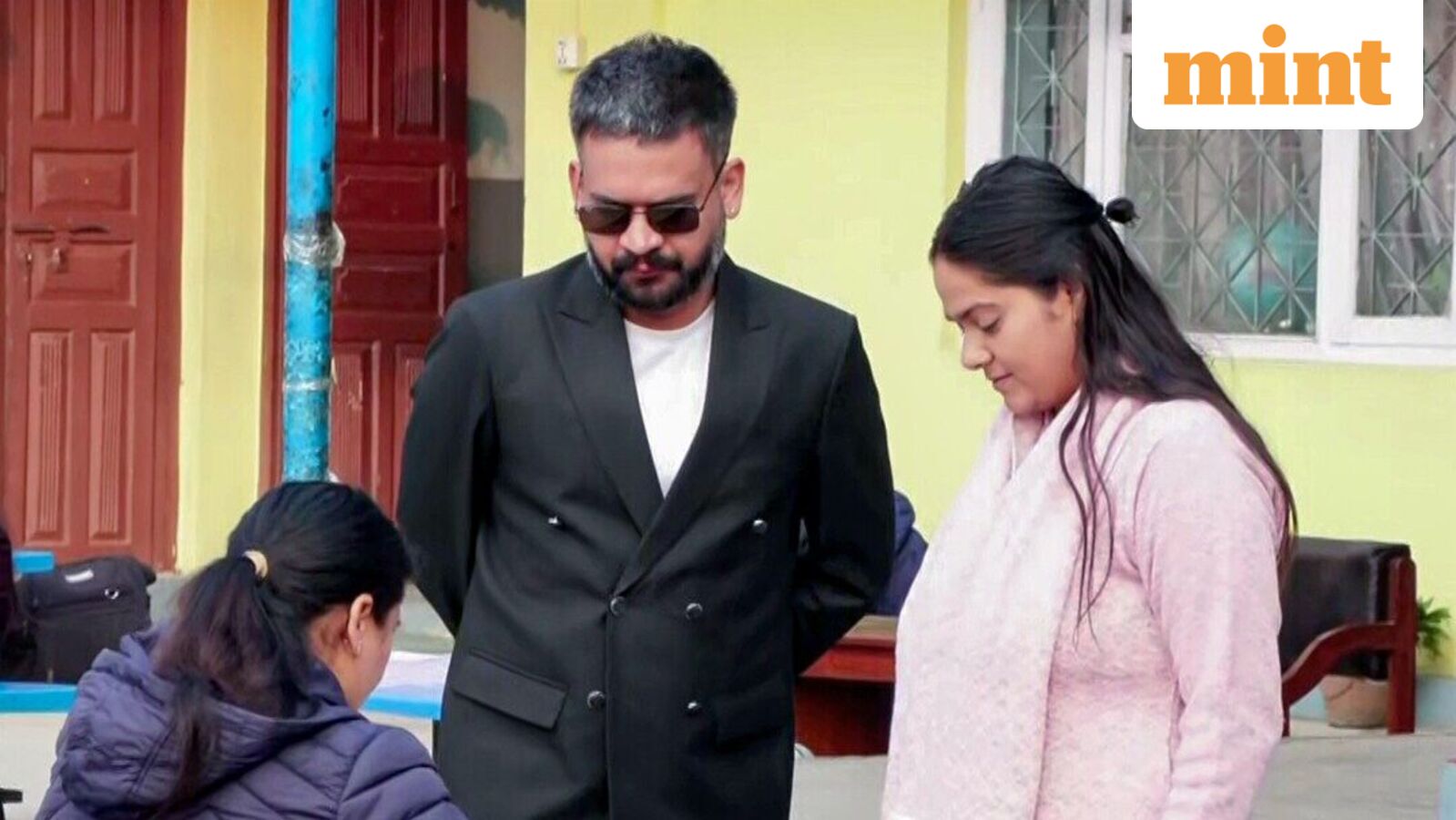
Independent candidate Mahabir Pun, who had resigned as education minister in the interim government, won in Myagdi-1 constituency in remote mountain districts beating his nearest rivals from the CPN-(UML) and the NC. Incidentally, the RSP had not fielded any candidate against him.
The seats won by RSP, headed by Ravi Lamichhane, include a clean sweep in all 15 constituencies of three districts in Kathmandu Valley, the EC data showed.
Legacy parties failed to convince voters for whom the major issues included fighting corruption and an end to nepotism apart from a generational change in political leadership of the country.
Former deputy speaker Indira Rana Magar, of the RSP, won from Jhapa-2 by defeating the speaker of the dissolved House of Representatives and senior leader of CPN-UML Dev Raj Ghimire.
Rana Magar won by a huge margin of 48,742 votes against Ghimire, who secured 11,368 votes.
Nepali Congress president Gagan Thapa, 49, who was projected as his party’s prime ministerial candidate, lost from Dhanusha-4 constituency to Amaresh Singh of the RSP.
Singh received 33,688 votes against Thapa’s 22,831, according to the Election Commission.
Other senior leaders of Nepali Congress, including general secretary Guru Raj Ghimire, Shekhar Koirala and Bimalendra Nidhi, also faced defeat.
Ten office bearers of the CPN-UML, including the party’s general secretary Shankar Pokharel, also lost the election.
Other leaders of the CPN-UML who lost were vice presidents Bishnu Paudel, Prithvi Subba Gurung and Gokarna Bista, deputy general secretary Raghubir Mahaseth, and secretaries Sherdhan Rai, Mahesh Basnet, Rajan Bhattarai and Bhanubhakta Dhakal.
Harka Rai, chairman of the Shram Sanskriti Party, won from Sunsari-1, defeating RSP candidate Goma Tamang.
RSP chairman Lamichhane won with a huge margin from the Chitwan-2 constituency, marking his third consecutive victory, with 54,402 votes against his nearest rival, NC’s Mina Kumari Kharel, who received 14,564 votes.
According to the EC, former prime minister and NCP leader Pushpa Kamal Dahal ‘Prachanda’ won from Rukum Purba district by securing 10,240 votes against his rival, Lilamani Gautam of the CPN-UML, who got 3,462 votes.
RPP’s Gyanendra Shahi won from the Jumla constituency of Karnali province by defeating his closest rival, Naresh Bhandari of the NCP, and became the only candidate of the pro-monarchist party to have secured a seat in the House of Representatives.
The election also saw 10 women candidates emerge victorious — nine from the RSP and one from the NC.
Nepal witnessed about 60 per cent voter turnout during the March 5 election to the House of Representatives.
Of the 275 members of Parliament, 165 are being elected through direct voting, while the remaining 110 through a proportional method.
Around 3,400 candidates were vying for 165 seats under direct voting and 3,135 candidates for 110 seats through proportional voting.
The RSP is also leading in proportional voting system with 24,55,764 votes followed by the Nepali Congress with 8,31,224 votes.
The CPN-UML has received 7,09,575 votes, the Nepali Communist Party 3,36,933, the RPP 1,78,975 and Shram Sanskriti Party 1,21,066 votes, according to the EC.

