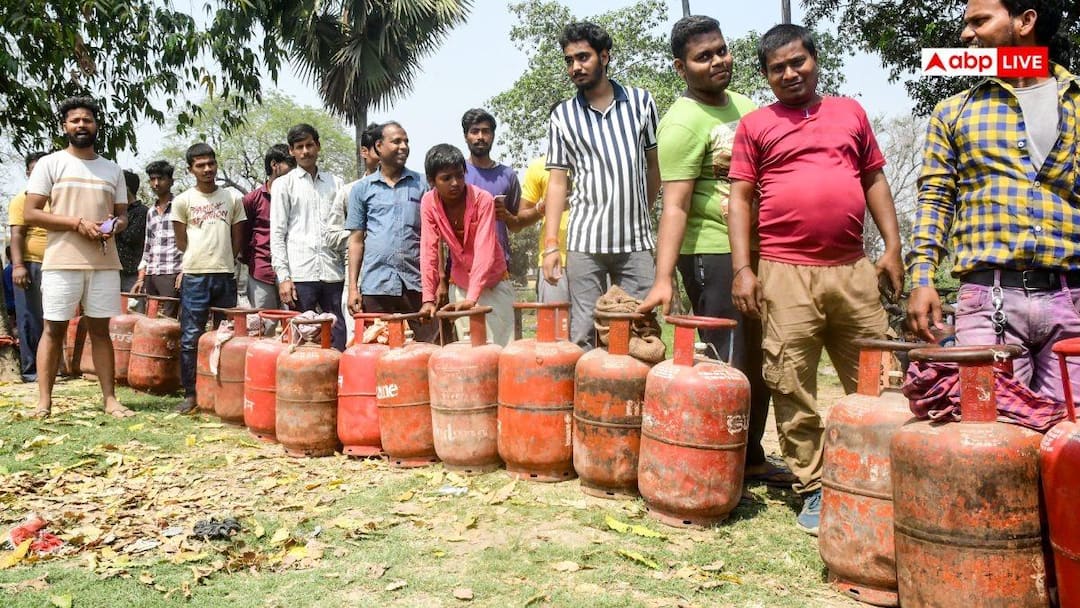

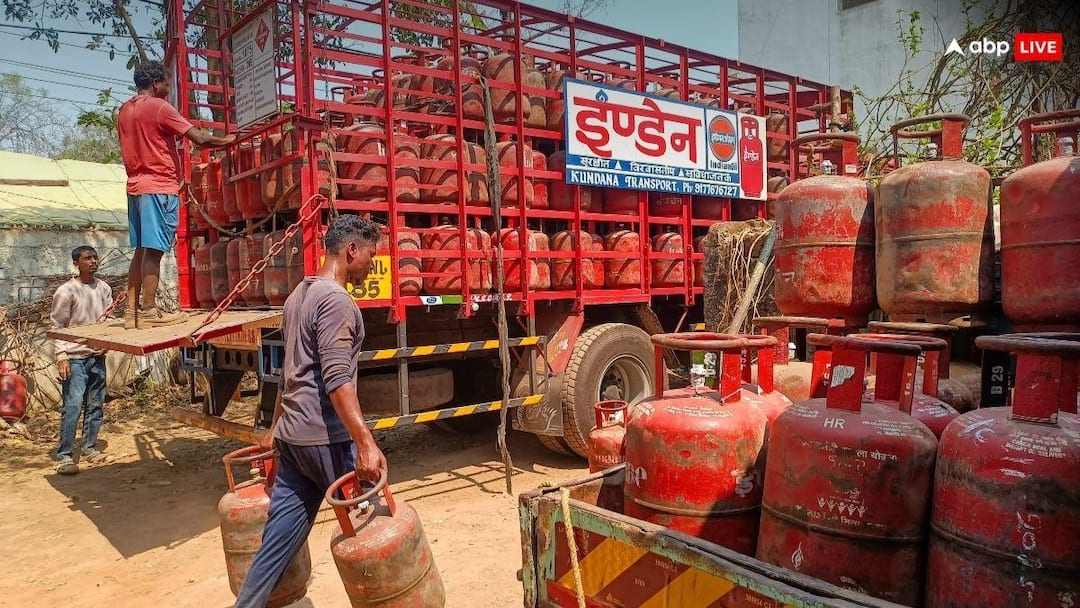
Even though the Petroleum Minister of the Government of India, Hardeep Puri, has claimed in the Parliament that India has sufficient reserves of oil and gas, but its reality has started appearing different in every village and every city of the country, where long lines are being formed not only for oil but for gas. In such a situation, it becomes important to understand whether India really has sufficient reserves of gas or whether these statements are being made just to keep the heart happy.
So the truth is that India has barely 22 to 25 days of gas storage as storage. And India’s capacity is only so much that it can store only 22 to 25 days. If we look at consumption, India consumes about 34 million tonnes of LPG in a year. According to this, the monthly consumption is around 2.83 million tonnes of LPG. Now India buys 60 percent of its LPG requirement from outside and produces 40 percent in India itself. The January data of Petroleum Planning and Analysis Cell i.e. PPAC says that the total production of LPG in India in January 2026 was 1.158 million tonnes, whereas in January 2026 itself, India imported 2.192 million tonnes of LPG.
Now 90 percent of the imports have completely stopped. Because 90 percent of India’s imports come from Gulf countries. Bloomberg report says that India buys about 34 percent of its total imports from Qatar and 26 percent from UAE. Rest of Saudi Arabia and Kuwait also supply LPG to India. But the gas that comes to India from all these countries comes from the Strait of Hormuz. And this road is still closed. Therefore gas is not coming to India.
So the current supply in India is coming from Indian storage. And if we understand how much storage is there in India, then the story of gas shortage in India will be easily understood. A report by S&P Global Commodity Insights says that India’s total LPG storage capacity is about 1.9 million tonnes, which can supply gas to the country for about 22 days. Some part of this is stored in the underground caves of Visakhapatnam and Mangaluru which are called ‘Rock Caverns’. The rock caverns of Mangaluru have a capacity of 80,000 tonnes and those of Visakhapatnam have a capacity of 60,000 tonnes. Now this storage has a backup of barely two days in India.
But there is still backup of more than 20 days at some other places. For example, the maximum storage is in more than 200 LPG bottling plants of gas companies like Indian Oil, HP and BPCL, where LPG is stored in bullets. Apart from this, there are more than 23 oil refineries in India, where LPG is made. These refineries also have large storage tanks where LPG is stored. Unless the gas is sent out through pipelines or tankers, it remains part of this buffer. Apart from this, India also has some transit stocks, that is, the gas which comes from the refinery to the bottling plants and is then filled in cylinders and sent separately through trucks. The remaining gas is also present in LPG pipelines. If all these are added, India has storage of 22 to 25 days.
To ensure that this storage is spent economically, gas companies are instructing people to reduce the flame after boiling and cook food in a pressure cooker, which will save 25 percent gas. Otherwise, the Petroleum Minister has already said that India has increased its domestic production by 28 percent. India’s previous domestic production was 1.158 million tonnes. Now even if it increases by 28 percent, the production will increase to only about 1.5 million tonnes. Whereas the daily expenditure of LGP in India is around 90,000 tonnes. In such a situation, the amount of production that India produces every month or is currently producing will not be sufficient even for 15 days in the absence of foreign supply. Rest of Hormuz is closed, so the supply is also closed. Unless Hormuz opens, India’s gas supply will definitely be disrupted.
Also read:-
Amidst the war, Iran asked for help from India! Foreign Minister S Jaishankar made a big promise, said – ‘We are international and regional…’