

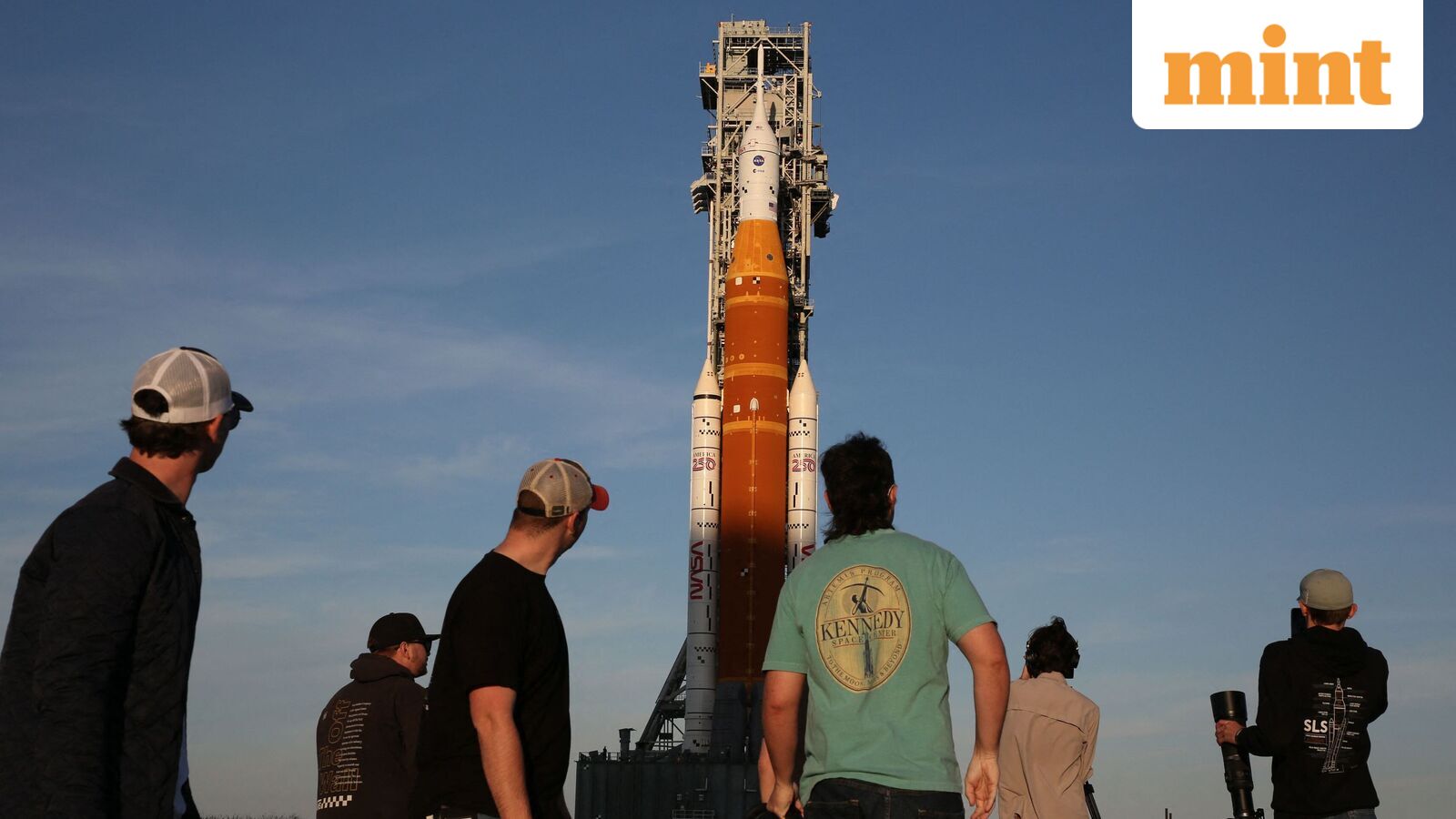
Artemis II is set to launch on April 1, 2026, carrying four astronauts: NASA’s Reid Wiseman, Victor Glover, Christina Koch, and Canadian Space Agency astronaut Jeremy Hansen. About eight minutes after takeoff, the Orion spacecraft will separate from the main rocket and enter orbit around Earth.
The rocket’s upper stage, called the ICPS, will perform two engine burns to raise Orion to a safe high orbit. Once in orbit, the crew will spend the rest of the day checking Orion’s systems—testing water and food systems, the toilet, and air filters. They’ll also practice moving around and rearranging the cabin to live and work comfortably in weightlessness. The astronauts will even practice flying Orion near the ICPS, which is used as a docking target. After some rest, Orion will perform a final engine firing to set up the next day’s journey toward the Moon.
Flight Day 2: Heading to the moon
On the second day, the crew will start exercising on Orion’s special flywheel device to stay fit in microgravity. Astronaut Christina Koch will prepare the spacecraft’s main engine for the translunar injection (TLI) burn—firing the big engine that will send Orion on its path around the Moon. This path is a “free-return trajectory,” meaning Orion will naturally swing back to Earth if needed.
After the TLI, the crew will take it easy and get used to life in space. They’ll also have a video chat with mission control on Earth, the first of many scheduled throughout the moon mission.
Flight Days 3–5: Fine-tuning the journey
Flight Day 3 will involve small engine adjustments to keep Orion on track, called trajectory correction burns. The crew will also practice emergency procedures, like CPR in zero gravity, and check medical tools like thermometers and blood pressure monitors.
Flight Day 4 is devoted to studying lunar geography and practicing photography from Orion’s windows. The astronauts will also take special photos of stars and planets.
Flight Day 5 marks Orion’s entry into the Moon’s gravitational influence. The crew will test the new orange Orion suits, which protect them in emergencies, provide breathable air, and can keep someone alive for up to six days if needed. The final engine adjustment before the Moon flyby will also take place.
Flight Day 6: Closest approach to the moon
Artemis II will pass within 4,000–6,000 miles of the Moon, potentially becoming the farthest humans have traveled from Earth since Apollo 13. The astronauts will take photos and videos of the lunar surface, capturing regions never seen firsthand. For about 30–50 minutes, they will lose contact with Earth while flying behind the Moon, recording observations to match their images later.
Flight Days 7–9: Heading back
On Flight Day 7, Orion will leave the Moon’s gravitational pull. The crew will speak with scientists on Earth and fire the engines for the first return adjustment. Flight Day 8 will test radiation protection and manual spacecraft piloting. On Flight Day 9, the crew will prepare for reentry, test the toilet system, and wear special compression garments to prevent dizziness when returning to Earth’s gravity.
Flight Day 10: Splashdown
The final day focuses on returning safely. Orion’s service module will separate, exposing the heat shield to withstand 3,000°F during reentry. Parachutes will slow the capsule to around 17 mph for a Pacific Ocean splashdown, where NASA and US Navy teams will recover the astronauts.

