

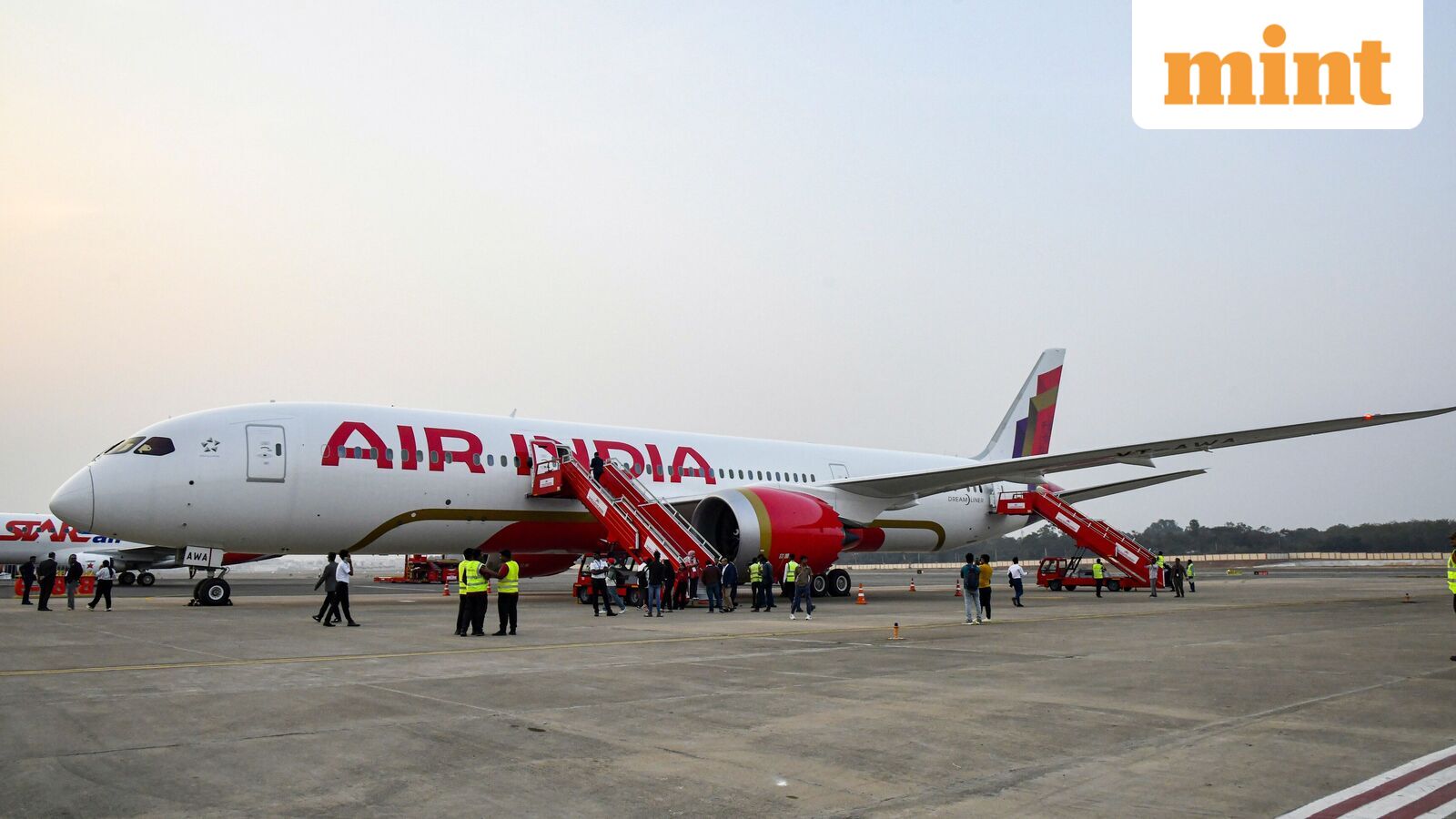
Air India and Air India Express will operate 44 scheduled and non-scheduled flights to and from the West Asia region on Tuesday. Both airlines will maintain their scheduled operations to Muscat and Jeddah.
Air India will operate its regular return flights between Delhi and Jeddah, along with two flights from Mumbai, while Air India Express will continue its scheduled services to and from Kozhikode. Air India Express will also operate its usual flights to and from Muscat, including services from Delhi, Kochi (two flights), Kozhikode, Mangalore, Mumbai, and Tiruchirappalli.
In addition to these regular services, Air India and Air India Express plan to operate a total of 24 non-scheduled flights to and from the United Arab Emirates (UAE) and Saudi Arabia, depending on slot availability and prevailing conditions at the departure points.
“These flights are being operated with the requisite permissions from the relevant Indian and local regulatory authorities,” Air India said.
Amid the ongoing conflict in West Asia, Dubai airport has imposed restrictions on flights operated by foreign carriers, prompting IndiGo, Air India Group, and SpiceJet to suspend their services to the emirate.
Meanwhile, Iran launched fresh attacks across the Persian Gulf, disrupting shipments at a key UAE oil hub.
Overnight into Monday, the UAE and Saudi Arabia reported multiple drone and missile strikes. Dubai temporarily suspended flights at its main airport, with some Emirates departures canceled following a fuel tank fire reportedly caused by an Iranian drone.
The UAE’s Fujairah oil-export terminal was targeted again on Monday, following a strike on Saturday that had temporarily halted some shipments. At the same time, Israel carried out additional airstrikes on infrastructure in Tehran after a series of missile attacks on the Jewish state.
The ongoing attacks indicate that the fighting, which began with US-Israeli bombings of Iran on February 28, shows no sign of easing.
Trump says ‘Iran wants to make a deal’; Araghchi denies
The Strait of Hormuz, a vital passage for roughly one-fifth of the world’s oil, remains effectively closed, causing global energy disruptions estimated by Morgan Stanley to be twice the impact of the 1956 Suez Crisis.
For the first time, US President Donald Trump called on other world powers, including France, the UK, Japan, and China, to assist the US in reopening the strait by sending warships to escort commercial vessels, though none of these countries have yet agreed to participate.
“Iran wants to make a deal, and I don’t want to make it because the terms aren’t good enough yet,” he mentioned.
However, Iranian Foreign Minister Abbas Araghchi refuted claims that Tehran was pursuing talks or a ceasefire with the US.
During a media briefing, Araghchi mentioned, “The reason we say we do not want a ceasefire is not because we are seeking war, but because this time this war must end in such a way that our enemies never again think of repeating these attacks. I think they have already learned a good lesson and understood what kind of nation they are dealing with.”
