

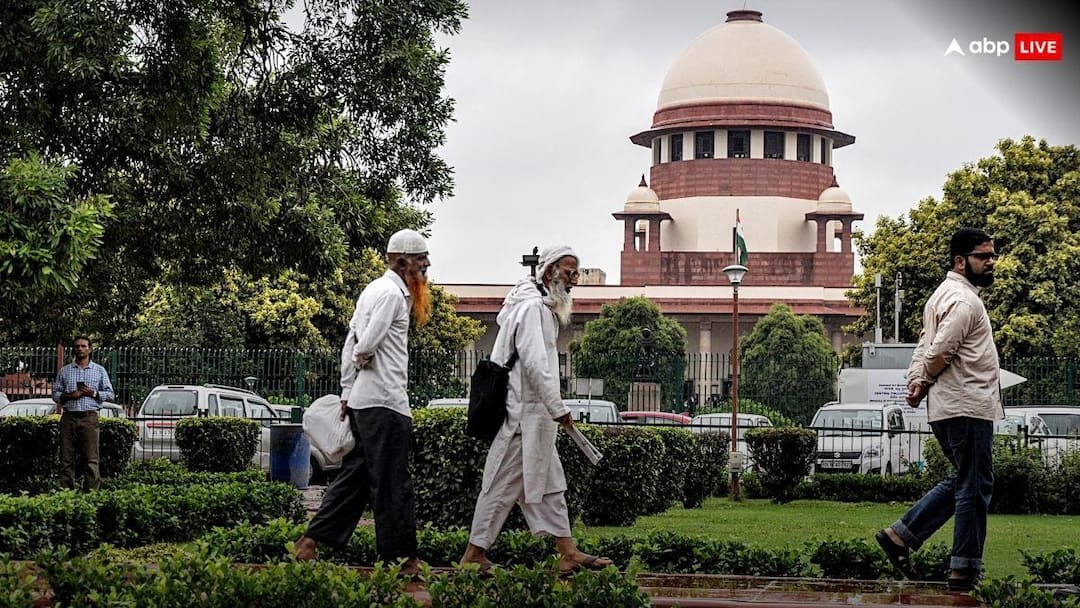
The Supreme Court has held that the ‘Air Force Group Insurance Society’ (AFGIS) falls within the category of ‘State’ under Article 12 of the Constitution as it has undertaken to discharge a public duty by looking after the safety and welfare of the armed forces personnel and their families.
Article 12 of the Constitution defines the category of ‘State’ to enforce fundamental rights. A bench of Justice Sanjay Karol and Justice Vipul M. Pancholi overturned the view taken by the Delhi High Court on February 1, 2023 in the pay parity dispute related to AFGIS employees.
“In our view, the perusal of the documents makes out a case for AFGIS being considered a ‘State’ within the meaning of Article 12,” the bench said in its March 12 judgment. For the aspect of deep and comprehensive control, we see that the President of India approved the establishment of AFGIS and also specifically approved the deputation rules.
The court said that the Principal Director of AFGIS is required to brief the Assistant Chief of the Air Staff every month about the cash flow of the society, thereby ensuring monitoring of its activities by a key member of the Indian Air Force.
The court said, ‘When the aspect of administrative control is examined, it is seen that all the members of the Board of Trustees, as well as the Managing Committee, are serving members of the Indian Air Force and are on deputation to AFGIS for a fixed period.’
The Supreme Court said, ‘Thus, in short, the administration of the body is entirely in the hands of the government servants, even though the body itself is a purported private, self-contained society.’ Senior advocate Shoaib Alam, representing AFGIS employees, had argued that in a letter dated March 15, 2016, AFGIS had represented itself as being ‘government’ in official correspondence.
He said the day-to-day affairs of AFGIS are managed by senior Indian Air Force officials, and the land on which the office is located is given by the Defense Ministry, and it is also exempted from various taxes imposed.
The Supreme Court said, ‘We believe that AFGIS actually performs a public duty. The safety and welfare of armed forces personnel is a major government function. The role of the armed forces is directly linked to the sovereignty and security of the nation, and to protect it, members of the forces are required to adhere to and maintain strict rules, impeccable conduct, and, at times, even in the most severe and adverse circumstances.’
It said the role of the state in their protection does not end on their retirement from service, as the life of a person in the forces is always shaped by their time in service. Justice Karol, who wrote the judgment, said that at one point AFGIS claimed to be government by claiming exemption from service tax because it was under the control of the Defense Ministry.
The court said, ‘In fact, by opposing the challenge of the appellants (employees), AFGIS has gone back on its own statement. We fail to understand that an organization may be ‘government’ for one purpose but not (so) for another purpose.’
The Supreme Court, while reviving the petition of the employees demanding the Sixth Pay Commission before the Delhi High Court, said that it is maintainable as AFGIS is in the category of ‘State’ under Article 12 of the Constitution. The bench said, ‘The High Court is requested to take a decision expeditiously keeping in mind the fact that this case was filed in the year 2017. The appeal is accepted.
Also read:-
‘There was already hope of victory..’ Nitin Naveen’s first reaction after the results of Rajya Sabha elections, know what he said?

