

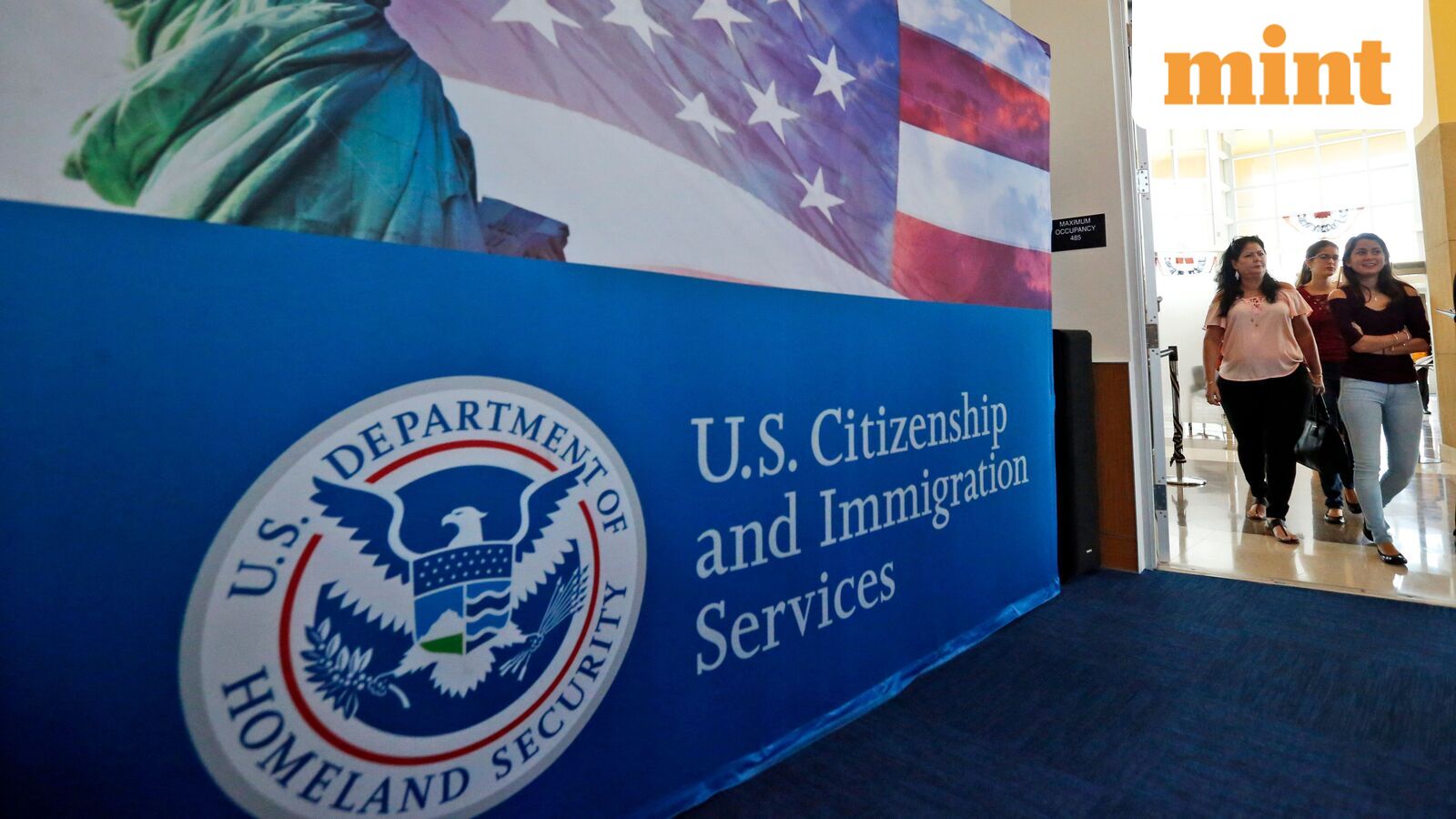
Amid the visa crackdown by the Trump administration, certain US immigration fees will rise following an inflation-adjusted update from January 1, 2026, according to the US Citizenship and Immigration Services (USCIS).
USCIS stated that the updated fees apply to certain immigration benefits specified under HR 1 and the increases account for inflation measured between July 2024 and July 2025. “REMINDER: Effective Jan. 1, 2026, certain immigration-related fees will increase. We will reject any request postmarked on or after Jan. 1, 2026, without the proper filing fee,” said USCIS in a post on X.
“The new inflationary-adjusted fees are effective on Jan. 1, 2026. If you submit a benefit request postmarked on or after Jan. 1, 2026, that requires one of these HR-1 fees, you must include the new fee for the specific benefit you are requesting. The fees that are increasing due to this Federal Register notice are listed in the table below,” according to the official website of USCIS.
| Form Type | Previous Fee | New Fee |
|---|---|---|
| Annual Asylum Application Fee | $100 ~ approx. 8,900 | $102~ approx. 9,165 |
| Form I-765, Application for Employment Authorization – Initial Asylum Applicant Employment Authorization Document (EAD) | $550 ~ approx. 49,400 | $560 ~ approx. 50,300 |
| Form I-765, Application for Employment Authorization – Initial Parole EAD | $550 ~ approx. 49,400 | $560 ~ approx. 50,300 |
| Form I-765, Application for Employment Authorization – Renewal or Extension of Parole EAD | $275 ~ approx. 24,700 | $280 ~ approx. 25,100 |
| Form I-765, Application for Employment Authorization – Initial Temporary Protected Status (TPS) EAD | $550 ~ approx. 49,400 | $560 ~ approx. 50,300 |
| Form I-765, Application for Employment Authorization – Renewal or Extension of TPS EAD | $275 ~ approx. 24,700 | $280 ~ approx. 25,100 |
| Form I-131, Part 9 – EAD requested upon authorization of a new period of Parole (Re-parole) | $275 ~ approx. 24,700 | $280 ~ approx. 25,100 |
| Form I-821, Application for TPS | $500~approx 44,900 | $510~approx 45,800 |
The Department of Homeland Security will keep adjusting these fees each year for inflation in future fiscal years, as mandated by law, USCIS noted.
The table below lists the fees that will remain unchanged under this Federal Register notice. In the future, the Department of Homeland Security (DHS) will issue a Federal Register notice detailing any inflation-based adjustment for the immigration parole fee.
| Form Type | Previous Fee | New Fee |
|---|---|---|
| I-589 Asylum Fee (Initial fee for aliens filing an application for asylum) | $100 ~ approx. 8,900 | $100 |
| I-765 Renewal or Extension of Asylum Applicant EAD | $275 ~ approx. 24,712 | $275 |
| I-360 Special Immigrant Juvenile Fee | $250 ~ approx. 22,465 | $250 |
Who is eligible for asylum in the USA?
To be eligible for US asylum, you must be present in the country and demonstrate that you fear persecution in your home country based on your race, religion, nationality, political beliefs, or membership in a specific social group (PSG).
You must show that you have either already faced persecution or have a “well-founded fear” of being persecuted in the future for one of these reasons.
How long can you stay in the US with asylum?
Asylum status does not expire and can be ended only by USCIS under specific conditions. Asylees are considered an ORR-eligible group and are entitled to the same benefits and services as refugees, except for the Reception and Placement Program.
Can I get a Green Card if I applied for asylum?
Asylees who are physically present in the United States can apply for a Green Card by submitting Form I-485, the Application to Register Permanent Residence or Adjust Status.
Crackdown on Green card applicants in 2026
Green card applicants and holders from 19 countries identified by the US government as posing security concerns will face heightened scrutiny.
Earlier, US Citizenship and Immigration Services chief Joseph Edlow said the president had instructed him to carry out a comprehensive and stringent review of every green card issued to foreign nationals from countries considered to be of concern.
AP digital embed map shows the countries subject to travel restrictions to the United States as imposed by the Trump administration. See here:
Starting 1 January 2026, the US will impose a complete ban on the entry of citizens from 12 countries: Afghanistan, Burma, Chad, the Republic of the Congo, Equatorial Guinea, Eritrea, Haiti, Iran, Libya, Somalia, Sudan, and Yemen.
Additionally, partial entry restrictions will apply to nationals from seven other countries: Burundi, Cuba, Laos, Sierra Leone, Togo, Turkmenistan, and Venezuela.
Job sites are in focus as Trump plans to expand immigration crackdown
In 2026, the Trump administration’s planned emphasis on workplace enforcement could result in a potential rise in arrests and have broader economic consequences, including impacts on businesses that typically support Republicans, as reported by Reuters.
Filling jobs left vacant by immigrants detained in workplace raids could drive up labor costs, potentially complicating Trump’s efforts to curb inflation—an issue analysts say will be central to the closely watched November elections that will decide control of Congress, the report stated.
In July this year, under a sweeping spending bill passed by the Republican-led Congress, Immigration and Customs Enforcement (ICE) and Border Patrol are set to receive an additional $170 billion in funding through September 2029, marking a significant increase over their current combined annual budgets of roughly $19 billion.
Trump’s overall approval rating on immigration policy fell from 50% in March, before he launched crackdowns in several major US cities, to 41% in mid-December, for what had been his strongest issue, reuters reported.
Effective Jan. 1, 2026, certain immigration-related fees will increase. We will reject any request postmarked on or after Jan. 1, 2026, without the proper filing fee.
Trump, a Republican, recaptured the White House, promising record levels of deportations, saying it was needed after years of high levels of illegal immigration under his Democratic predecessor, Joe Biden.
(With inputs from agencies)
Key Takeaways
- USCIS will increase immigration fees in 2026 due to inflation adjustments.
- Certain countries will face complete entry bans, affecting asylum seekers.
- The changes may have economic repercussions, impacting businesses and labor costs.

