

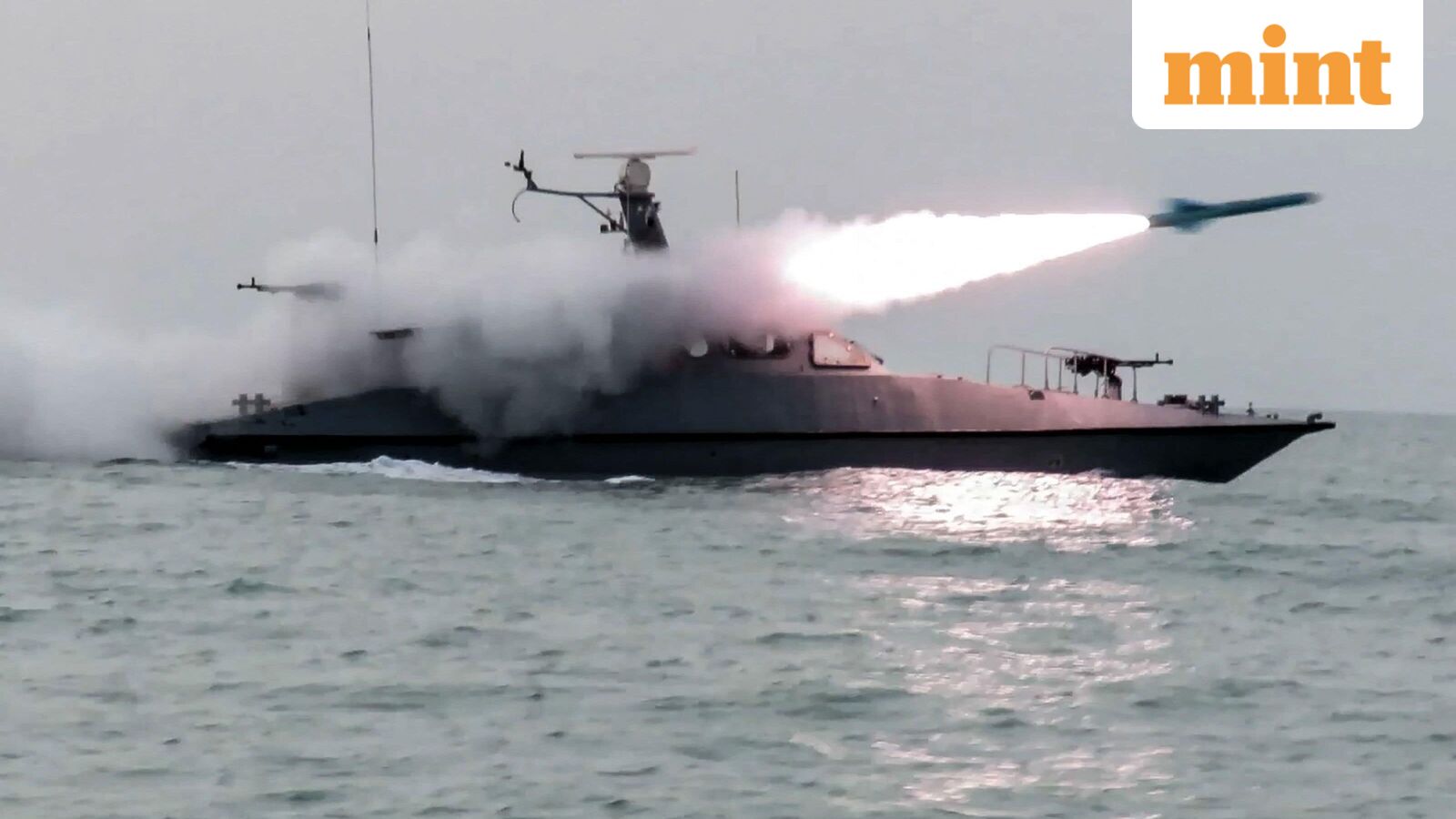
Iran’s Islamic Revolutionary Guard Corps on Monday launched a series of military exercises in the Strait of Hormuz, according to state media, on the eve of talks with the United States, as reported by AFP.
State television said the drills — whose duration was not specified — are intended to prepare the Guards for “potential security and military threats” in the strategic waterway, following the deployment of a large US naval force to the region, the report stated.
Iranian hardline politicians have repeatedly threatened to block the strait, especially during times of heightened tensions with the United States, but it has never been closed.
Around a quarter of all seaborne oil and a fifth of the world’s liquefied natural gas transit through the strait, according to the International Energy Agency, AFP reported.
The drills, supervised by Guards commander General Mohammad Pakpour, are intended to strengthen the IRGC’s capacity for rapid response, according to Iranian media. The Guards serve as the ideological branch of Iran’s armed forces, AFP reported.
The Guards initiated the drills from Abu Musa Island — Iran’s southernmost territorial point — with Pakpour saying forces built “a strong fortress all around the island,” according to state television.
The report said island-based units in the Gulf can act without mainland support, with missiles able to “destroy enemy destroyers within a radius of 1,000 kilometers.”
It also released a blurred video of a drone, while withholding operational specifics that remain classified.
The exercises were underway as Tehran and Washington were getting ready for a fresh round of negotiations in Geneva on Tuesday, with Oman acting as mediator. They are also happening amid a significant buildup of US military forces in the region.
The decades-long adversaries resumed negotiations on February 6 in Oman, their first since diplomacy collapsed last June when Israel sparked a 12-day war with surprise strikes on Iran, which the United States briefly joined to strike Iranian nuclear facilities.
US President Donald Trump has been pressuring Iran to reach an agreement, especially with recent US naval force deployments to the region that he has described as an “armada”.
After sending the aircraft carrier USS Abraham Lincoln and escort battleships to the Gulf in January, Trump said on Friday that a second supercarrier, the Gerald R. Ford, would depart “very soon” for the Middle East.
On Monday, IRGC navy official Mohammad Akbarzadeh warned that all foreign ships in the region were “under full intelligence surveillance and within the reach of our defense power”.
“The armed forces are fully prepared, monitoring the enemy’s movements and never ignoring threats,” the state-run IRNA news agency reported him saying.

