

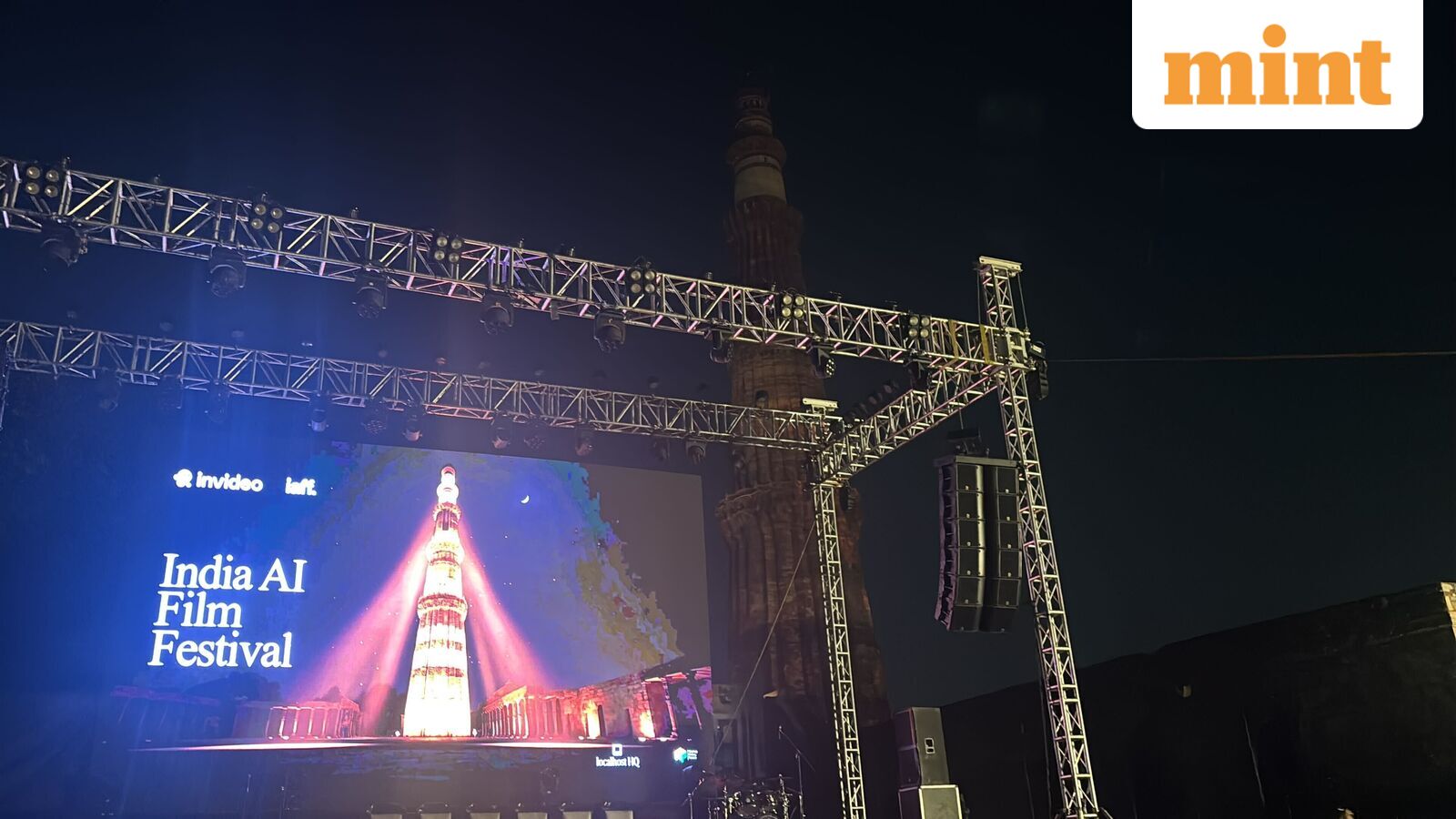
New Delhi: The traditional red carpet at the India AI Film Festival and the AI Impact Summit this week had a distinctively digital sheen. Amidst the usual chatter of cinematography and casting, a new breed of exhibitors, AI platform developers, are spending the week pitching a radical proposition to India’s creative core: the end of the ‘producer hunt’.
For decades, the journey from a script to the screen has been guarded by high-net-worth gatekeepers and the grueling search for funding. Now, AI startups are showcasing tools that promise to convert a raw vision into a professional screenplay and high-fidelity visuals at a fraction of the traditional cost, effectively democratizing the director’s chair.
The primary draw for independent creators is the staggering collapse in production overheads. Hriday Nagpal, a filmmaker who recently pivoted to AI-driven production, represents a growing cohort of ‘tech-native’ directors. For Nagpal, the switch wasn’t just about innovation; it was about survival in an industry notorious for its ‘closed-door’ access.
“It helps in cutting costs and time to a great extent,” Nagpal explains. “What would otherwise take upwards of ₹20 crore to create can now be realized for approximately ₹5 lakh with AI. While the models currently in use require further improvisation, the barrier to entry has officially been shattered.”
Abundantania Entertainment, known for films like Baby and Toilet Ek Prem Katha, has partnered with AI video creation platform Invideo to invest $10 million in AI content creation. “AI helps the film industry by amplifying creativity as well as cutting down the cost,” said Vikram Malhotra, cofounder and CEO of the film production house, which is working on five AI films, two of which are expected to be released by the end of this year.
human element
Despite the optimism, the technology is currently in a ‘beta’ phase of creative excellence. Soumyadeep Mukherjee, chief technology officer of Dashverse—an AI microdrama platform—notes that the output still lacks the nuanced ‘soul’ of human-led cinema.
“The AI models currently deployed require at least two rounds of moderation to meet industry standards,” Mukherjee said. However, he warns that the window for skepticism is closing fast. “By the end of 2026, AI-generated content could dominate social media and OTT filmmaking in India, mirroring the explosion of AI-led micro-dramas we’ve already seen in China,” he added.
The most contentious debate at the summit centered on the ‘labor of art’. As AI begins to automate everything from screenwriting to background score generation and even visuals, fears of job displacement for actors, writers, and technicians have reached a fever pitch. Audience reception remains mixed, with many viewers still skeptical of the ‘uncanny valley’ effect in AI-generated performances.
However, industry leaders argue that the ‘AI vs. Humans’ narrative is a false dichotomy. Sanket Shah, CEO and co-founder of Invideo, believes the technology will act as a force multiplier rather than a replacement.
“AI will improve the process of filmmaking and may not necessarily cut down jobs, but create new ones,” Shah asserts. He points to a critical bottleneck in the current ecosystem: a ‘lack of talent and takers’ for AI-integrated filmmaking. “Any filmmaker can update their skillset and build better films at lesser cost. The tools are here; the talent just needs to catch up.”
“India, with its star-struck audience, sees actors as humans beyond cinema, and watches films for their presence. Actors contribute depth of emotion to films that AI cannot replicate, even if it is getting better at emulating human actions and behavior day by day. AI film-making can work well with animated films, but I am skeptical about the reception of hyper-realistic films that are overriding the use of actors in India,” said actor Pallav Singh.
AI is displacing actors who would have been involved in film production so actors are pivoting to alternative careers like live performances, content creation, standup comedy, etc., said Ayyaz Ahmed, TV actor and content creator. “AI will take over the film creation process and if one does not upskill themselves, they will struggle for work, so creators also have to adapt to the new incoming technology constantly.”

