

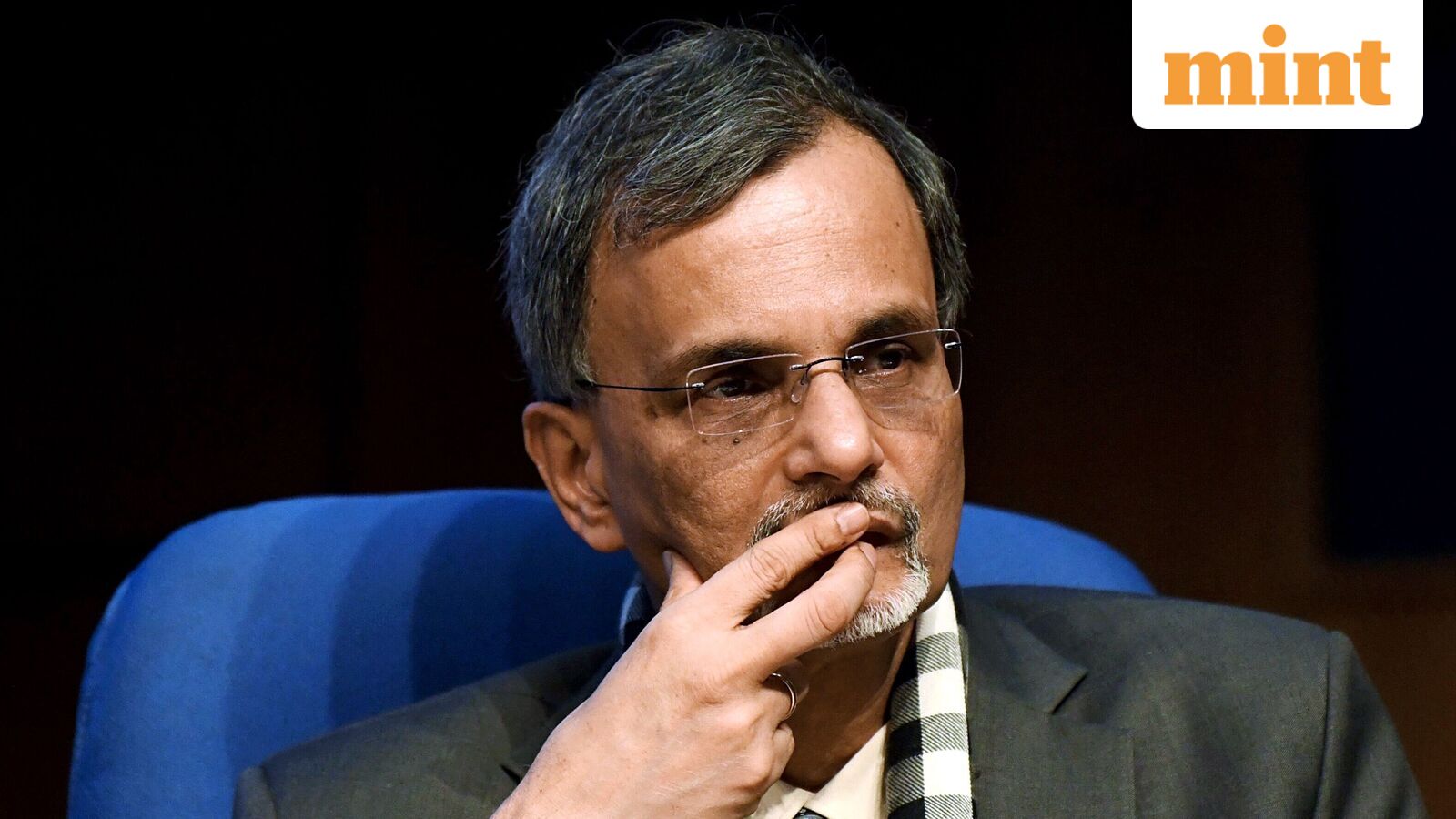
India needs to act quickly on imparting skills to its workforce, given the need to create at least eight million jobs annually at a time when artificial intelligence (AI)-induced productivity is testing the state’s capacity to strengthen education and skilling, and expand labour-intensive sectors, chief economic advisor V Anantha Nageswaran said on Monday.
Addressing the AI summit 2026 virtually, Nageswaran said if AI displaces humans faster than people can be trained, if productivity rises without employment elasticity, and if institutional reform lacks technological adoption, there is a risk that India will squander its demographic window and inequality will widen at precisely the moment of greatest technological change, he said.
“For advanced economies facing demographic decline, AI may serve as a supplement. For India, it is a stress test of our state capacity. Time for us is not abstract. Every year, we must generate millions of productive, dignified jobs or livelihoods. Every year of delay compounds the pressure. Every year of drift narrows our options,” Nageswaran said.
Demographic urgency
He pointed out that demographics creates opportunity, but also urgency. The chief economic advisor said only a small proportion of India’s workforce has received formal skill training. “That gap is not just a statistic; it is a structural vulnerability,” Nageswaran said.
He highlighted the need to move decisively to strengthen foundational education, scale high-quality skilling, expand labor-intensive service sectors, remove the regulatory bottlenecks that hinder the expansion of labor-intensive services, and ensure calibrated AI deployment. Missing these goals would not merely mean wasting an opportunity but creating unavoidable social and economic instability, Nageswaran cautioned.
“But the alternative, fortunately, remains within reach. With foresight, institutional discipline, and relentless execution, India can become the first large society to demonstrate that human abundance and machine intelligence can reinforce and not undermine each other,” Nageswaran said.
“This will not happen by drift. It will require urgency, it will require political will, it will require state capacity, and it will require a clear national commitment to aligning technological adoption with mass employability. It has to be a Team India effort, including the private sector and academics, as well as policymakers. The window is still open, but it is not indefinite,” Nageswaran added.
He said for India, this is not a debate about the future of work – it is a decision about the future of growth, social stability, and cohesion. “We must act and act now. The first step begins with a reform of our education and pedagogy, and the teaching and imparting of foundational skills. And that is where the path to co-creating prosperity with AI and employability in the age of AI begins,” he said.

