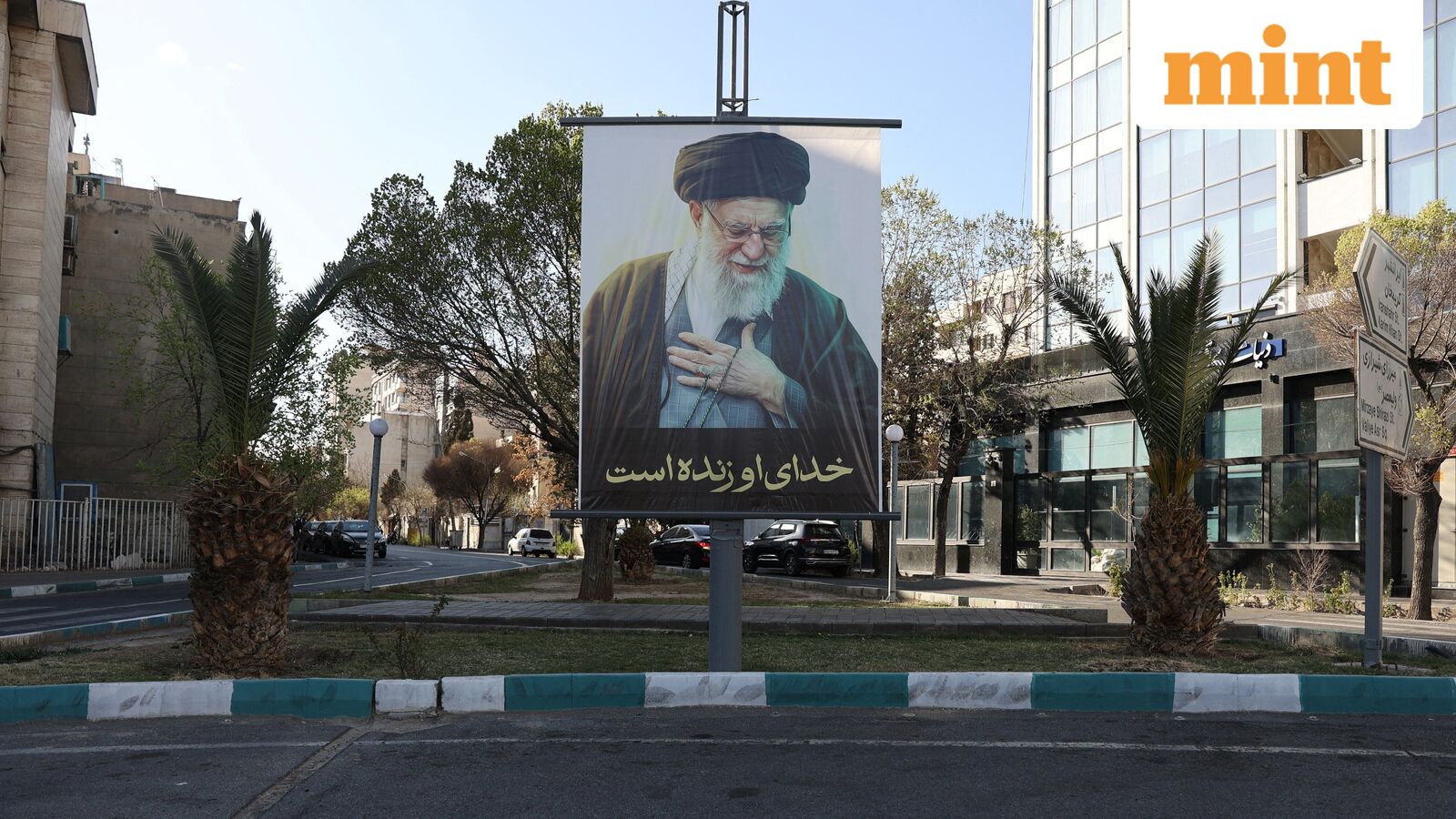
At least three close US allies have said they are prepared to coordinate efforts to protect their interests in the Middle East and counter Iran’s retaliatory missile and drone strikes following the killing of Supreme Leader Ayatollah Ali Khamenei.
Several other countries, however, expressed concern that the conflict triggered by the coordinated US-Israel attacks could escalate into a broader regional war, underscoring growing international divisions over the unfolding crisis in the Middle East.
Britain, France and Germany said they were prepared to work with the United States. “We will take steps to defend our interests and those of our allies in the region, potentially through enabling necessary and proportionate defensive action to destroy Iran’s capability to fire missiles and drones at their source,” their statement said, according to news agency AP on Sunday.
“We have agreed to work together with the US and allies in the region on this matter.”
British Prime Minister Keir Starmer, French President Emmanuel Macron and German Chancellor Friedrich Merz said they are “appalled” by Iran’s “reckless” strikes on their allies, which threaten their service members and citizens in the region.
US can use British bases for defensive strikes: Starmer
In fact, British Prime Minister Keir Starmer said that his country has accepted a US request to use British bases for defensive strikes against Iranian missiles in storage depots or launchers. Starmer, however, said the UK will not join in strikes on Iran.
“The United States has requested permission to use British bases for that specific and limited defensive purpose. We have taken the decision to accept this request to prevent Iran firing missiles across the region,” he said in a video message on X.
Massive explosions rocked the Iranian capital for a second day as Israel’s military said it was targeting the “heart” of Tehran. Iran pressed on, targeting Israel and US military bases in Gulf states. Iranian officials hurried to plan a future after the death of Khamenei, who had no designated successor, as some Iranians who had long suffered from political repression celebrated.
On streets around the world, there were protests in outrage or bursts of celebration.
Pope Leo XIV, the first pope from the United States in the history of the Catholic Church, said he was “profoundly concerned” about the US and Israeli strikes on Iran and urged both sides to “stop the spiral of violence before it becomes an irreparable abyss.”
Defining moment in Iran’s history: EU
Top diplomats from the 27 European Union nations held an emergency meeting Sunday to discuss the situation and the bloc’s next steps.
“The death of Ali Khamenei is a defining moment in Iran’s history. What comes next is uncertain,” EU foreign policy chief Kaja Kallas said. “But there is now an open path to a different Iran, one that its people may have greater freedom to shape.”
Many nations, including several in the Middle East, refrained from commenting directly or pointedly on the joint strikes but condemned Tehran’s retaliation.
The 22-nation Arab League called the Iranian ‘retaliatory’ attacks on US and Israeli bases in the region “a blatant violation of the sovereignty of countries that advocate for peace and strive for stability.”
UAE closes embassy in Iran
“Return to your senses … and deal with your neighbors with reason and responsibility before the circle of isolation and escalation widens,” Anwar Gargash, an adviser to the United Arab Emirates’ president, told the Iranian theocracy. The UAE closed its embassy in Iran and announced the withdrawal of its diplomatic mission after Iranian strikes hit the country.
The UAE foreign minister met with counterparts from five other Gulf states on Sunday for an emergency virtual meeting. The top diplomats said their countries retain “the legal right to respond and the right to self-defense” under international law.
Russia and China slam killing of Khamenei
Russian leader Vladimir Putin blasted Khamenei’s killing, which he called “a cynical violation of all norms of human morality and international law.”
“The blatant killing of the leader of a sovereign state and the incitement of regime change are unacceptable,” China’s Foreign Minister Wang Yi said in a phone call with his Russian counterpart Sergey Lavrov, according to China’s official Xinhua News Agency. “These actions violate international law and the basic norms governing international relations.”
Wang said attacking a sovereign state without UN Security Council authorization undermines the foundation for peace established after World War II.
At least 22 people were killed in clashes with police in northern Pakistan and in the southern port city of Karachi after hundreds of protesters stormed the US Consulate there, authorities said.
In Iraq, hundreds wore black and waved flags belonging to Iran-backed Iraqi militias and red flags that symbolize vengeance in the Shiite Muslim faith as they marched across Sadr City to declare the killing of Khamenei.
Anger flashed at protests in Istanbul and among Shiite Muslims in India. Demonstrations were also held in cities including New York, Berlin, Paris and Vienna by members of the Iranian diaspora and their supporters, celebrating the end of Khamenei’s rule. Some demonstrators waved flags of the Iranian monarchy, with Israeli and US flags also on display.
How did India respond?
Prime Minister Narendra Modi spoke by telephone with Israeli Prime Minister Benjamin Netanyahu. During the call, Modi discussed the regional situation and called for an early cessation of hostilities. He conveyed India’s concerns over recent developments and emphasized that the safety of civilians must remain a priority.
PM Modi also spoke with UAE President Sheikh Mohamed bin Zayed Al Nahyan and strongly criticized the Iranian attacks. He also expressed gratitude to the UAE president for looking after the Indian community living in the Gulf nation, and said New Delhi backs de-escalation, regional peace, security and stability.
The blatant killing of the leader of a sovereign state and the incitement of regime change are unacceptable.
There was no official word, however, on Khamenei’s killing from the Indian side.