

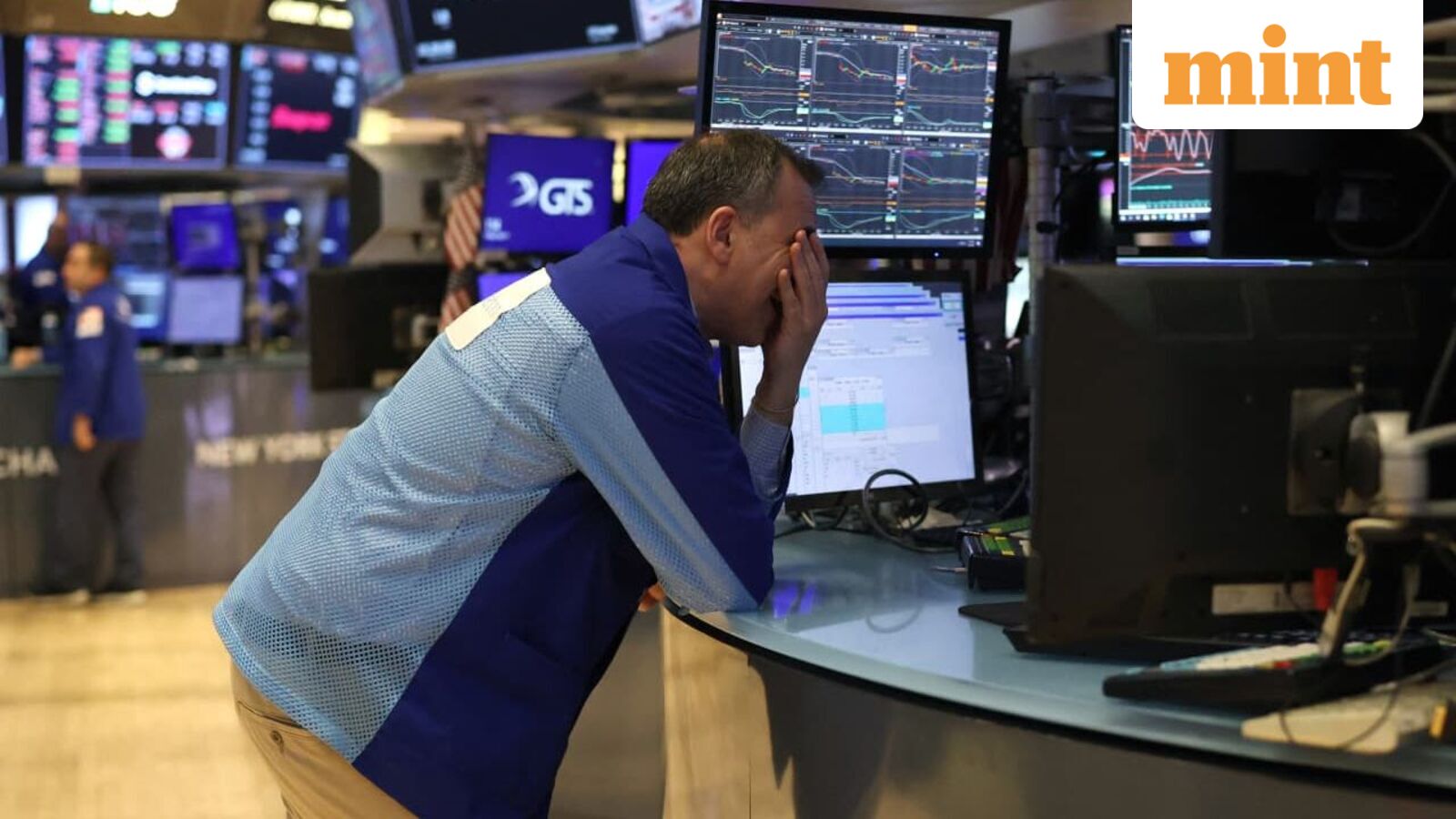
The market is certainly nervous this won’t end well. After falling for several days, the S&P 500 is down nearly 1% for the year. The Nasdaq Composite Index is off 3%, as companies like Microsoft and Nvidia drag it down. The CBOE Volatility Index or VIX—the market’s “fear gauge”—has spiked, though it’s still low compared to last April’s “Liberation Day” panic.
The problem isn’t earnings, which have been strong. Rather, investors are fretting over AI’s destructive potential. Tools like Anthropic’s Claude Opus 4.6 are threatening things like enterprise software, consulting, data analytics, and legal services. The fear is that it’s only the beginning.
Yet tech’s troubles aren’t new. As Deutsche Bank strategist Jim Reid points out, the sector peaked on Oct. 29, 2025, and is down more than 10% since then while the S&P 500 has been flat.
What’s worked instead, he notes, is almost everything but tech. Energy has led the charge, up 21%, followed by materials, consumer staples, and industrials. Aside from tech, the only sector down notably is utilities, off 4%.
Tech is hardly falling off a cliff, at least from an earnings perspective. The outlook from tech companies and corporate managers still looks better than that of the overall market, points out Dennis DeBusschere, president of 22V Research. “As a sector highly tied to the AI theme, strong earnings outlooks helps alleviate some concern about capex and profitability,” he wrote in a note on Thursday.
The economy, despite weakness in hiring, also looks reasonably strong. The economy came into 2026 “on a firm footing,” Federal Reserve Chair Jerome Powell said recently. That may mean the Fed won’t cut rates as much as the market wants, but it makes a recession or deep slowdown less likely near-term.
Since tech accounts for so much of the market, the sector still plays a pivotal role. History suggests it will be tough sledding if tech keeps faltering. As Reid points out in a note, “the longer and deeper the sell-off in a dominant sector becomes, the harder it can be for the broader index to withstand the drag.”
We wouldn’t buy this dip. But we would stick with companies and segments that are proving resilient and have growth tailwinds intact.
Two stocks that look attractive, for instance, are JPMorgan Chase and Taiwan Semiconductor, says Will McGough, deputy chief investment officer at Prime Capital Financial. JPMorgan and other banks should benefit from steeper yield curve that increases profit margins, he says, They should also benefit from a pickup in mergers and acquisitions.
Taiwan Semiconductor is up 8% this year, amid signs that AI-capital expenditures are accelerating. Capex projections for the Magnificent 7 for 2026 are now up to $600 billion, 25% above 2025 levels, notes DeBusschere. That should help Taiwan Semi, which makes chips for Nvidia, Arm Holdings, and other companies. Earnings estimates for 2026 have increased from $12.48 at the start of the year to $14.15, pushing down the company’s P/E ratio slightly to 23 times.
Small-caps are forging ahead, up about 4% this year. They would benefit from lower interest rates, and still look relatively cheap. The S&P Small Cap 600 index, which has financials, industrials and consumer discretionary stocks as its biggest weightings, trades for 16 times 2026 earnings estimates, compared to a multiple of 22 for the S&P 500.
“There are absolutely opportunities in small cap value,” says Elena Khoziaeva, co-chief investment officer and portfolio manager with Bridgeway Capital Management. Within that space, she favors financials and energy.
Don’t want to pick sides? Consider the Invesco S&P 500 Equal Weight ETF. Unlike the cap-weighted S&P 500—tilted heavily to mega-cap tech—the fund holds every stock in the index in equal proportion, none accounting at more than 0.25% of its holdings. That means companies like Microsoft, Tesla, and Palantir Technologies have roughly the same weighting as firms like Ball Corp., Coca-Cola, and General Motors.
The former three stocks are down sharply year-to-date while the latter are up nicely. Sometimes, it pays to stay on the sidelines as a fight breaks out.
Write to Paul R. La Monica at paul.lamonica@barrons.com

