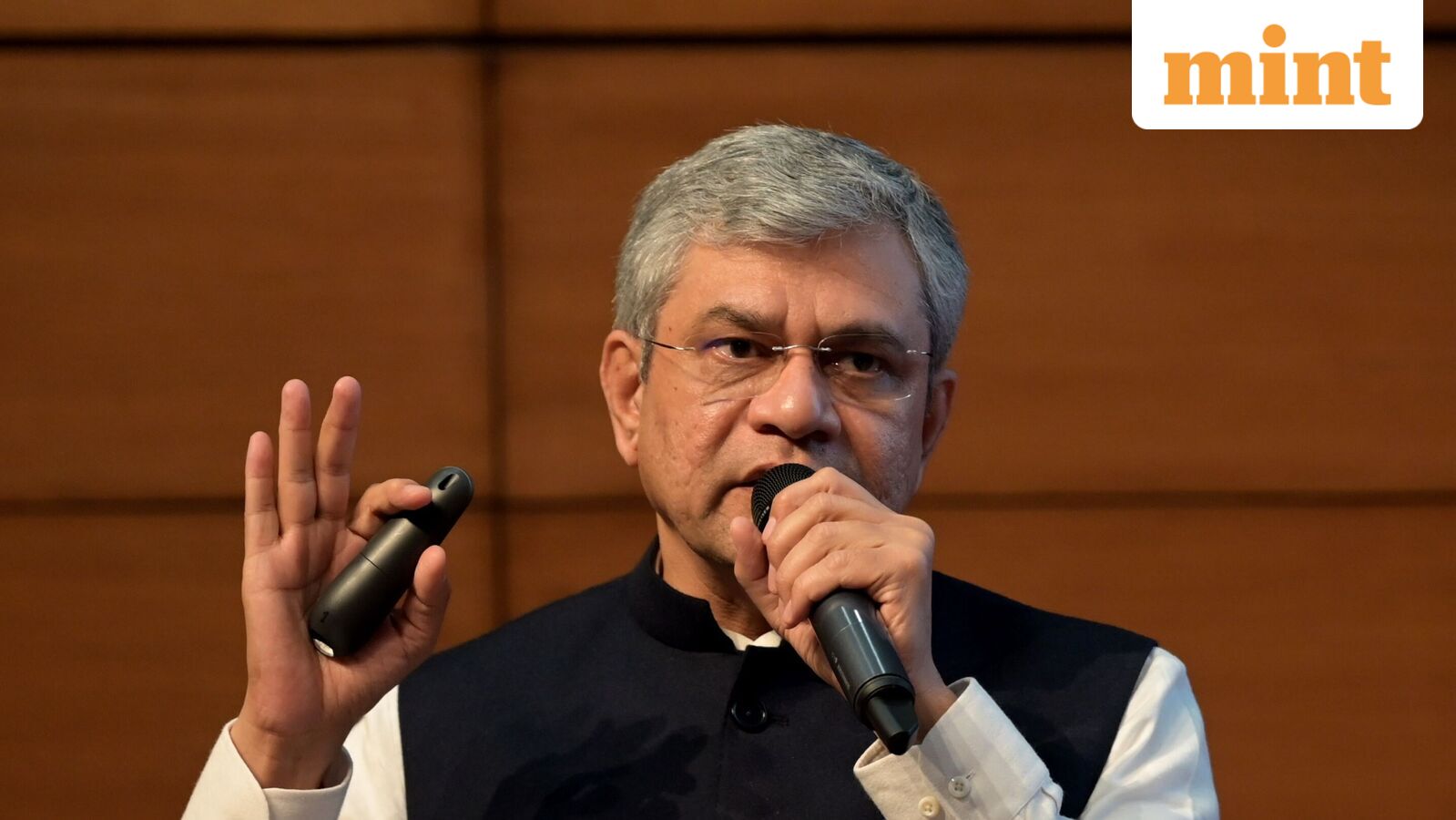
Union Minister for Information and Broadcasting Ashwini Vaishnaw on Thursday flagged the escalating threat of deepfakes and coordinated disinformation campaigns, stressing that public trust worldwide is at risk and stating that digital platforms must take responsibility for the content they host.
Speaking at the Digital News Publishers Association (DNPA) Conclave 2026, Vaishnaw highlighted that the rapid advancement of technology has made it possible to produce and disseminate manipulated content on an unprecedented scale.
He emphasized that in today’s world, the fundamental principle of trust is increasingly at risk, noting that misinformation has shifted from being isolated incidents to a widespread, systemic problem, as per HT.
“The threat is coming from so many different angles – deepfakes – which can make you believe things that have never happened anyway,” Vaishnaw mentioned, further warning about ongoing misinformation campaigns that manipulate public perception, stating, “Disinformation barrage – which can cause a sense of distrust that doesn’t exist in real life.”
He raised the concern involving creation of fabricated digital material respected individuals. “Creating synthetically generated pictures of people well respected in society, creating videos which have absolutely no correlation with reality,” he said.
‘Time has come to make that big inflectional change’
According to the minister, digital platforms must recognize the critical role they play in upholding trust in institutions that have been built over millennia. He stated that platforms are responsible for the content they host and for ensuring the online safety of children and all users.
He further warned that failure to adhere to these responsibilities would make platforms accountable, highlighting that the internet has evolved and its impact on society has grown significantly.
He also reflected on the importance of regulating AI-generated content, stating that such material should not be created without the consent of the individual whose face, voice, or personality is used.
“The time has come to make that big inflectional change. I request the platforms to cooperate with this human society’s basic needs. The society which is today asking for this change has to be respected,” he said, according to PTI.
Vaishnaw mentioned that human society relies on trust in institutions—from family and social identity to the judiciary, media, and legislature—all of which function based on the fundamental principle of trust.
Citing the media as an example, the minister explained that its credibility depends on impartiality, careful verification of information before publication, and accountability for the content it produces.
He added that every institution created by humans operates on the same basic principles, with mutual trust forming the foundation of their functioning. However, he cautioned that in today’s rapidly changing world, this fundamental trust is increasingly at risk, particularly due to emerging technologies like deepfakes, which can lead people to believe in events that never actually happened.
What is DNPA event?
The DNPA event is designed to unite policymakers, media executives, and industry experts to explore the latest trends in digital journalism and artificial intelligence.
The discussions are expected to cover regulatory frameworks, newsroom transformation, strategies for content monetization, and the broader economic landscape of digital publishing in an AI-driven era.
Mariam Mammen Mathew, Chairperson of the DNPA, noted that with AI fundamentally reshaping the news industry, it is essential for publishers, policymakers, and platforms to collaborate in creating a framework grounded in trust and responsibility.