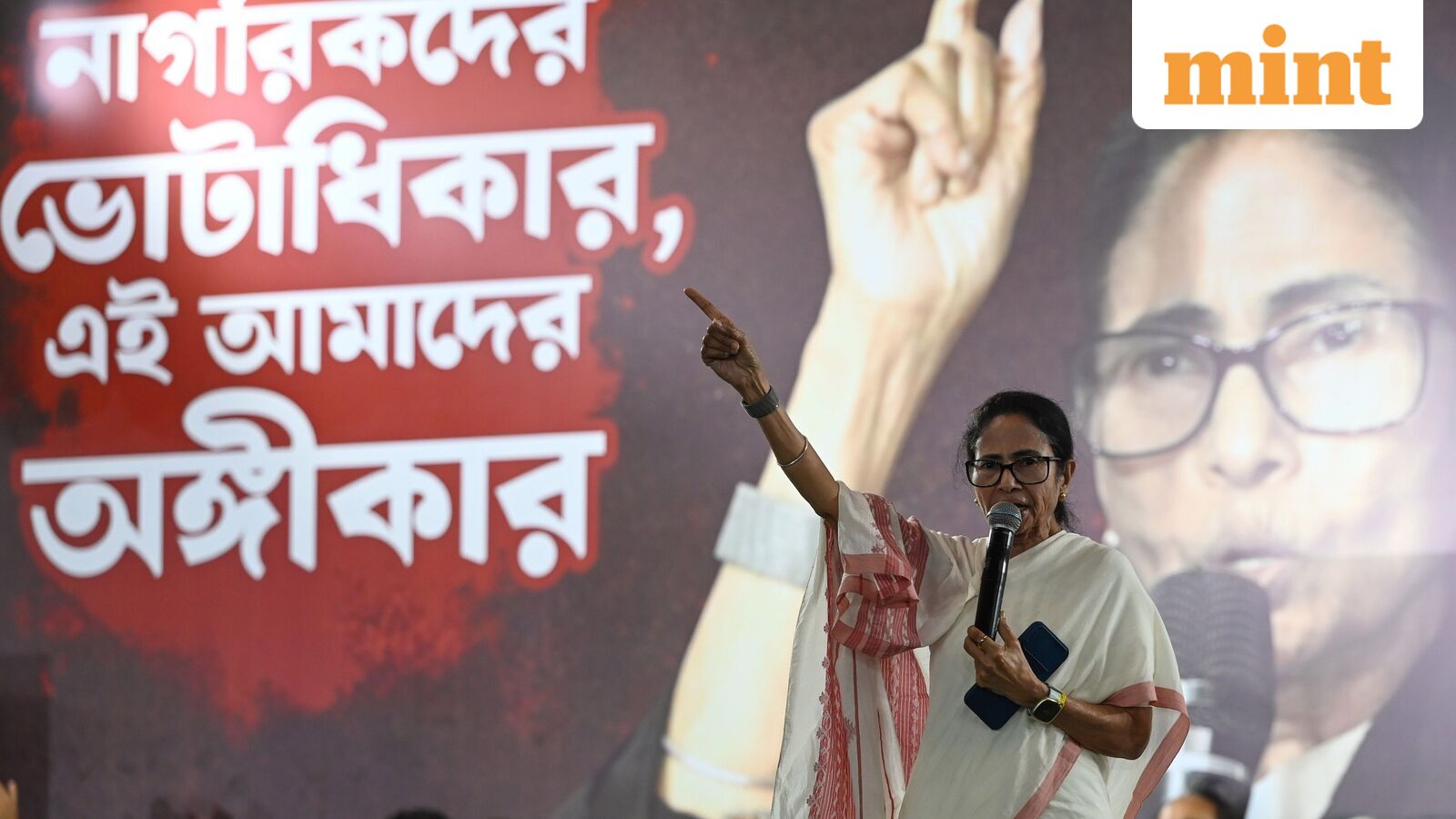
The Election Commission of India (ECI) on Sunday announced the schedule for Assembly elections in four states – West Bengal, Kerala, Tamil Nadu, and Assam–along with the Union Territory of Puducherry.
Following the announcement, the Model Code of Conduct (MCC) came into immediate effect in all poll-bound regions.
On 16 March, the ECI issued directions to the Chief Secretary and Chief Electoral Officer of the respective States/UTs regarding the immediate coming into force of the Model Code of Conduct (MCC) in the States/UTs.
The MCC shall also be applicable to the Central Government in respect of announcements/policy decisions for the States/UT concerned, the poll panel said in a statement.
“The Commission directed to ensure strict compliance with the instructions related to removal of defacement from Government, public and private property; misuse of official vehicles or Government accommodation by any political party, candidate or any other person connected with election; ban on issuance of advertisement at the cost of public exchequer,” it said.
What is the Model Code of Conduct?
The Model Code of Conduct (MCC) is a set of guidelines published by the Election Commission of India (EC) for political parties and candidates to set standards of conduct during the election campaign and polling.
The code comes into effect the moment the election dates are announced. In this poll season, the code came into effect on Sunday.
The code explains how parties can register complaints to the poll panel’s observers in case of dispute. It also instructs political leaders in power on how they should conduct themselves.
In 2019, a new addition regarding election manifestos was added, instructing parties not to issue promises which were ‘repugnant to the ideals of the Constitution’
Does MCC violation attract punishment?
The MCC is not a statutory document. It is not enforceable by any laws passed by the Parliament. Some violations may attract punishment while others may not.
Some offenses are listed as ‘electoral offences’ and ‘corrupt practices’ under the Indian Penal Code (now known as Bharatiya Nyaya Sanhita) and the Representation of the People Act, 1951. These actions will attract the appropriate punishment under these laws. These include:
-Causing tension between castes, religious or linguistic communities.
-Appealing to caste or communal feeling for securing votes.
-Using places of worship for election propaganda.
-Bribing/intimidating/impersonating voters.
-Canvassing within 100 meters of polling booths.
-Transporting voters to and from polling stations.
-Disrupting public meetings.
-Serving or distributing liquor on polling day.
-Holding public meetings 48 hours prior to the closing of polls.
What time does MCC come into force?
The MCC comes into force immediately when the election commission released the voting schedule. It ends with the commencement of the election when the results are announced. The code is applicable to all elections to the Lok Sabha and State Assemblies. It is also applicable to State Legislative Council elections from Local Bodies and from Graduates’ and Teachers’ Constituencies.
It is enforced throughout India in case of General elections, and the State up for polls in case of Legislative Assembly elections. All organizations, committees, and corporations funded by the state or central government come under MCC.
Non-political organizations that run campaigns in favor of a political party or candidate are bound to follow the EC’s specific guidelines.
How is the MCC enforced?
The Election Commission is responsible for elections. The poll panel issues guidelines to the government to shift out all officers, including police, who are posted in their home district and have completed/completing three out of four years in that district, to ensure no interference.
The MCC is implemented by the newly appointed officials, and nodal EC officers monitor compliance.
What is the guideline for parties and candidates?
Political parties and candidates are advised to refrain from commenting on all aspects of the private lives of leaders and workers of other parties, limiting criticism to their policies, programs, past records, and works.
Social media posts must also refrain from insulting rivals
The candidates and star campaigners of political parties are prohibited from engaging in activities that could potentially aggravate differences or create mutual hatred among different castes, religious, and linguistic communities. Appeals to caste or communal feelings to secure votes are also prohibited under the electoral code of conduct.
The candidates and political parties must follow norms, such as seeking permission to use public spaces and loudspeakers from the local police.
Parties and candidates must not resort to bribery, intimidation, or voter impersonation. The candidates and their parties must also not transport voters to and from polling stations or serve/distribute liquor on the day of polling.
Posters, flags, symbols or any other propaganda material shall not be displayed at the polling place. Loudspeakers cannot be used between 10 PM and 6 PM unless written permission from the local authorities is obtained.
Are there guidelines for governments?
The Union Ministries will need the Election Commission’s prior approval for any policy announcements, fiscal measures, taxation issues, and financial reliefs during the MCC’s period of force.
Similar guidelines apply to State governments: proposals must be referred to a screening committee, which will then forward them to the Chief Electoral Officers, who will not forward them to the EC unless the instructions applicable to the case are unclear.
The governments of the day are not allowed to announce financial grants or lay foundation stones for projects or schemes when MCC is in force. They must also not make promises to construct roads, provide drinking water facilities, etc., to influence voters in favor of the party in power.
Budgets cannot be presented in poll years. No new schemes can be announced to avoid impacting voters.
Also, the fresh release of funds from Members of Parliament Local Area Development (MPLAD) schemes is prohibited. No work can be started on orders that were issued prior to MCC enforcement, but work did not start on the field.
What are the guidelines for manifestos?
As per the MCC, the manifestos must not contain anything repugnant to the ideals enshrined in the Constitution. The manifesto should reflect the rationale for the welfare scheme’s promises and indicate how to meet its financial requirements.
What is the punishment for violation?
The Model Code of Conduct is crucial for maintaining the integrity of elections, ensuring all parties adhere to ethical standards.
The complaints are brought to the notice of EC observers, the Returning Officer, local district magistrates, the Chief Electoral Officer or the Election Commission itself.
In response, any directions issued by the EC, the Returning Officer, or the District Election Officer must be complied with.