
India has strongly condemned Pakistan’s recent airstrikes on Afghan territory, calling them a “flagrant violation” of international law, the UN Charter and the principle of state sovereignty. India also raised concerns at the United Nations about restrictions on trade and transit affecting the landlocked country.
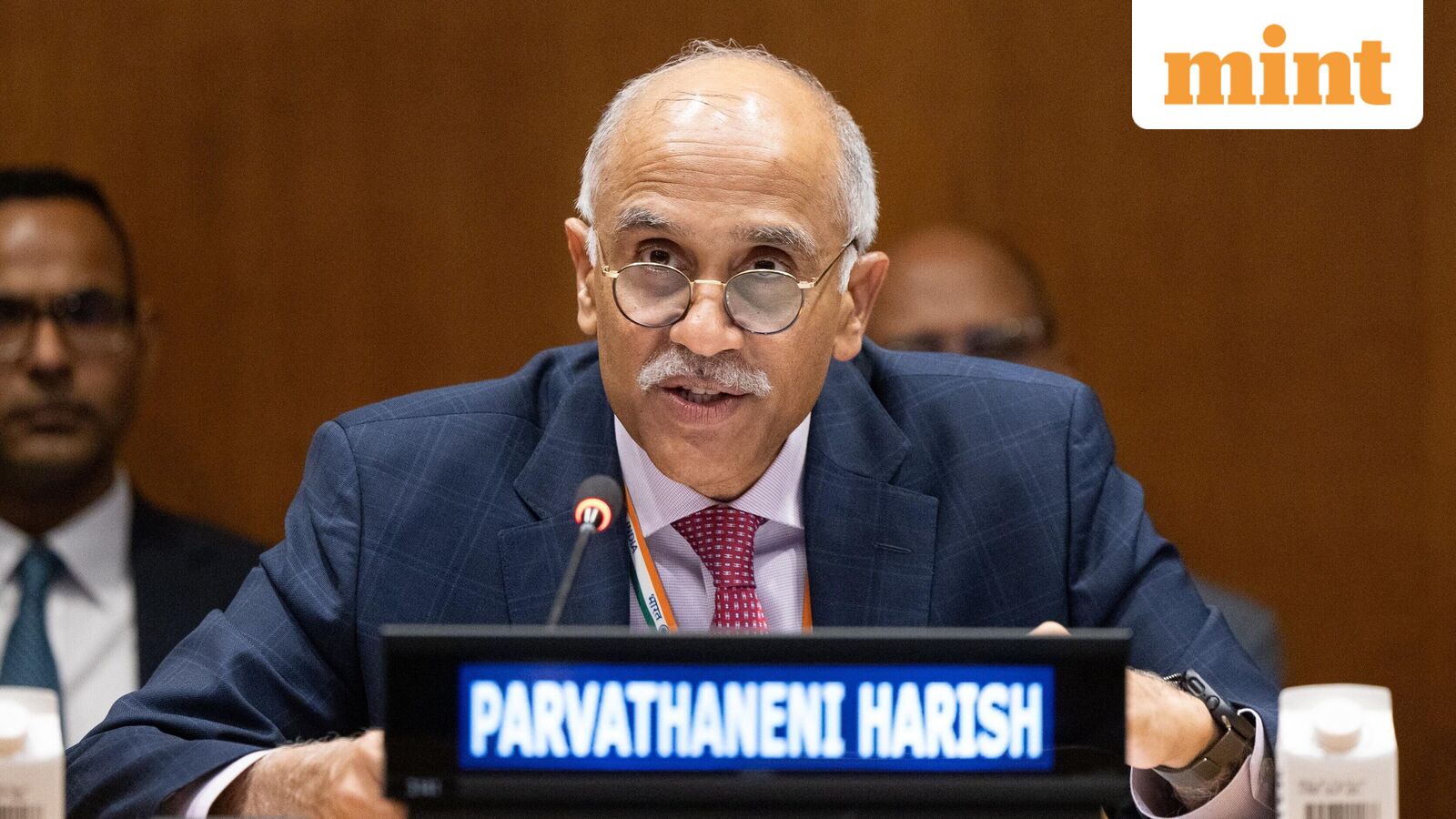
Harish Parvathaneni, India’s representative, while delivering India’s statement at the UNSC meeting on the situation in Afghanistan on Monday (local time), criticized the strikes that he said had caused heavy civilian casualties and displacement.
“India strongly condemns the airstrikes on Afghan territory which are flagrant violations of international law and the UN Charter and the principle of state sovereignty,” Parvathaneni said in a statement.
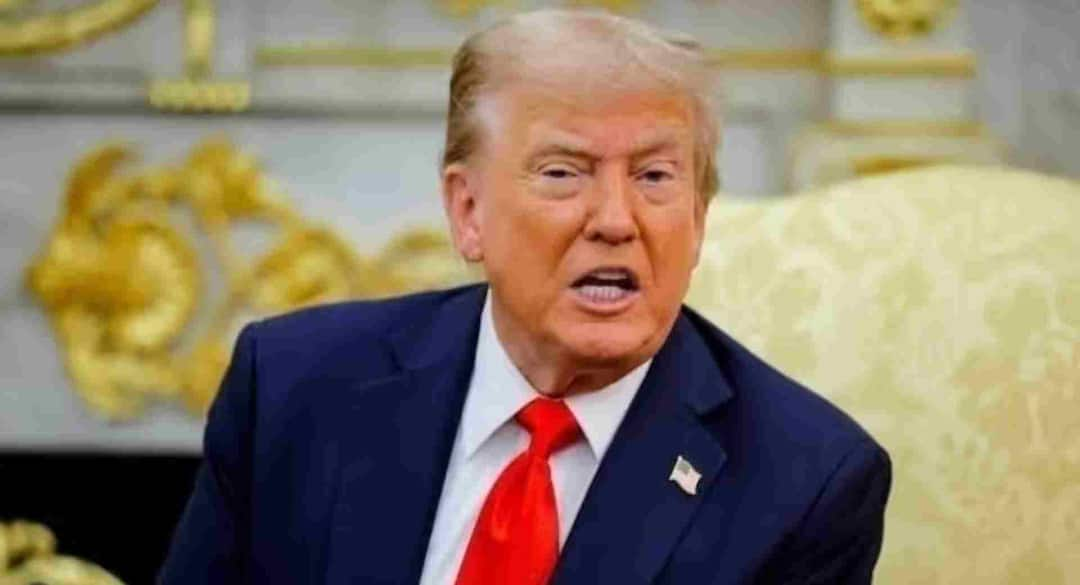
The statement comes on a day when US Secretary of State Marco Rubio formally designated Afghanistan as a state sponsor of wrongful detention, paving the way for the Trump administration to impose restrictions such as sanctions and export controls as punishment for the Taliban’s arbitrary imprisonment of Americans.
“The Taliban continues to use terrorist tactics, kidnapping individuals for ransom or to seek policy concessions. These despicable tactics need to end,” Rubio said in a statement announcing the decision.
‘Hypocritical to invoke principles of international law’
Parvathaneni said it was “hypocritical” to invoke principles of international law and Islamic solidarity while carrying out strikes during the holy month of Ramadan that had resulted in large civilian casualties.
Parvathaneni cited figures from the United Nations Assistance Mission in Afghanistan (UNAMA) and said that at least 185 innocent civilians had been killed as of 6 March 2026, around 55 per cent of whom were women and children, while more than 100,000 people had been displaced.
Last month, Pakistan struck the Afghan capital, Kabul, the city of Kandahar, where Taliban leaders are based, and other towns. Pakistan’s defense minister declared an “open war” with the Taliban government in Afghanistan, in a major escalation between the neighboring countries. The attacks were its first directly targeting Afghanistan’s government over allegations it harbors militants seeking to overthrow the Islamabad government. Afghanistan’s Taliban rulers said last Friday that they were willing to negotiate after Pakistan bombed their forces in major cities.
At the UNSC meeting, Parvathaneni also raised concerns about restrictions affecting Afghanistan’s trade and transit routes, warning that such actions worsen the vulnerabilities of landlocked developing countries.
“We reiterate our grave concern on the practice of trade and transit terrorism by denial of passage for trade and cynical closure of access for a landlocked country,” he said.
The UN envoy added that UN declarations on landlocked developing countries (LLDCs) “sound hollow” if such actions continue, arguing that the trade and transit vulnerabilities of LLDCs should not be weaponised. These actions violate World Trade Organization norms as well as provisions of the UN Charter and international law, he said.
India’s support for Afghanistan’s sovereignty
The Indian envoy also reiterated India’s support for Afghanistan’s sovereignty and territorial integrity. “We reaffirm our support for the territorial integrity, sovereignty and independence of Afghanistan,” Parvathaneni said.
Parvathaneni also stressed that terrorism remains a major global threat and called for coordinated international action against terrorist groups operating in the region.
“Terrorism remains a global scourge afflicting humanity and only coordinated efforts of the international community would ensure that ISIL and Al-Qaida and their affiliates, including Lashkar-e-Taiba and Jaish-e-Mohammed, and proxies such as The Resistance Front, along with those who facilitate their operations, no longer indulge in cross-border terrorism,” he said.
India had in February strongly condemned Pakistan’s airstrikes on Afghan territory, saying the attacks caused civilian casualties, including women and children, during the holy month of Ramadan.
The Ministry of External Affairs (MEA) spokesperson Randhir Jaiswal said, “India strongly condemns Pakistan’s airstrikes on Afghan territory that have resulted in civilian casualties, including women and children, during the holy month of Ramadan.”
“It is another attempt by Pakistan to externalize its internal failures. India reiterates its support for Afghanistan’s sovereignty, territorial integrity and independence,” the MEA said.
India’s close ties with its contiguous neighbor
At the UNSC, Parvathaneni also highlighted India’s history of close ties with its contiguous neighbor, Afghanistan, “which guides us today, in a situation when the proud Afghan people need the world’s assistance.”
With more than 500 development partnership projects across all 34 provinces, India is deepening engagement in healthcare, public infrastructure and capacity building, he said.
“We are making significant progress in healthcare support. In last 3 months, 1 million doses of immunization vaccines and 9.5 tons of anti-cancer medicines have been delivered. Other areas include food security, counter narcotics and earthquake relief and education, for both men and women,” the UN envoy said.
It is hypocritical to invoke principles of international law and Islamic solidarity while carrying out strikes during the holy month of Ramadan that had resulted in large civilian casualties.
The envoy noted that the Afghanistan Cricket team has been winning hearts wherever they have played. “Their passion in the recently-concluded ICC World Cup 2026 was notable. India is proud to be part of their journey. India’s history of close ties with its contiguous neighbour, Afghanistan, guides us today, in a situation when the proud Afghan people need the world’s assistance,” he said.
With more than 500 development partnership projects across all 34 provinces, India is deepening engagement in healthcare, public infrastructure and capacity building, he said.
Key Takeaways
- India firmly supports Afghanistan’s sovereignty and territorial integrity amid rising tensions.
- The humanitarian impact of conflicts, particularly on women and children, must be prioritized.
- International cooperation is essential to combat terrorism and uphold international law.