

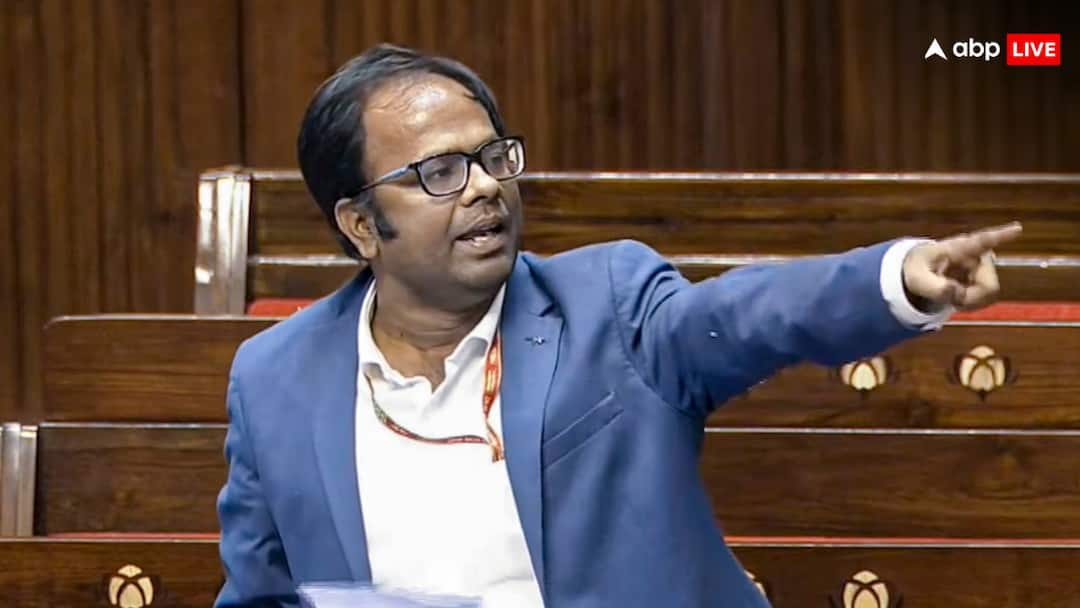
During the budget session of Parliament, along with the opposition in the Lok Sabha and Rajya Sabha, the ruling party MPs are also continuously asking questions to the Modi government at the Center on many issues. To which the government is replying with figures. In this series, on Monday (February 9, 2026), in the Rajya Sabha, the upper house of the Parliament, All India Trinamool Congress (TMC) MP Sameerul Islam also asked several questions to the Central Government related to the income of the citizens.
On behalf of the Central Government, Union Minister of State (Independent Charge) in the Ministry of Statistics and Program Implementation, Union Minister of State (Independent Charge) in the Ministry of Planning and Union Minister of State in the Ministry of Culture, Rao Inderjit Singh responded with figures to the question of the TMC MP.
TMC What question did the MP ask the government??
TMC MP in Rajya Sabha Sameerul Islam asked whether the Planning Minister would explain whether it is a fact that the average income of the top 1 per cent section of the population is almost 150 times that of the bottom 50 per cent section? Also, is it a fact that the top 10 percent of the population gets 57.75 percent of the total income, while the bottom 50 percent of the population gets only 15 percent of the income?
Union Minister answered TMC MP’s question
Answering the question of TMC MP Sameerul Islam in the House, Union Minister Rao Inderjit Singh said that data related to class-wise distribution of income in India is not compiled at the central level. Nevertheless, household consumption expenditure data collected by the National Statistical Office (NSO) can be used as a proxy to measure economic inequality based on consumption expenditure.
The minister informed that according to the new Household Consumption Expenditure Survey (2023-24), income inequality has decreased in both rural and urban areas. In rural areas the Gini coefficient has decreased from 0.266 to 0.237 by 2022-23 and in urban areas it has decreased from 0.314 to 0.284.
He said that this positive trend is also confirmed by the World Bank’s assessment (India Poverty and Equity Brief, April 2025) report. According to this, India’s Gini index is 25.5, whereas in 2011-12 it was 28.8, due to which India ranks fourth globally in terms of income equality.

