
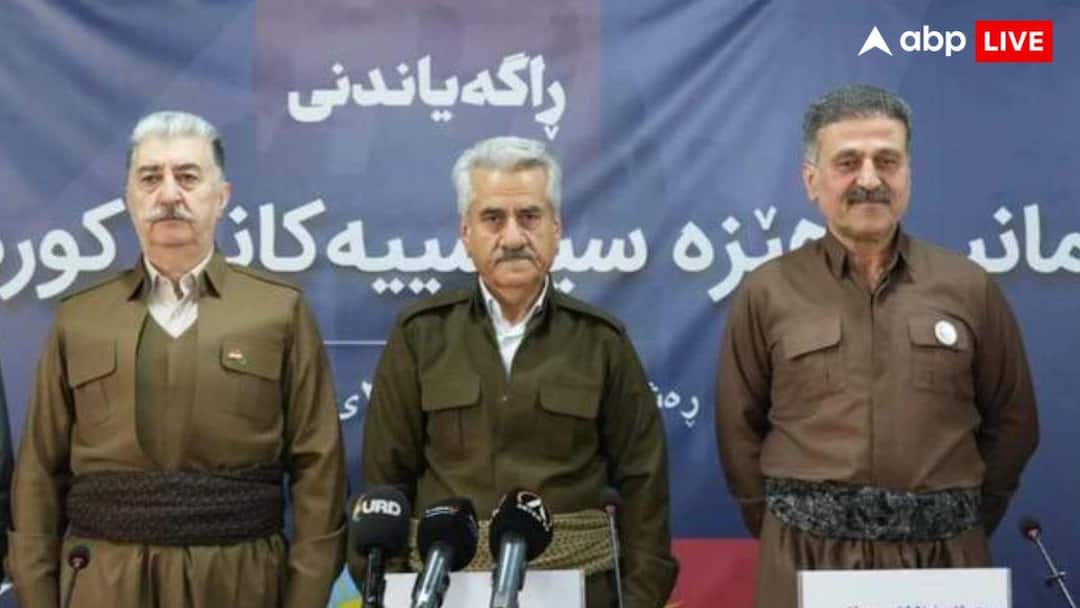
Amidst the increasing tension in the Middle East, there is now a fear that a new front will be opened against Iran. According to reports, Iranian Kurdish armed groups present in Iraq are preparing such units, which can be sent inside Iran if needed. It is being said that this possible action may also get the support of America.
However, the White House has made it clear that it has not approved any plan for Kurdish rebellion in Iran. Nevertheless, the history of cooperation between America and Kurdish organizations is quite old. Experts say that in the past also America supported Kurdish forces many times, but later left them alone. For example, after the 1991 Persian Gulf War, the US encouraged the Kurdish rebellion in Iraq, but did not intervene during subsequent attacks on the Kurds.
Where do Kurds live?
The Kurds are a large ethnic group of about 40 million people, who live mainly in Iran, Iraq, Syria and Türkiye. For a long time they either want their own independent country or have been demanding more autonomy. For this reason, they are considered to be the largest ethnic community in the world that does not have its own independent nation.
After World War I and the fall of the Ottoman Empire, the Kurds were promised their own country, but this promise was never fulfilled. Many Kurds hold the Sykes-Picot Agreement of 1916 responsible for this, which divided the borders of the Middle East in such a way that the Kurds were divided into different countries. The Kurdish community faced discrimination for a long time in many countries. In many places, restrictions were imposed on speaking their language, celebrating cultural programs or even on civil rights. For this reason, the demand for Kurdish autonomy intensified and armed organizations also emerged in some areas.
What is the situation of Kurds in Iran?
The share of Kurds in the total population of Iran is considered to be about 10 percent. They live mainly in the north-western part of the country, near the Iraq border. Many times the Kurdish community has played an important role in protests against the Iranian government. In 2022, after the death of Iranian Kurdish woman Mahsa Amini, there were massive protests across the country. She was arrested by the “Morality Police” for violating the strict dress code for women. The movement that started after her death brought to the fore women’s rights as well as the old grievances of the Kurdish community.
Will the Kurds join the fight against Iran?
At the moment it is not clear whether Kurdish armed groups will actually join the fight against Iran. Kurdish organizations have crossed borders to help each other before, most notably during the Syrian civil war. However, Iraq’s Kurdish leaders have currently distanced themselves from involvement in any new conflict. The Kurdistan Regional Government, located in the north of Iraq, has said that it is not part of any campaign to increase war and tension in the region.
Iraqi First Lady Shanaz Ibrahim Ahmed also issued a statement saying that Iraq’s Kurds have achieved stability and respect after a long struggle and do not want to become “pawns” of the world’s superpowers. At one time, Kurdish forces in Syria were America’s closest allies in the fight against ISIS. They protected US military bases and also operated camps and prisons holding thousands of ISIS fighters.
But now regional politics is changing. Changes are also being seen in Kurdish-American relations due to America’s inclination towards the new government of Syria. In the current circumstances of the Middle East, it will be important to see whether Kurdish groups actually become part of a new conflict against Iran.
read this also
West Bengal: Center takes action regarding President’s protocol issue, Home Ministry seeks report from Chief Secretary of Bengal, know the matter