

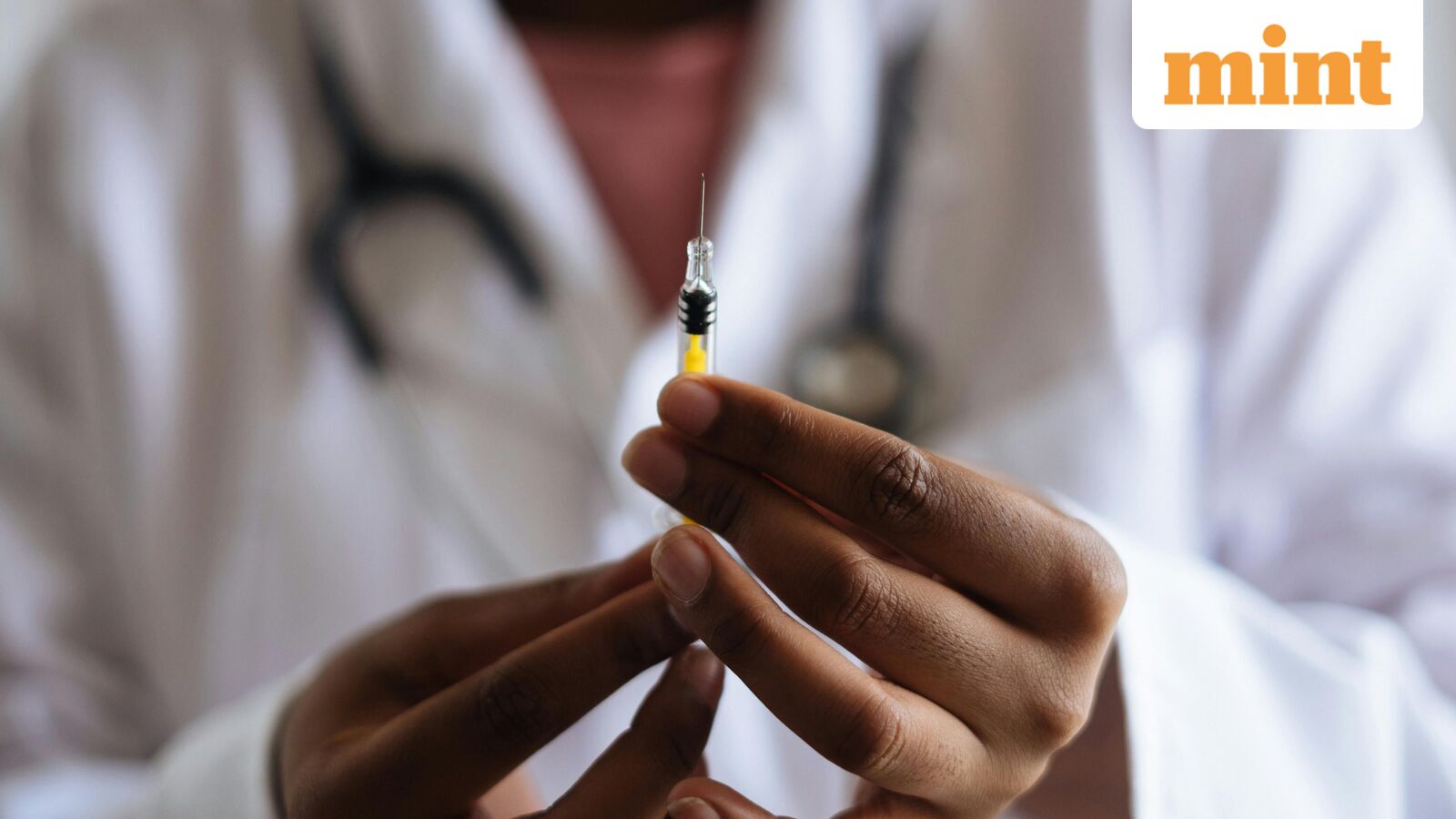
New Delhi: The Center has directed all government and private hospitals to keep permanent stocks of anti-rabies vaccines (ARV) and rabies immunoglobulin (RIG), as dog-bite incidents rise across the country, threatening public health.
The government has introduced extensive medical preparedness protocols to prevent the intrusion of stray dogs into high-traffic institutional areas, including schools, hospitals, sports complexes, bus depots, and railway stations, according to two government officials and a document reviewed by Mint.
The directive issued by the health and family welfare ministry to all central ministries, departments, states and Union territories in December, and reviewed by Mint, states, “All government and private hospitals shall maintain a mandatory stock of anti-rabies vaccines and immunoglobulin all the time.”
Anti-rabies vaccine and rabies immunoglobulin are both used for post-exposure prophylaxis (PEP), or treatment, against rabies, but they differ fundamentally in function: ARV stimulates the body to produce its own antibodies for long-term protection, whereas RIG provides immediate, pre-formed antibodies for instant, short-term, passive protection.
India has an installed capacity to produce 53.6 million doses of ARV annually, according to the Association for Prevention and Control of Rabies in India (APCRI), a society of medical and veterinary professionals for rabies elimination.
“As per installed capacity of DCGI (Drug Controller General of India), we have enough capacity for manufacturing both ARV (anti-rabies vaccine) and ARS (anti-rabies serum). There is no issue, but the problem that occurs is that sometimes there is a gap in the projection of demand and the timely delivery by the manufacturers. Because of this, sometimes there’s a stock-out position. Otherwise, we have enough stock,” said a senior government official requesting anonymity.
Leading Indian pharmaceutical companies manufacturing rabies vaccines include the Serum Institute of India, Bharat Serums and Vaccines, and Bharat Biotech. The rabies-specific veterinary vaccine market in India is currently valued at $37.6 million, according to Grand View Research, a market research firm.
Significant public health risk
Rabies, a preventable yet fatal viral disease, continues to pose a significant public health risk worldwide. According to the World Health Organization (WHO), dogs are responsible for nearly 96% of human rabies cases, with the remaining 4% caused by bites from cats, monkeys, mongooses, wild cats, and cattle.
The health ministry is intensifying its efforts to address a significant rise in dog-bite cases, comply with strict Supreme Court mandates, and achieve the national objective of eliminating rabies by 2030.
As part of the Centre’ plan, every institution is now required to designate a nodal officer responsible for campus cleanliness and for ensuring that stray dogs do not enter and inhabit the premises. The contact details of these nodal officers shall be displayed at the entrance and notified to the jurisdictional municipal body to ensure the effective exclusion of stray animals.
Management teams for stadiums and sports complexes will also have to ensure the deployment of security and ground-keeping personnel specifically tasked with a round-the-clock vigil against the entry and habitation of stray dogs. Railway authorities, state transport corporations, and municipal bodies overseeing bus stands and inter-state bus terminals (ISBT) have also been tasked to ensure these premises are effectively secured to prevent the movement of stray dogs.
Queries emailed to the health and family welfare ministry, and Bharat Biotech on Monday remained unanswered till press time. The Pune-based Serum Institute did not formally respond to Mint’s queries.
However, a company official, on the condition of anonymity, said: “We and other manufacturers making the rabies vaccine have enough quantity and supplying as per India’s requirement. There is enough capacity for India. Everybody is selling their full stock. Domestically, there is absolutely enough for India.”
“Bharat Serums & Vaccines currently supplies over 130,000 doses of anti-rabies vaccines and rabies immunoglobulins every month across India’s public and private healthcare systems,” Sanjiv Navangul, managing director and chief executive officer of Bharat Serums and Vaccines Ltd, said. “In line with the government’s directive on maintaining permanent stocks, we have proactively strengthened our manufacturing capacity and forward planning to support the anticipated increase in domestic demand. This includes optimizing production schedules, enhancing operational efficiencies, and further reinforcing our quality systems to ensure consistent and timely supplies.”
“In parallel, we are strengthening our supply chain and distribution capabilities with a sharper focus on private healthcare institutions. This involves closer coordination with channel partners, improved demand forecasting aligned with hospital procurement cycles, and faster replenishment mechanisms to minimize stock-outs. We are also deploying data-led planning and procurement systems to ensure vaccines are available precisely where and when healthcare providers need them, without disruption,” Navangul said.
Immediate attention needed
Health experts say that animal bites require immediate attention, as they can cause rabies infection.
Dr. Dilip Bhanushali, president of Indian Medical Association (IMA), said that any animal bite or scratch, whether from a pet or a stray animal, requires prompt medical attention.
“Rabies is a critical medical emergency with a 100% mortality rate once symptoms appear. There are currently no medicines in the world capable of saving a patient once the disease takes hold, making it fatal. The treatment must be sought immediately, irrespective of whether the dog has been vaccinated or not,” Dr. Bhanushali said, adding that immediate post-exposure vaccination is the only way to ensure survival.
The treatment involves two distinct components: the rabies vaccine for long-term immunity, and rabies serum, or immunoglobulin, for immediate protection. As per information available on the portal of the National Rabies Control Programme, the vaccine is administered either through five intramuscular injections on days 0, 3, 7, 14, and 28 from the dog-bite, or via a cost-effective intradermal route involving two smaller injections across four visits on days 0, 3, 7, and 28.
While government hospitals provide both the vaccine and life-saving serum free of cost, private treatment is expensive. In private clinics, the vaccine course costs up to ₹2,500, while the critical serum can cost between ₹1,500 and ₹8,000.
Meanwhile, as part of the health ministry’s communication, all schools and educational institutions have been asked to educate students and staff on preventive behavior around animals, essential first-aid for bites, and immediate reporting protocols.
“Proper waste management systems shall be implemented to eliminate food sources that attract animals; regular inspections shall be conducted to detect and address the presence of stray dogs,” the communication added.
Amid rise in dog bites
The preparedness push comes in the backdrop of a sharp spike in the case of dog-bite incidents. According to official reports from the ministry of fisheries, animal husbandry and dairying (MoFAHD), dog-bite cases surged 70% from 2,189,909 in 2022 to 3,715,713 in 2024.
The crisis intensified in the 2025 calendar year, with January 2025 alone recording 429,664 cases. Human fatalities have also seen a sharp rise, climbing from 21 in 2022 to 54 in 2024. While the 2019 Livestock Census officially pegged India’s stray dog population at 15.3 million, independent estimates from the State of Pet Homelessness Index by Mars Petcare states that the country’ start dog population could be as high as 62 million, far exceeding the official 2019 census figures.
The Center has been intensifying its efforts to curb the dog-bite menace and may announce a first-of-its-kind dedicated national sterilization scheme for animal birth control (ABC) in the upcoming Union budget to reduce human-dog conflict, Mint reported earlier.
“There is no shortage of rabies vaccine. Market-wise, serum is also available, and there is government supply as well. It depends on the state whether they are purchasing it or not, but there is no shortage of serum in the market. There is no shortage of supply,” said Dr. HK Goel, secretary general of the Association for the Prevention and Control of Rabies in India.
Prataprao Jadhav, minister of state for health and family welfare, in a written reply to the Lok Sabha on 25 July 25 last year, said that states and Union territories had procured approximately 1.33 crore (13.3 million) vials of ARV, of which 1.26 crore (12.6 million) vials were utilized.
India runs the National Rabies Control Program (NRCP) focused on strengthening surveillance, intersectoral coordination, and providing medical training for animal bite management. It also ensures the free provision of anti-rabies vaccines and conducts awareness campaigns to prevent and control the disease.
“Fortis Healthcare is fully committed to complying with all statutory and regulatory directions issued by the Ministry of Health and relevant state authorities. Our hospitals follow established protocols for the availability of essential vaccines and emergency medicines, including anti-rabies vaccines and immunoglobulins, in line with applicable guidelines,” a Fortis Healthcare spokesperson said.
“We have received the communication from the Delhi Nursing Home Cell, and our hospitals in Delhi have complied with the stipulated requirements. Across our network, we will continue to review and implement all directions as and when they are formally issued by the respective authorities. Patient safety and public health preparedness remain a priority for Fortis Healthcare, and we work closely with health authorities to ensure adherence to all mandated norms,” the spokesperson added.

