

China, the world’s top carbon emitter, is rapidly positioning itself as a green superpower, even as the Trump administration backtracks on US climate goals, according to the BBC.
In Inner Mongolia’s deserts, vast solar farms now stretch across golden dunes, turning one of the harshest landscapes into a hub of clean energy. Rows of aluminium-framed solar panels capture the intense desert sun, as projects in the Kubuqi desert have transformed over 4,600 hectares of land, restoring vegetation and offering hope to local farmers.
US backtracks on green energy commitments
Meanwhile, in Washington, the Trump administration has recently rolled back a major scientific determination underpinning federal greenhouse gas reduction measures, signaling a retreat from green energy commitments.
How is China leading the renewables revolution?
Thousands of farmers in these parts, for decades, have watched their grazing lands shrink as vegetation thinned, topsoil blew away, and the land lost its life due to overgrazing and rising temperatures.
But, with the recent changes that Beijing has planned, some of those farmers are now welcoming it.
In the Kubuqi desert, in the past decade, over 46,000 hectares of that land have been transformed by solar bases, which include panels in the shape of a horse, in a symbolic tribute to the speed and power of the technological transformation taking place.
The report, citing scientists, suggests that the solar panels act as shade and windbreaks, helping protect the grass and restoring the land. While it doesn’t stop the desert, it seems to have a modest impact, one welcomed by the farmers and giving them hope.
According to Xin Guiyi, a farmer who has lived there all his life, “Wind and solar energy are abundant in Inner Mongolia. We can contribute to our country.” While that sentiment may not be shared everywhere, Beijing’s determination to turn China into a global renewable energy powerhouse is increasingly visible across its sprawling terrain.
Renewable hubs expand in China
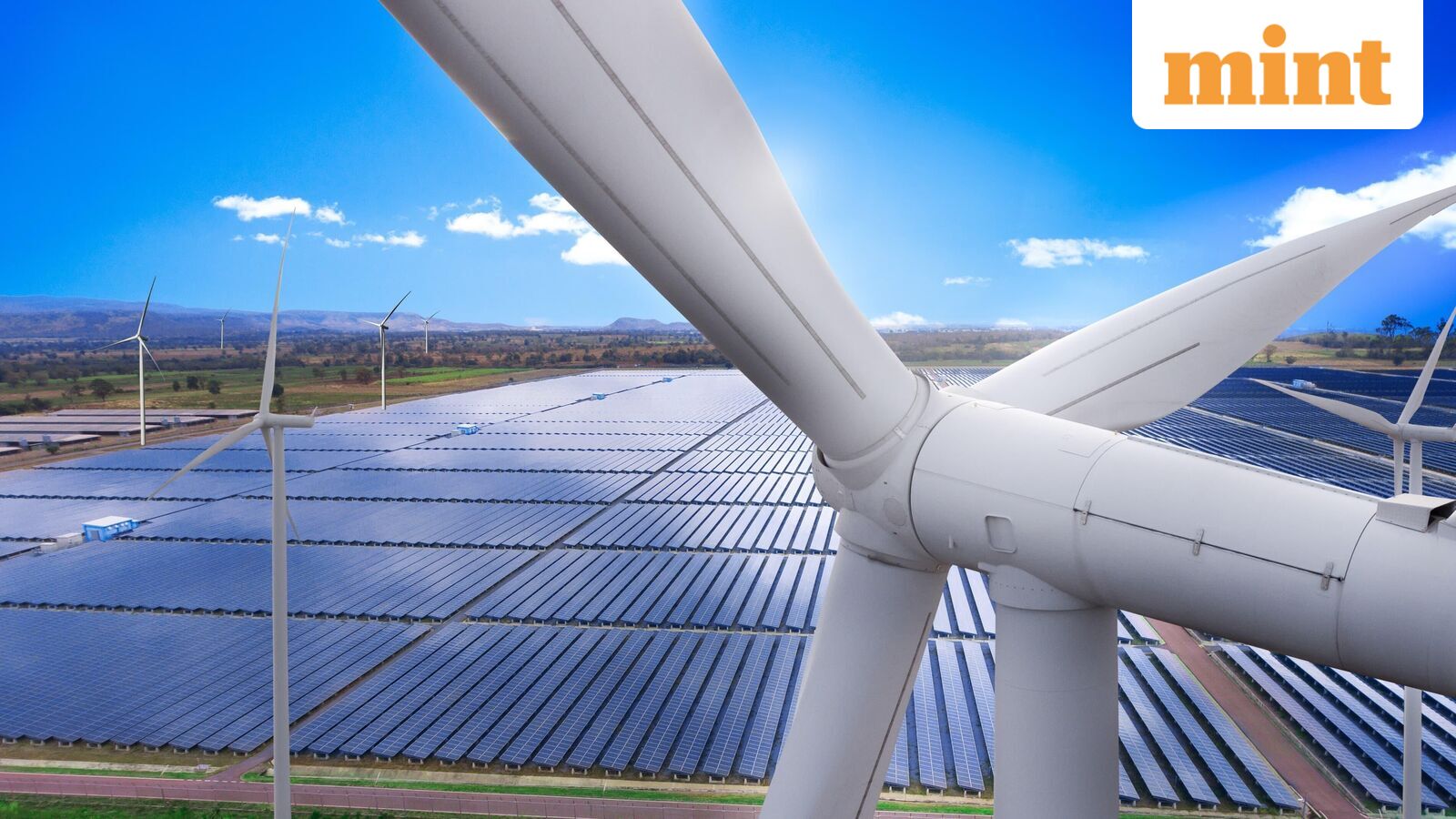
In Gansu and Xinjiang, once-quiet hills and wide plains have been transformed into vast wind and solar energy hubs. Rows of gleaming solar panels stretch beneath towering wind turbines, and together they produce enough electricity to power millions of homes.
The country is now building an unmatched green energy grid. This comes after Chinese President Xi Jinping, in 2020, told the United Nations that Beijing would aim to achieve peak emissions by 2030 and carbon neutrality by 2060, a goal that now seems to be within reach. Citing analysts from Carbon Brief, the report added that CO2 emissions have either remained flat or have been falling for nearly two years now.
China grows in solar capacity
In 2010, China operated only a small number of major solar farms, generating about 1 gigawatt of power, an amount sufficient to supply electricity to roughly 100,000 households, depending on estimates. It was generating less electricity from the Sun than six countries, including Germany, Spain, the United States, Japan, Italy, and South Korea.
China began building rapidly, and by 2018, the country had more than 7,000 of these solar farms, with the total capacity touching 111 GW, which was three times the amount needed to power the United Kingdom. Over the past eight years, however, the country has moved toward constructing ultra-large renewable projects, with individual solar farms now exceeding 1GW (1,000 megawatts) in capacity.
China launched a solar thermal power plant in the Gobi Desert
Back in October 2025, the South China Morning Post reported that China launched a new solar thermal power plant in the Gobi Desert, marking a first for the country in deploying this particular configuration of the technology. According to the report, the project is being promoted as a more economical and efficient model that could be expanded in the future.
Developed by China Three Gorges Corporation, the facility in Guazhou County features a dual-tower design connected to a single turbine system. Around 27,000 mirrors have been set up across the site to direct sunlight toward two towers, each about 200 meters tall and located roughly a kilometer apart. The focused solar energy generates intense heat, which is used to melt and store molten salt at temperatures reaching approximately 570°C (1,058°F). This stored thermal energy is later converted into steam to power the turbines, enabling the plant to continue generating electricity even after sunset or during periods of low sunlight.

