

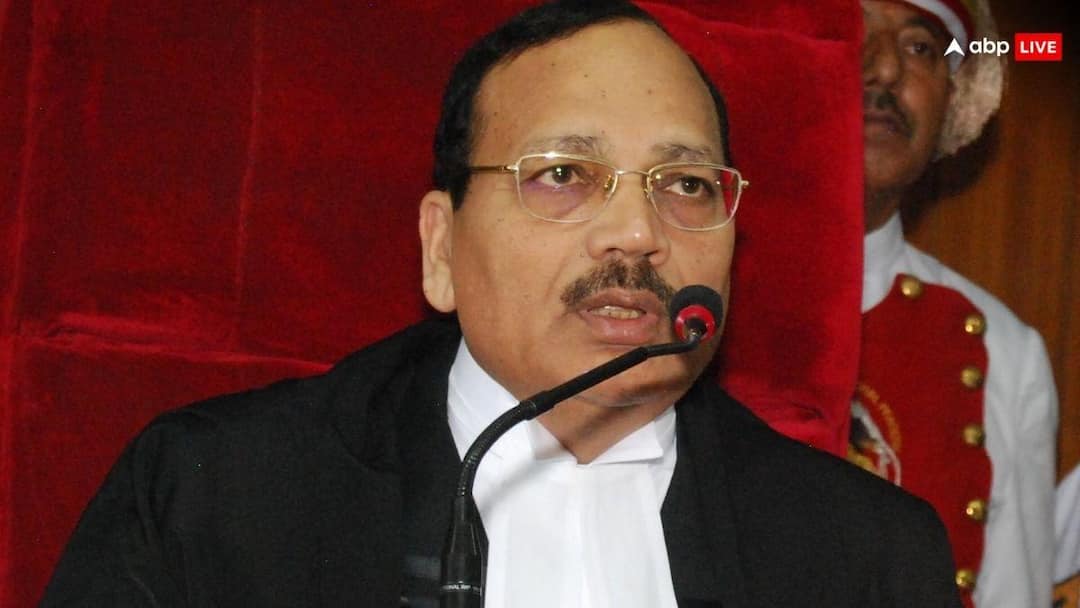
The Supreme Court has assured an early hearing in the case of inclusion of a chapter on ‘Judicial Corruption’ in the NCERT Class 8 book. Chief Justice Surya Kant said, ‘I have taken cognizance of the matter. No one will be allowed to defame the judiciary. The case will be heard soon.
The Chief Justice gave this information on Wednesday (February 25, 2026) when senior advocates Kapil Sibal and Abhishek Manu Singhvi raised the matter before him. CJI Surya Kant said, ‘Lawyers and judges all over the country are worried about this. I will play my role as the head of the judiciary.
The court has strongly opposed the chapter of the Social Science book of Class-8 of the National Council of Educational Research and Training (NCERT), in which there is mention of ‘corruption in the judiciary’. Justice Joymalya Bagchi has called it an attack on the basic structure of the Constitution.
What is in the new book of NCERT Class 8?
According to PTI report, NCERT’s new social science book for class 8 states that corruption, large number of pending cases and adequate shortage of judges are among the challenges faced by the judicial system. The chapter on ‘Corruption in the Judiciary’ states that judges are bound by a code of conduct which not only regulates their conduct in court, but also their conduct outside the court. The chapter titled ‘Role of the Judiciary in our Society’ goes beyond explaining the hierarchy of courts and access to justice to addressing the challenges faced by the judicial system.
The earlier edition of this book mainly focused on the structure and role of the courts. It is written in the new chapter, ‘People have to face corruption at various levels of the judiciary. This may further aggravate the issue of access to justice for the poor and the underprivileged. Therefore, continuous efforts are being made at the state and central levels to increase trust and transparency in the judicial system, including the use of technology, and wherever cases of corruption come to light, prompt and decisive action is being taken against them.’
According to the book, the estimated number of cases pending in the Supreme Court is 81,000, 62.40 lakh cases are pending in the High Courts and 4.70 crore cases are pending in the District and Subordinate Courts.
The book outlines the internal accountability systems of the judiciary and mentions the established process for receiving complaints, which operates through the Centralized Public Grievance Redress and Monitoring System (CPGRAMS).
It is written in the book that between 2017 and 2021, more than 1,600 complaints were received through this mechanism. Former Chief Justice of the country Bhushan Ramakrishna Gavai has also been mentioned in the book. In July 2025, he had said that incidents of corruption and misconduct within the judiciary have a negative impact on public trust.
Quoting former CJI BR Gavai, the book says, ‘However, the path to restoring this trust lies in prompt, decisive and transparent action to address these issues… Transparency and accountability are important virtues of democratic values.’
(With inputs from Nipun Sehgal)

