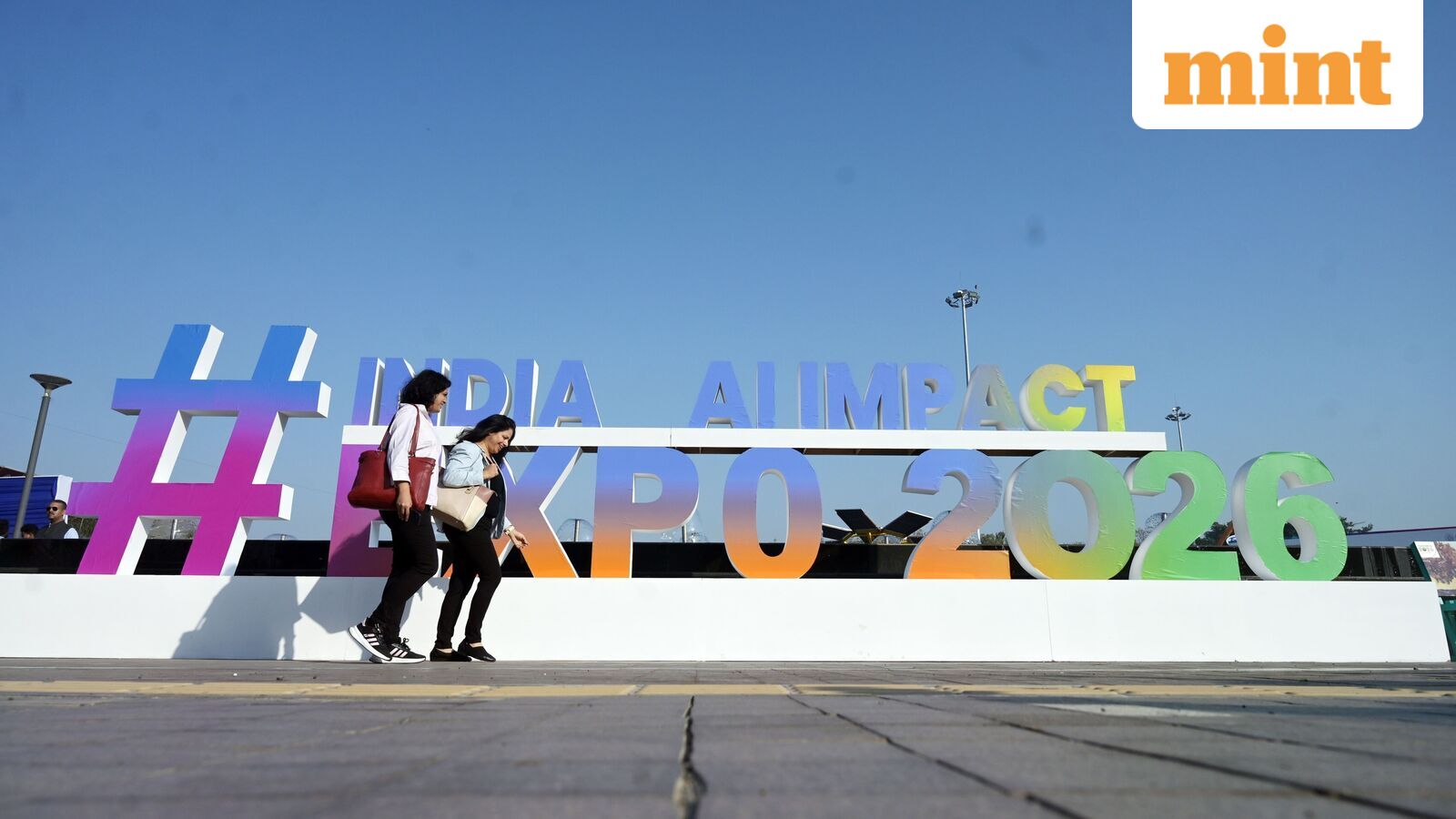

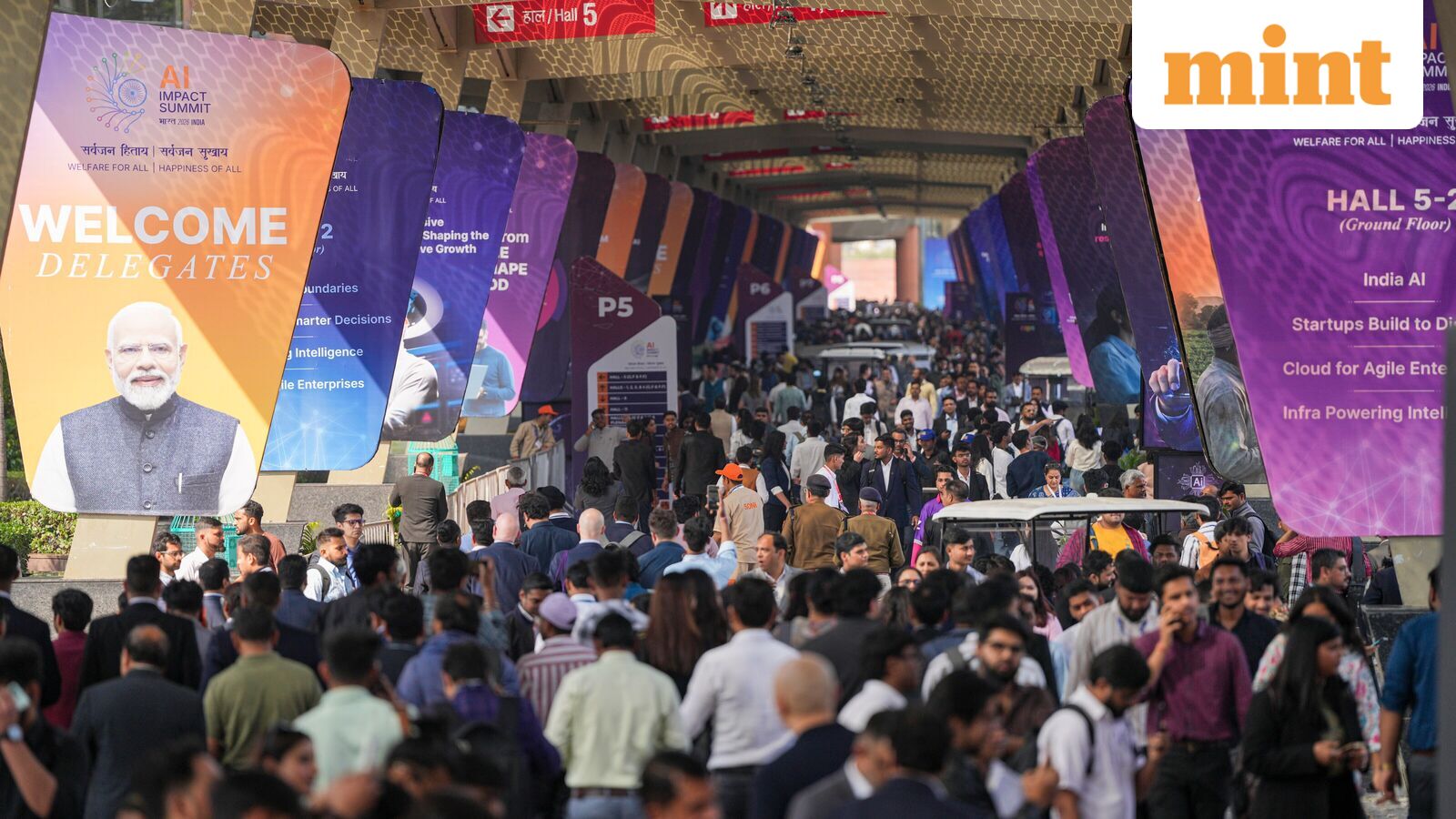
New Delhi: After months of planning and coordination, the first day of India’s big-ticket AI Impact Summit descended into chaos, with a patchy mobile network and a breakdown in organization—leaving participants from around the world disappointed halfway through. However, exhibitors remained hopeful of larger footfall over the next four days, as the presence of Big Tech corporations and some of the world’s largest technology enterprises boosted hope of business returns.
Amid security preparations in anticipation of Prime Minister Modi’s inauguration of the AI expo, thousands of visitors, exhibitors, foreign delegates and even VIP speakers found themselves stranded without access to basic necessities such as water or stuck in overcrowded hallways.
Delegates from the US and South Africa, as well as multiple exhibitors that mint spoke with, were plagued by a lack of clarity from on-the-ground organizing and security staff, poor crowd management, and even stalled access to basic necessities such as network connectivity, food, and water.
“We paid a substantial, hefty fee for a large-scale exhibition, but for most of the day, there was no footfall as people were confused about entry protocol, and we were asked to leave halfway through the day because of the prime minister’s arrival,” said Romil Rungta, head of sales at Chennai-based YuVerse. “But overall, there are organizational issues where no one can get in or out for even a bottle of water, and the crowd coming in is also difficult to justify in terms of the money that we have invested.”
Foreign attendees, too, found the going difficult. Daniel Otieno, a delegate from Kenya, is an AI literacy specialist who uses AI to help those with learning disabilities. He said that navigating the venue was one of the biggest challenges. “On top of that, the security personnel were not equipped well enough to understand global delegates and guide them,” Otieno said.
Teething problems?
Some, though, were hopeful that the next few days would yield greater returns.
“For a startup of our stage and size, the ability to get this scale of exposure is a massive opportunity. There are also global tech exhibitors and executives, all of which can bolster our scope to get noticed,” said Ishan Kapoor, founder of AI startup, Infutrix Technologies. The startup is an exhibitor at the summit.
Akankshashree, business development manager at fellow early-stage startup AngelBot, echoed Kapoor. “There could be improvements in the way security protocol is conveyed, but this platform is massive for us to increase our understanding of what we need to work on,” she said.
Attendees also took to the social media platform
“…meanwhile – exhibitors, delegates, startup founders left outside. No water. No clarity. Media shows celebration. Ground reality was chaos. If access was limited to select high-value guests, just say it upfront. Don’t mobilize the ecosystem and then displace them. This is not how we build India’s AI future,” said Punit Jain, founder of Reskill, in a post on X.
Patchy telecom network coverage
Faltering network coverage at the venue, coupled with security protocols that hindered entry and exit points, were the key issues attendees questioned.
Even as telecom operators said they added network sites both indoors and outdoors to improve connectivity, delegates complained about a patchy network at the Bharat Mandapam, where sessions were held.
“We at least expected to have WiFi connectivity at the summit. But it is not there and is causing issues,” Otieno said. Another delegate from South Africa also complained about not being able to connect via WiFi and a weak international roaming network.
“Airtel has strengthened its network infrastructure to deliver seamless, high‑speed connectivity for the Summit beginning 16 February. With thousands of attendees expected, Airtel has deployed a future‑ready, multi‑layered network to ensure uninterrupted performance,” an Airtel spokesperson said.
“All venues are fully fiberized with four‑way protected fiber paths and enhanced through 55 small cells across the Bharat Mandapam complex and 12 additional outdoor sites, while existing sites have been optimized and augmented to serve the venues, traffic routes, and entry‑exit corridors,” the spokesperson said, adding the telecom operator will monitor all roaming links to ensure visitors enjoy a superior, uninterrupted experience on the Airtel 5G Plus network.
In response to mint‘s queries, a Vodafone Idea spokesperson said, “We have expanded comprehensive venue coverage by deploying 22 dedicated 4G/5G sites…Core network reliability was further bolstered through VoLTE setup upgrades, alongside the launch of VoLTE for international roamers in Delhi to ensure seamless connectivity with premium voice quality.”
Reliance Jio also deployed 8-10 sites, keeping in view the traffic that summits of this kind attract, an industry executive said, adding that weak connectivity could be due to jammers being deployed during the prime minister’s visit to the expo.
Security forces and the traffic police department said they had been facing flak for no fault of theirs, as they had not received clear instructions on their duties and responsibilities.
A security personnel from Delhi police, on condition of anonymity, said, “We received no security briefing, and since we reported directly for duty today, we’ve been completely in the dark. We’re unaware of even the basic plan or venue layout, and we’ve been following random, uncoordinated instructions from seniors. Positioned on the front-facing line, we’re left dealing with a shouting crowd, but feel helpless, we don’t know what to tell them.”
Security, traffic mismanagement
Delhi traffic department officials told mint They have been reporting to the venue and preparing security arrangements since 12 February. “We’ve gotten used to the shouting after so many years in the force. There’s been plenty today over the poor on-ground arrangements, but we’ve turned a deaf ear,” a Delhi traffic police official said.
A senior industry executive, who was also speaking at the summit, added that “it was not just attendees—even speakers and those with high-level access were finding it difficult to enter or exit meeting rooms and the venue in general.”
Delegates, however, were hopeful that the authorities would take note of the issues and that conditions might improve at the summit over the next few days.