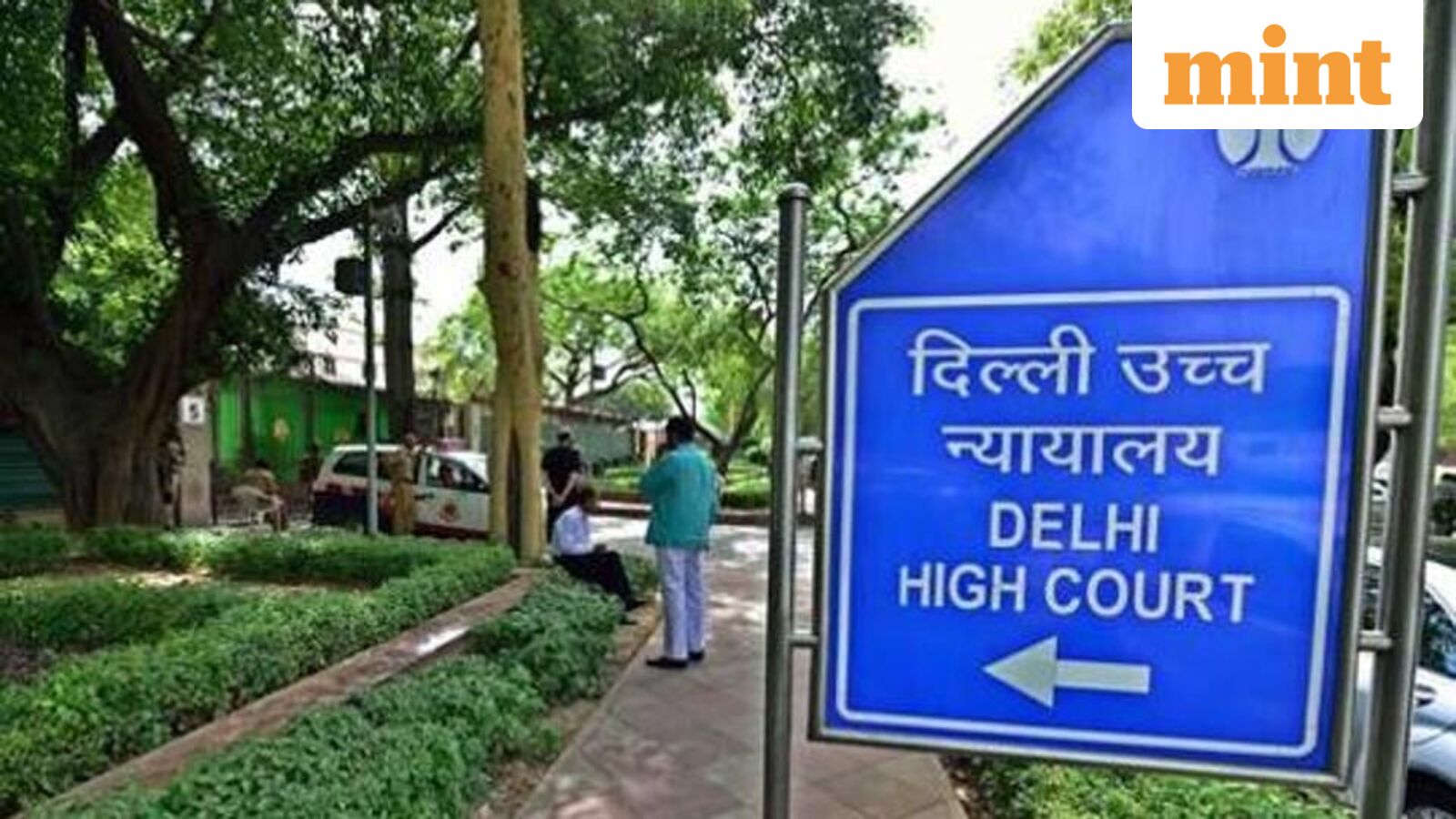
The Delhi High Court on Tuesday directed social media platforms, including
What Delhi High Court Ordered — and What It Did Not
Justice Mini Pushkarna ruled that a prima facie case of defamation had been established and issued a firm interim injunction, reported Bar and Bench. The order was unambiguous: “Defendants are restrained from publishing or circulating the contents, on any platform whatsoever, the details of which are given in the plaint.”
The court gave platforms 24 hours to comply. If uploaders failed to remove the flagged content within that window, the social media companies themselves were required to block access to the posts, videos and links in question.
The Delhi High Court also granted Himayani Puri the liberty to flag similar new content as and when it appears, with platforms obliged to act on such notifications.
However, the high court stopped short of issuing a global blocking order, at least for now. Justice Pushkarna clarified that the content blocking order would, for the time being, be confined to India. “For the time being, it [blocking order] will be for India. Let them file a reply, and then we will consider,” Bar and Bench quoted the Delhi HC judge.
The operative order reflected that position: “The present injunction order will operate within the Indian domain with respect to the video/content uploaded from the IP addresses within India… In so far as URLs/links that have been uploaded from outside India, the defendants are directed to ensure that they are blocked in India.”
What Himayani Puri Alleged: ‘Personal Malice and Political Malice’
Himayaani Puri, a US citizen and finance and investment professional, filed the suit seeking ₹10 crore in damages, a permanent injunction, an unconditional apology and a full retraction. According to the plaint, a coordinated campaign against her commenced on 22 February, when a flood of posts, videos and articles began appearing across platforms.
“Commencing on or around 22.02.2026, a series of false, misleading and defamatory posts, articles, videos and digital material were published, disseminated and amplified across social media and intermediary platforms,” Bar and Bench quoted the plea.
The allegations were specific and serious. Content claimed Himayaani Puri maintained direct or indirect business, financial or personal ties with sex offender Epstein and his criminal network.
Separately, online posts alleged that Real Partners LLC, where Himayani Puri was employed, received funding or tainted money from Epstein or his associates. Another claim suggested that one Robert Millard acted with her to engineer the collapse of Lehman Brothers.
Hardeep Singh Puri’s daughter described all of it as “entirely false, malicious and devoid of any factual foundation,” arguing she was being targeted in a “coordinated and motivated manner” solely because of her father’s cabinet position.
Senior Advocate Mahesh Jethmalani, who led arguments on her behalf, was characteristically blunt in court.
I am accused of professional misconduct and moral misconduct. That is the sum and substance of the nature of the defamation.” Bar and Bench quoted Jethmalani.
The Global Blocking Order Debate: Platforms Push Back
The most legally contentious moment in the Delhi HC hearing centered on whether the court could – or should – issue a global content blocking order. Social media intermediaries were united in their resistance.
Senior Advocate Arvind Datar, appearing for Meta, urged the court to exercise restraint. “The issue of global blocking is pending before a division bench of this court. India can’t block globally. Similarly, England can’t block globally,” he argued.
Datar proposed an alternative: rather than ordering platforms to block content worldwide, the court should direct the uploaders themselves to take it down. “If the uploaders take it down, it is done globally. Other High Courts are also passing takedown orders for India,” he said.
Google’s counsel took the same position. Both platforms pointed to a related legal question currently pending before a Division Bench of the High Court, arguing that a global order should await that ruling.
Jethmalani was having none of it, countering that existing law permits global blocking orders where content is uploaded from within India. He cited a judgment by Justice Prathiba Singh in which a global blocking order had been issued — and noted that the ruling had not been stayed.
Datar pressed back, urging a detailed hearing before any global directive. “As an intermediary, I can’t apply my mind and take it down. I can only do it on the court’s directions or after direction from the government. All the platforms here are saying that there can’t be a global blocking order because that creates a lot of problems. We can have an Indian order today. If they want a global order, then we would like to argue and file a counter. My instructions are that plaintiff is a resident of US and she can’t get a global order in the US. also,” he argued.
The court ultimately sided with the platforms on this narrow point — for now.
Journalists in the Dock — and a Sharp Exchange in Delhi HC
Two journalists whose work was among the flagged content also opposed the plea, arguing through their counsel that some of the material attributed to them had already been taken down, that certain allegations were wrongly ascribed to them, and that a blanket order would threaten press freedom.
“An order against us would stifle the journalistic freedom. There is a global investigation against Epstein, people have had to resign,” Bar and Bench quoted their lawyer informing the court.
Justice Pushkarna was unmoved, noting that it falls to investigating agencies, not journalists, to verify allegations against Epstein. “Investigating agencies will not use material from journalists,” she said.
When the journalists’ counsel invoked the tradition of accountability journalism, arguing that “major scams have been revealed through journalism,” Jethmalani’s retort was swift and pointed: “Please do not put yourself in that category.”
What happens next
The matter will return before the court on 7 August. In the interim, platforms have 24 hours to act on each piece of content flagged by Himayani Puri, and she retains the right to bring new instances of similar content to the court’s attention. The question of a global blocking order remains unresolved — and given the division bench proceedings currently underway, it may not be settled quickly.