

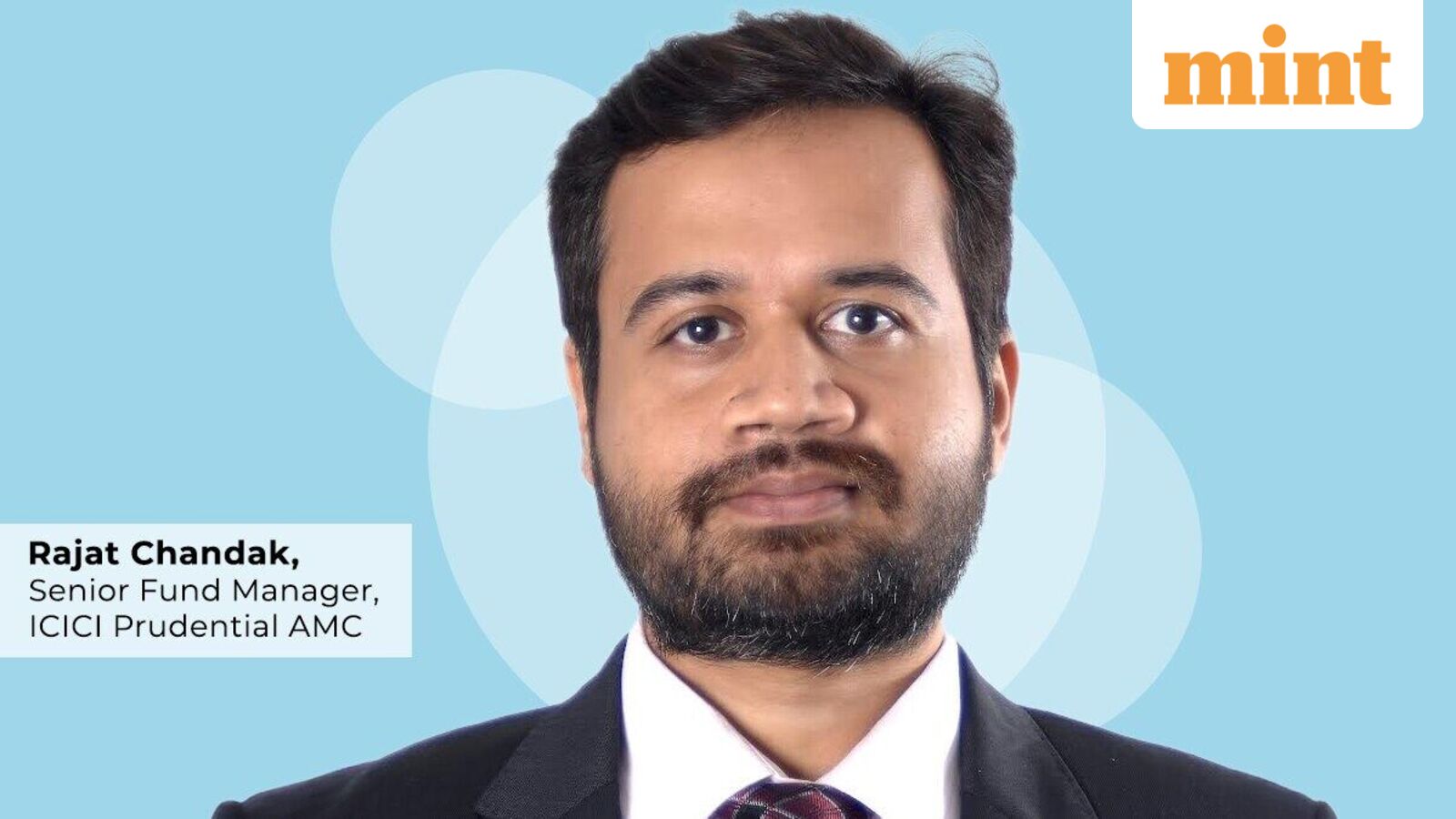
Rajat Chandak, Senior Fund Manager at ICICI Prudential AMC, is optimistic about the Indian stock market and believes global uncertainties may not derail the broader trajectory in the domestic market. In an interview with Mint, Chandak said that steady earnings growth and a supportive policy environment will help the Indian stock market navigate global headwinds.
Amid the geopolitical developments and a delayed India–US trade deal, what’s the outlook for the domestic market in 2026?
While global uncertainties continue to influence market sentiment and can lead to intermittent volatility, they are unlikely to derail the broader trajectory.
We believe the domestic market’s underlying fundamentals remain relatively resilient.
India’s growth drivers are increasingly localised, with consumption, public capex, and private sector balance sheets in a far healthier position than in past cycles.
Also, policy measures which are aimed at boosting consumption, improving rural demand, and supporting discretionary spending can help provide a meaningful cushion.
Over the medium term, we believe, steady earnings growth and a supportive policy environment are likely to help markets navigate these global headwinds.
Considering last year’s performance, is it time to increase exposure to gold and reduce equities?
Asset allocation decisions are best made based on one’s long-term objectives rather than the recent performance of a particular asset class.
We believe that equities remain the most effective asset class for long-term wealth creation, particularly in an economy like India, which continues to deliver structural growth.
Hence, making sharp allocation shifts in favor of last year’s best-performing asset class is not warranted.
What should be the equity investment strategy at this juncture?
Valuations are not cheap across market capitalisations. However, there are select pockets, especially in the mid- and small-cap segments, where valuations have become attractive on a relative basis.
Hence, the optimal approach to invest in the current environment is through diversified equity funds, particularly those with a flexible mandate, such as the flexi-cap fund.
Conservative investors and those considering lump sum investments can consider hybrid offerings. Investors should ensure they are diversified across asset classes.
What sectors look well-positioned to endure market volatility?
We are positive on large banks, as the valuations are reasonable, coupled with improving growth prospects.
Given the expected revival in discretionary spending, the automotive industry stands to benefit.
Furthermore, select platform and internet-based companies continue to deliver consistent growth, while life insurers remain structurally well-positioned given India’s low insurance penetration.
Even within IT, downside risks appear limited given that their valuations are reflecting much of the near-term uncertainty.
Should investors prefer value over growth at this juncture?
A blended approach that allows participation across styles, driven by bottom-up stock selection, is more appropriate in the current environment. The focus should be on businesses where valuations are reasonable relative to their long-term earnings potential.
Given the prevailing uncertainties, should investors prefer flexi-cap funds at this juncture?
Flexicap funds have the built-in flexibility to invest across market capitalisations.
This flexibility allows the fund manager to respond dynamically to changing market conditions with an aim to create wealth over the long term.
During volatile times, this agility aids in striking a balance between the stability of large-cap stocks and the growth potential of mid and small-cap stocks.
For investors seeking diversified equity exposure, a flexicap fund can be considered, provided they have a reasonable investment horizon.
Read all market-related news here
Read more stories by Nishant Kumar
Disclaimer: This story is for educational purposes only. The views and recommendations expressed are those of the expert, not Mint. We advise investors to consult with certified experts before making any investment decisions, as market conditions can change rapidly and circumstances may vary.

