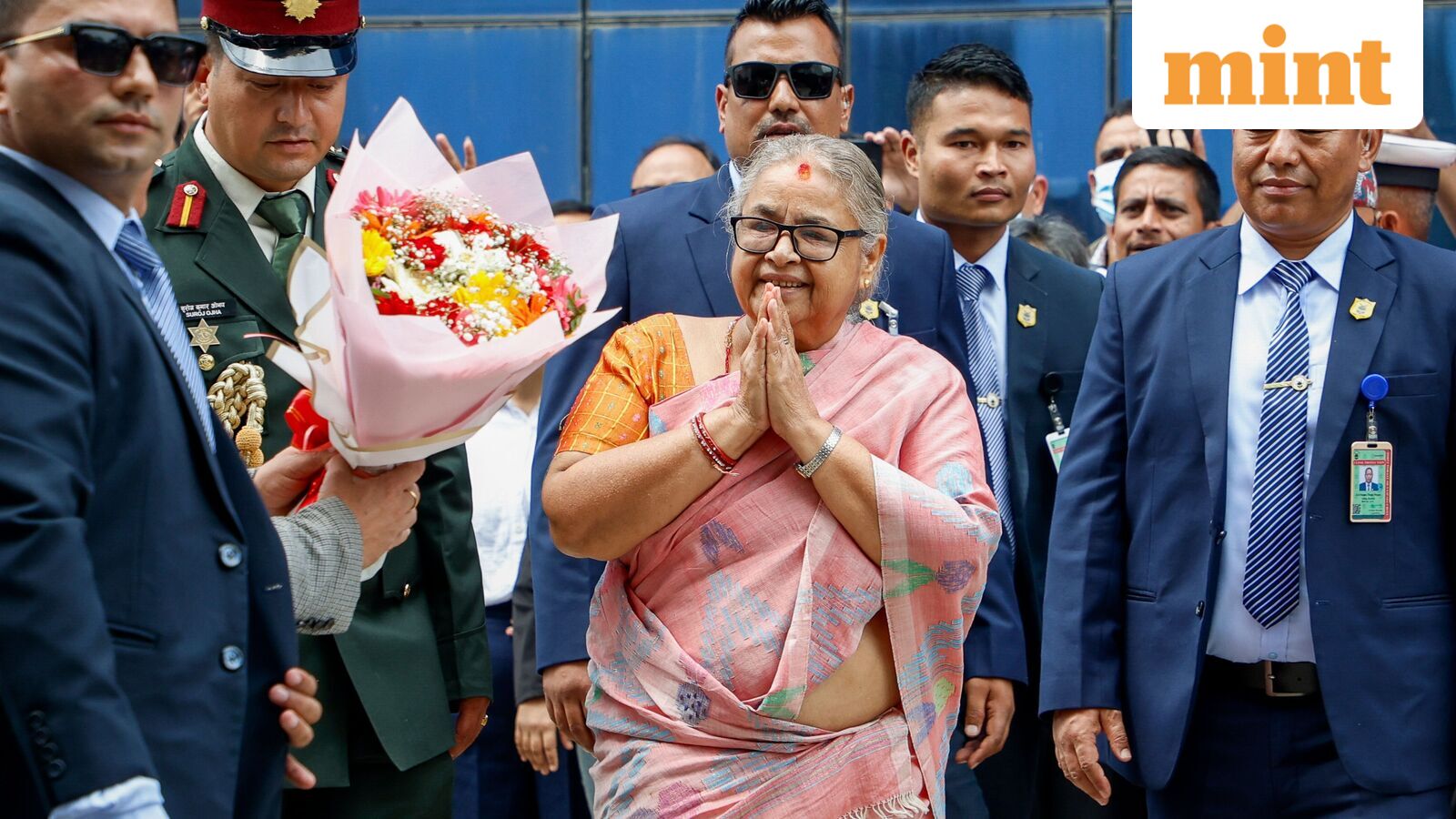
Nepal’s interim prime minister, Sushila Karki has called for peaceful elections being held today. The elections are the first polls being held in the Himalayan nation since the last year’s deadly anti-corruption protests that toppled the government.
“Every vote is important in determining our future,” the 73-year-old former chief justice, who came out of retirement to lead the South Asian nation, said in a statement.
Nepal is voting today in crucial general elections. The Gen Z-led protests last year had toppled the KP Sharma Oli-led government. Oli is again a PM contender this election, too.
As many as 1.9 Crore Nepalese are eligible to exercise their franchise to elect the 275-member House of Representatives from among the 3,406 candidates vying for 165 seats under direct voting and 3,135 candidates vying for 110 seats through proportional voting.
“Thank you for your patience and understanding, for ensuring a peaceful election,” Karki said.
The voting began at 7 AM (Local time) today and will conclude at 5 PM. Counting will begin immediately after the ballot boxes are collected. Final results may take a day or two, the officials said.
Officiating Chief Election Commissioner Ram Prasad Bhandari said before the voting that foolproof security arrangements have been put in place, with the deployment of more than 300,000 security personnel under an integrated security plan coordinated with the Nepal Army.
Bhandari expressed confidence that voters would exercise their franchise in large numbers.
“This time the voting percentage will increase, and the percentage of invalid ballot papers will also decline due to improved voter education launched by the commission,” he said.
Why were the elections necessitated?
The general elections were necessitated after KP Sharma Oli resigned as prime minister on 9 September last year, following violent protests by the youth-led Gen Z group against his government over corruption and a ban on social media.
The government of KP Sharma Oli abruptly banned 26 social media platforms (including Facebook, YouTube, and TikTok), citing regulatory non-compliance. The youth viewed this as a blatant attempt to silence dissent and expose government corruption, which had been trending online under hashtags like #NepoBaby.
In the following days, tens of thousands of young protesters—many in school and college uniforms—marched on the Federal Parliament. The march turned violent after the Prime Minister dismissed it as a “staged drama” and the police response led to dozens of deaths.
Oli resigned as prime minister on 9 September. Former chief justice Sushila Karki,73, was appointed interim prime minister to lead the Himalayan republic of 30 million people to elections.
Why do Nepal Elections matter for India?
Elections in Nepal are considered most consequential for India-Nepal relations in decades. Because of the shared 1,751-km open border and deep cultural ties, any tremor in Kathmandu is felt in New Delhi.
“Gen Z Uprising” in September 2025 created a security nightmare for India. During the chaos, over 15,000 prisoners escaped, and firearms were looted from police armouries, prompting India to put the Sashastra Seema Bal (SSB) on high alert.
Thank you for your patience and understanding, for ensuring a peaceful election.
A stable government can secure the border and prevent it from being used by third-party actors or criminal elements.