

With aggressive US trade tariffs and geopolitical uncertainties in the neighborhood and the West Asia, New Delhi navigated a period of intense volatility in 2025 – the year that is about to end.
Under these circumstances, the year turned out to be a test of New Delhi’s ability to balance strategic autonomy with rising expectations of leadership on the global stage.
India’s foreign policy in 2025 reflected caution, flexibility and calculated engagement, as New Delhi managed neighborhood instability, navigated tariff disputes and strengthened ties with major powers.
Here is a break up of how India fared on foreign policy in 2025
Prime Minister Narendra Modi ended the year with a three-nation tour to Jordan, Ethiopia and Oman earlier this month. The visit was in line with New Delhi’s bid to consolidate India’s strategic footprint in West Asia and the Horn of Africa.
‘Carefully calibrated outreach’
Apart from foreign trips, a carefully calibrated outreach to Afghanistan and a notable reset in ties with Canada stood out as India’s key diplomatic gains.
As for neighbourhood, 2025 ended with a dip in India-Bangladesh relations, months after military confrontation with Pakistan in the aftermath of Pahalgam terror attack. India is on way to improve ties with China, a major neighbor.
Globally, Russia-Ukraine war, Israel-Gaza conflict and the efforts to end it added to the volatility of global order.
Trade, Tariffs and Economic Diplomacy
US imposed steep tariffs of up to 50 percent on India. New Delhi stood its ground and intensified efforts to fast-track free trade agreements with other countries.
While negotiations are underway for India-US trade deal, New Delhi went ahead with key free trade agreements with other nations – the UK, the European Free Trade Association or EFTA and the latest one with New Zealand (both in December 2025).
Experts pointed out how New Delhi prioritized diversifying export markets, advancing negotiations with the European Union, and deepening economic engagement with partners in Asia, Africa and Latin America.
New Delhi continued to focus on protecting domestic manufacturing and critical sectors under its self-reliance push. Towards the end of the year, Oman, one of the countries PM Modi visited in December, offered India zero-duty access on 98 per cent of its tariff lines as part of the Comprehensive Economic Partnership Agreement (CEPA).
While India deepened its defence, technology and security cooperation with the United States and Quad partners, it indulged in engagement with Russia, particularly in energy and defense supplies which was at the center stage during Russian President Vladimir Putin’s recent India visit.
India-China, India-Pakistan ties
India-China relations remained stable for over a year since the two sides worked on disengagement along the LAC.
New Delhi’s ties with Dhaka, however, suffered since Sheikh Hasina’s ouster on August 5, 2024. Recent developments at envoy-level worsened the ties.
India was involved in a four-day military confrontation with Pakistan in May in the aftermath of the April 22 Pahalgam terror attack in Jammu and Kashmir that left 26 people dead.
The Israel-Gaza War
Israel’s offensive in Gaza continued in 2025. Iran vs Israel war in June complicated the situation further. The uncertainty would mean worries for India’s regional connectivity strategy, such as the India-Middle East-Europe Economic Corridor, the International North South Transport Corridor, and the Chabahar port.
But by the year end, US President Donald Trump came up with a peace plan which seemed to have eased tensions. In October, Prime Minister Narendra Modi welcomed the Israel-Hamas agreement on the first phase of Trump’s peace plan for Gaza.
PM Modi, however, praised Benjamin Netanyahu, saying the agreement was a reflection of the strong leadership of the Israeli prime minister, while hoping, at the same time, for a respite for the people of Gaza, paving the way for lasting peace.
Political transitions, economic stress and security concerns across South Asia demanded constant diplomatic attention. This resulted in challenged for India’s Neighborhood First policy
India continued to extend humanitarian assistance, development aid and connectivity projects to neighboring countries, while remaining cautious about internal political developments and border sensitivities that could affect regional stability.
Focus on Global South
The year also saw India strengthening its engagement with the Global South, projecting itself as a key advocate for developing nations. New Delhi pushed for reforms in international financial institutions, highlighted debt distress, and called for fairer climate action frameworks at multilateral forums.
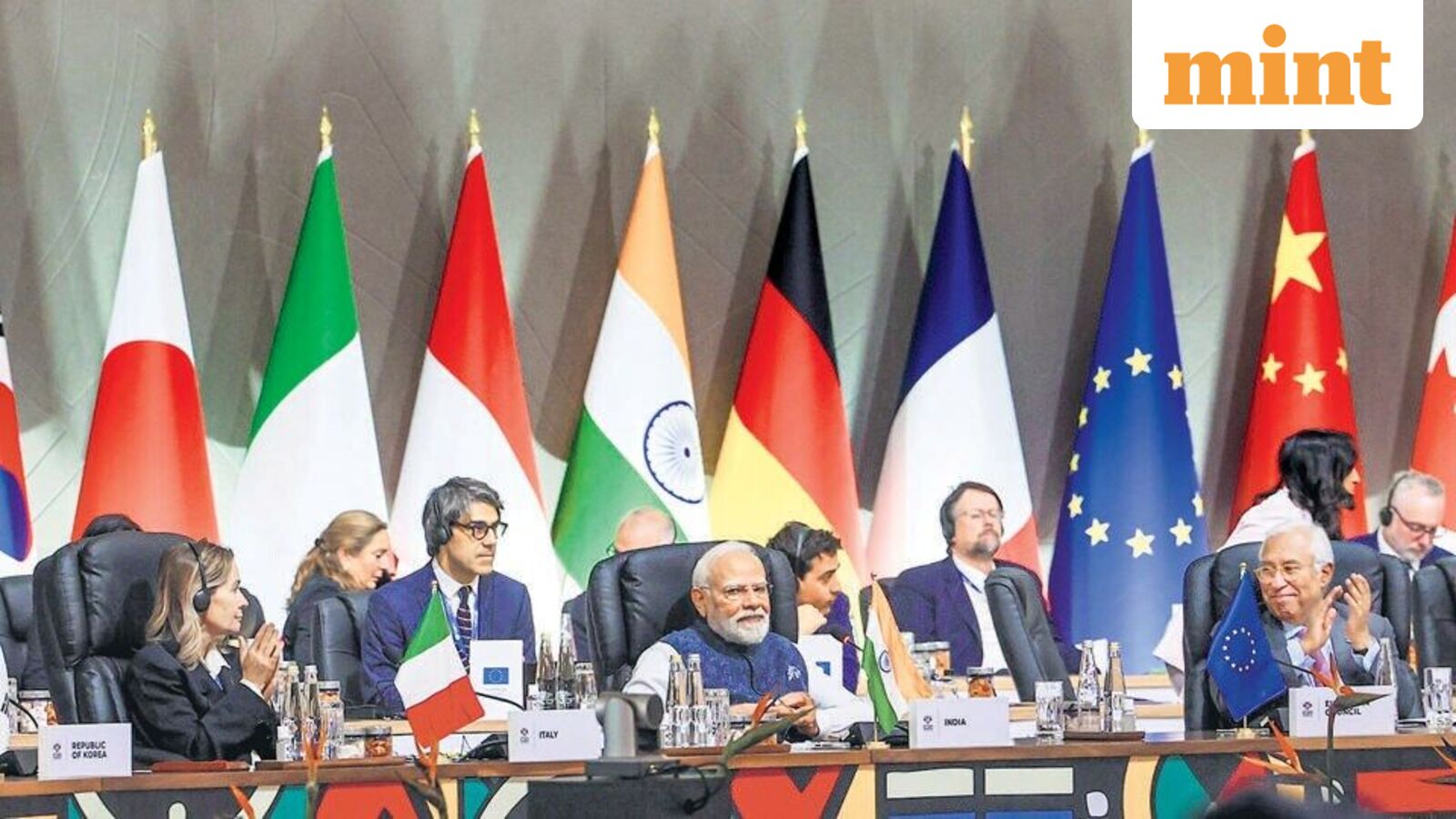
The G20 Leaders’ Summit hosted by South Africa in November adopted a consensus declaration focusing on the climate crisis, debt relief for developing nations, and global inequality.
PM Modi, in his address, underlined the growing threat of narcotics, especially fentanyl, and called for a G20 Initiative on Countering the Drug–Terror Nexus, stressing the need to dismantle the “wretched economy” that fuels both terrorism and the drug trade.
Defense partnerships and intelligence cooperation gained momentum in response to regional security challenges in 2025. Technology emerged as a strategic pillar, with cooperation in semiconductors, artificial intelligence and digital public infrastructure gaining prominence.
Climate diplomacy focused on balancing developmental needs with international commitments, especially on energy transition and climate finance. In November this year, for example, Union Environment Minister Bhupender Yadav termed the recently held UN COP30 climate summit a significant milestone in advancing equity and climate justice.
The Road Ahead
Towards the end, India’s foreign policy reflected a country navigating a complex and uncertain world. New Delhi clearly sought to influence without alignment, grow without overdependence, and lead without overreach.
Amid global uncertainty, the India’s approach in 2025 underlines how New Delhi is positioning itself as a confident yet cautious power. New Delhi, experts said, is determined to protect its interests while shaping the evolving global order.
Key Takeaways
- India’s foreign policy in 2025 demonstrated a careful balance between strategic autonomy and global leadership.
- New Delhi intensified trade negotiations and diversified its export markets amid rising US tariffs.
- The country maintained stability in relations with China while facing challenges in its neighbourhood, particularly with Bangladesh and Pakistan.

