

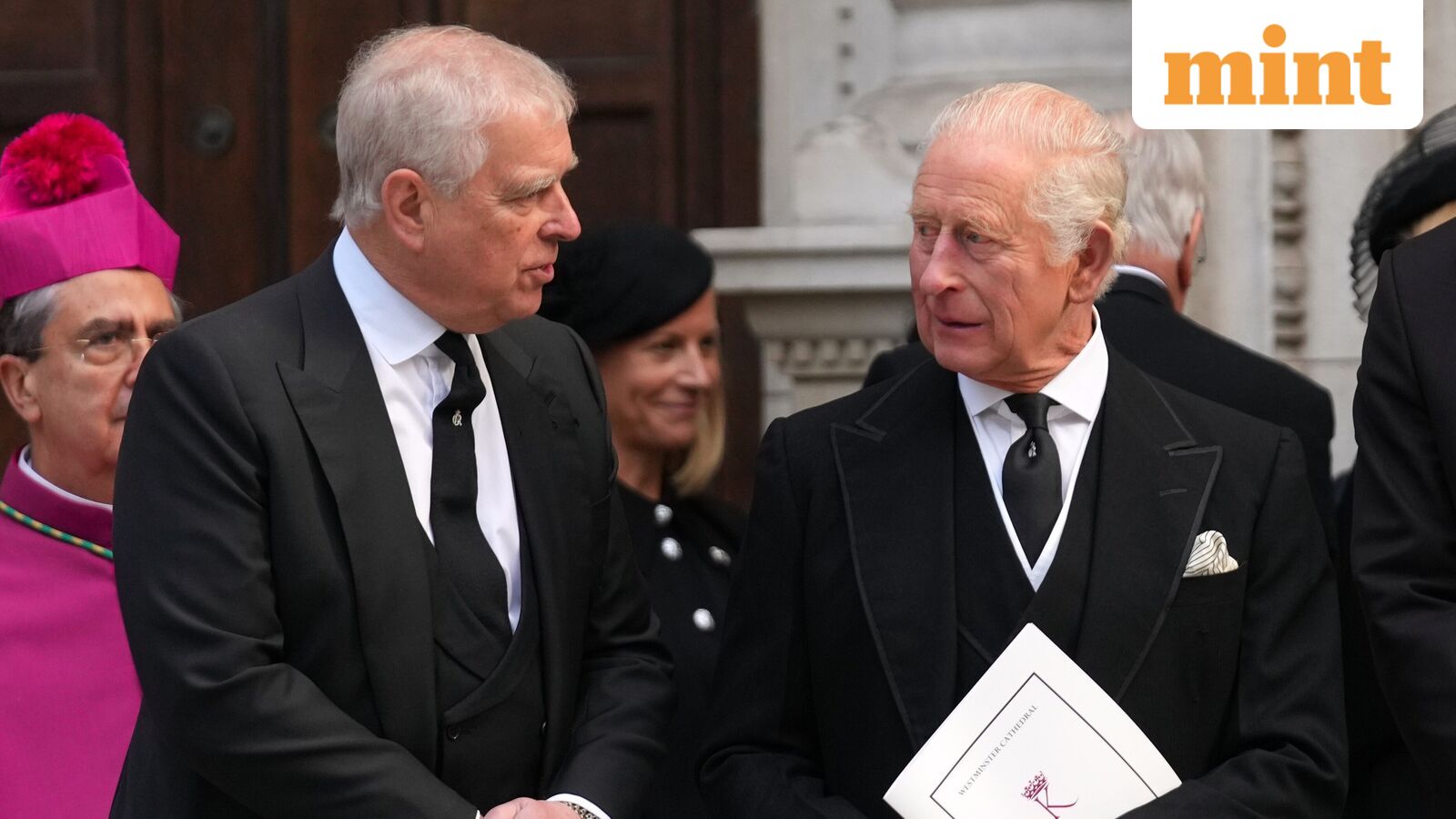
Trouble continues to mount for Andrew Mountbatten-Windsor, the former prince, as the UK government is now mulling the introduction of legislation that would remove him from the line of royal succession, the BBC reported.
UK Defense Minister backs the move
UK’s Defense Minister Luke Pollard, on Friday (local time), said that the move, which will prevent Andrew from ever becoming King, is the “right thing to do,” regardless of the outcome of the police investigation.
speaking on BBC Radio 4’s Any Questions programme, the defense minister said that the UK government had “absolutely” been working with Buckingham Palace on the plans to stop Andrew from “potentially being a heartbeat away from the throne”.
He added that this was “something that I hope will enjoy cross-party support, but it’s right that that is something that only happens when the police investigation concludes”.
Andrew’s current position in the line of succession
Currently, Andrew is eighth in line to become the King, despite being stripped of his titles, including “prince”, a decision which King Charles III took in October 2025, after the former’s relationship with the late convicted sex offender, Jeffrey Epstein, made headlines.
Andrew’s time as trade envoy under fire
The UK Defense Minister’s remarks come days after Andrew was arrested by Thames Police after the US Department of Justice (DOJ) released millions of documents in connection with Epstein, confirming his correspondence with Andrew during his time as the trade envoy. The last tranche of the documents was released on January 30, which consisted of emails, photos, and videos.
In one such email, it was revealed that back in November 2010, when Andrew came back from a government trip to Asia, he received the documents related to the trip, which he immediately shared with Epstein, which compelled Thames Police to get involved.
In another correspondence, dated 24 December 2010, the former prince sent the convicted paedophile a confidential briefing on investment opportunities in Helmand Province, Afghanistan, which was undergoing reconstruction at the time. The reconstruction was being overseen by the British armed forces and was funded by the British government.
Andrew was, however, released on Thursday (local time), within 11 hours of his arrest, and continues to deny any wrongdoing. Thames Valley Police, the force that arrested him, will continue to search Royal Lodge, his former residence, until Monday (local time).
Parliamentary support to remove Andrew
The proposal for Andrew’s removal from the line of succession comes after several members of parliament (MPs), including the Liberal Democrats and the SNP, hinted at their support for such legislation. Some Labor parliamentarians, who have been critical of the monarchy, said they were less convinced that legislation was required, partly because Andrew’s accession to the throne is unlikely.
If the proposal goes forward, making a change would require an Act of Parliament, which would need to the nod of both MPs and peers in addition to royal assent by King Charles III. It would also require approval from the 14 Commonwealth realms where Charles III serves as head of state, such as Canada, Australia, and New Zealand.
When was the line of succession changed last?
Previously, the line of succession was altered by the UK Parliament in 2013, when the Succession to the Crown Act reinstated individuals who had been excluded for marrying a Catholic. The most recent removal from the line of succession took place in 1936, when Edward VIII and his descendants were excluded following his abdication.
In 2019, Mountbatten-Windsor stepped back from his duties following his infamous interview with the BBCwhere he spoke about his relationship with Epstein.

