New Delhi: Thirteen days after the war in West Asia broke, the Indian government on Friday said there are indeed concerns over supply and availability of cooking gas in the country due to the disruptions. This comes in the wake of tension around the crucial Strait of Hormuz, a vital route for energy shipments from the region, amid the Israel-Iran conflict.
“Regarding LPG, I would tell that this is an issue of concern for us, especially as a major portion of our LPG (liquefied petroleum gas) import comes through the Strait of Hormuz and because of the closure there this is a matter of some concern,” Sujata Sharma, joint secretary, marketing, oil refinery in the petroleum and natural gas ministry said in a briefing on the war in West Asia and the fuel stock situation in the country.
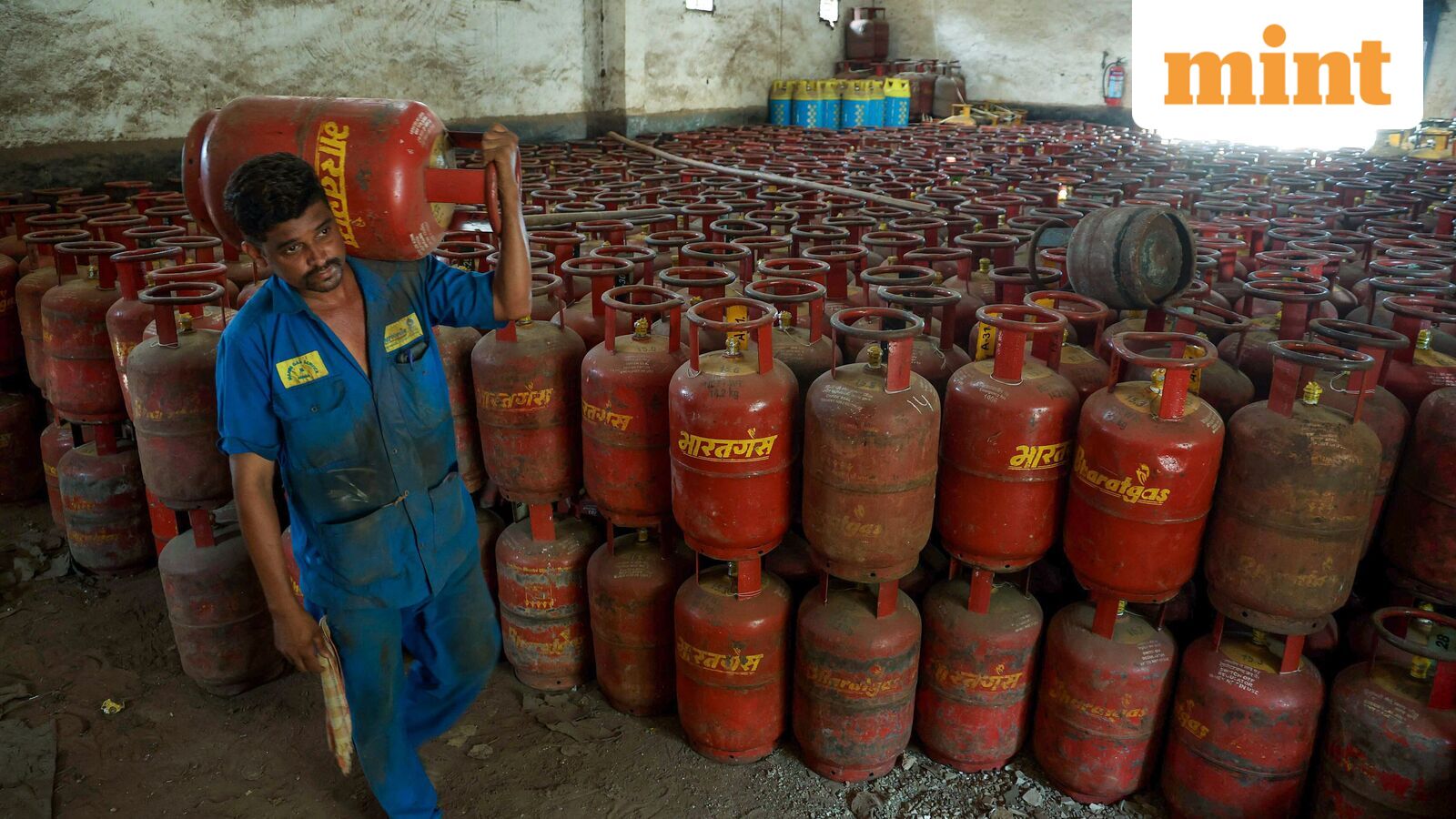
Bookings of domestic LPG across the country have crossed 75 lakh per day from the pre-war levels of 55 lakh due to panic among consumers, Sharma said. “But, despite this situation, no dry out has been reported in any of the 25,000 (LPG) distributors,” she added.
Allaying concerns
The joint secretary alleged concerns over shortages for the time being, and said the pre-war levels of average daily delivery across the country was around 50 lakh LPG cylinders, which is currently at the same level.
In the wake of the cooking gas supply worries, Sharma urged domestic and commercial consumers in the proximity of city gas distribution infrastructure to shift to piped natural gas at the earliest. The government has also directed local and highway authorities as well as state governments to expedite clearances for such expansion.
According to the government, about 60 lakh households can shift to piped natural gas (PNG) in the short term. This comes a day after the government called for increased use of alternative fuels such as kerosene, coal, biomass and RDF (refuse-derived fuel) pellets by hotels and restaurants and allowed higher consumption of these fuels.
The shipping ministry has also directed ports to allow priority berth to LPG tankers across the country’s ports.
India has an annual LPG requirement of 31-32 million tonnes, of which about 60-65% is imported, making the country the world’s second-largest LPG importer. About 90% of its overall imports come from West Asian countries, mostly from Saudi Arabia, Qatar, and the UAE.
After increasing the lock-in period for booking of household cylinders to 25 days across the country on 9 March, the government further raised it to 45 days on 12 March for rural consumers. Those in urban areas, however, can continue to book a cylinder after 25 days of the previous booking.
Sharma said commercial cylinders for consumers have been put at the disposal of state governments for priority distribution.
Production hiked
She said that on the back of efforts to boost production, domestic LPG production from refineries has been hiked by over 30% as compared to the period before the war between US, Israel and Iran broke.
The statements come in the backdrop of reports of consumers unable to book cylinders and long queues outside LPG dealers to purchase cylinders across the country.
“Oil marketing companies continue to deliver around 50 lakh LPG cylinders every day. All the consumers are requested not to resort to panic booking,” Sharma said.
Noting that consumers of PNG and compressed natural gas would get 100% supply with no cuts under the Natural Gas Control Order issued on 9 March 2026 under the Essential Commodities Act, she said supplies to industrial and commercial consumers are being regulated at 80% of their average consumption in the past six months.
“Around 3.73 MMSCM (million standard cubic meters) per day gas is being consumed across the domestic PNG segment, for which adequate gas supply is available across GAs (geographical areas). More than 1.5 Cr. PNG households in India are currently being served natural gas in their homes and will continue to be served without any hindrance,” the joint secretary said.
Consultations on
She said that in order to ease the supply concerns related to LPG, the government is consulting different city gas distribution (CGD) entities authorized in major urban centers and cities to immediately offer new PNG connections to the affected commercial and industrial consumers.
This may not be that easy. As natural gas supply—about 55% of which is imported—had also been affected, India’s CGD industry may also be hit. A Crisil Ratings report on Friday said daily CGD sales volume may moderate 8-10% on reduced natural gas supplies to industrial and commercial consumers due to the ongoing conflict until the situation stabilizes.
To be sure, the CGD industry relies on domestically-produced natural gas for 60% of its requirement, while imports make for the remaining.
On the crude oil stocks scenario, the ministry reiterated that all refineries are currently operating at high levels, and some of them are working over 100% capacity, and they are maintaining adequate crude oil inventories. Supplies are being continuously received through diversified import sources and shipping routes, it added.
Oil prices somewhat eased on Friday after the US announced a 30-day waiver for all countries to procure Russian oil stranded in vessels. The development comes a week after the US allowed India to buy Russian oil loaded on vessels as of 5 March, offering temporary relief on the supply front.
At the time of writing this report, the April contract of the benchmark Brent on the Intercontinental Exchange traded at $99.35 a barrel, 1.1% lower than the previous close. The April contract of the West Texas Intermediate on the NYMEX fell 1.9% to $93.91 a barrel.
Ongoing efforts
Amid the energy crisis and vessels stuck in the Persian Gulf, India has been in touch with the Iranian authorities to facilitate the safe passage for India-bound vessels.
On this issue, the representative of Iran’s Supreme Leader in India, Dr Abdul Majid Hakeem Ilahi, on Friday told reporters that there have been some discussions on the matter, “And I am sure that India will benefit from oil, gas, and other resources. But I think the complete solution is that the leaders of the world have to come together. They should go to the United States and convince President Trump that this war is an unjust war against civilians and that it has to stop.”
On the question of giving safe passage to India, news agency ANI quoted Iran’s Ambassador to India Mohammad Fathali as saying, “Yes, because India is our friend. You will see it within two or three hours. We believe that Iran and India share common interests in the region…”
On Thursday Prime Minister Narendra Modi had held a telephonic conversation with the Iran president Masoud Pezeshkian, and expressed deep concern about the evolving security situation in the region and reiterated India’s consistent position that all issues must be resolved through dialogue and diplomacy.