

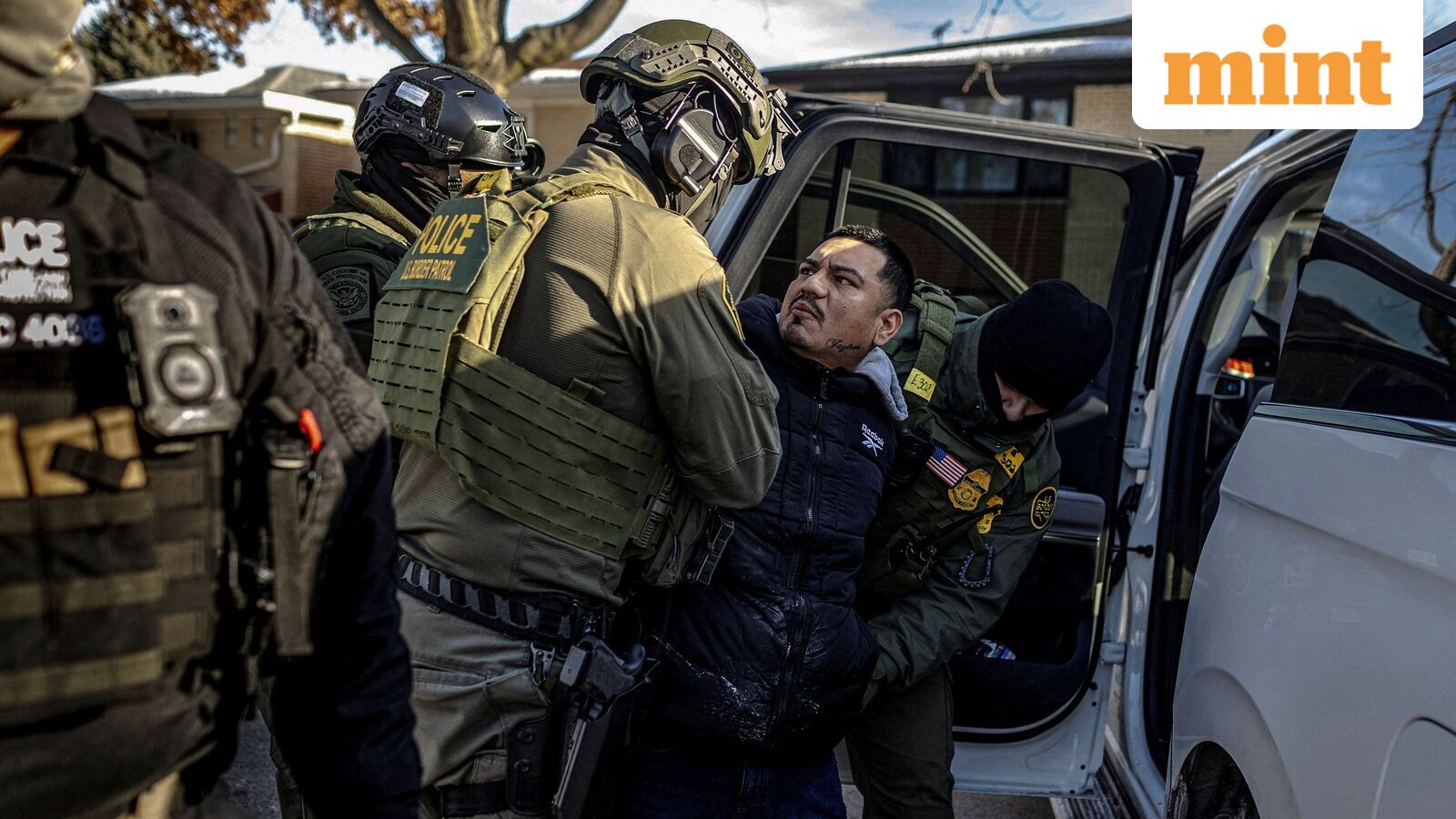
Amid higher H-1B visa fees and the Trump administration’s intensified immigration crackdown, 22% of immigrants say they personally know someone who has been arrested, detained, or deported on immigration-related grounds since Trump took office in January, according to the 2025 Survey of Immigrants, conducted by the Kaiser Family Foundation (KFF) in collaboration with The New York Times,
Here’s what the survey revealed—5 points
- Most of those who know someone affected say the individual had not committed a serious crime. At the same time, 41% of immigrants say they worry that they or a family member could be detained or deported, a sharp increase from 26% in 2023.
- While these concerns remain highest among likely undocumented immigrants (75%), the largest increases have been seen among lawfully present immigrants, where concern rose from 33% to 50%, and naturalized citizens, where it jumped from 12% to 31%, the KFF survey found.
- Overall, more than half of immigrants (53%)—including majorities of both naturalized citizens and lawfully present immigrants—lack confidence that they or a family member would be treated fairly by the US legal system if detained on immigration-related charges, the survey noted.
- Nearly three in ten immigrants said they canceled their travel plans to avoid scrutiny from immigration authorities. Fear was most pronounced among undocumented immigrants, with 63% reporting they avoided both domestic and international travel, the KFF survey found.
- However, caution extended beyond this group, as 32% of H-1B visa holders said they refrained from traveling, while 15% of naturalized citizens reported doing the same.
H-1B visa controversy
In December 2025, the Department of Homeland Security said that the traditional random lottery used to allocate H-1B visas would be replaced with a weighted selection system favoring higher-paid and more highly skilled applicants.
The final rule, issued by US Citizenship and Immigration Services, is set to take effect on 27 February 2026, and will apply to the upcoming H-1B cap registration cycle.
The H-1B visa program is a key pillar of employment-based immigration, enabling US companies to recruit highly educated foreign professionals for specialized roles.
In September, Trump signed a proclamation raising application fees, saying the move was intended to curb abuses of the program that he argues disadvantages American workers.
The policy marks a sharp departure from the United States’ traditional approach to immigration. Since its founding, the country has long served as a destination for people from a wide range of nations and economic backgrounds seeking greater opportunity and freedom.
H-1B visa fees hike hits Indian hard
Beyond the US tech companies, the action also hits India hard, as Indians have been the biggest beneficiaries of the H-1B visa program.
In addition to the extra costs that Indian IT companies will bear for thousands of employees on such visas, the ongoing unpredictability has unnerved many Indian professionals working in US tech, finance, health care and other industries, especially after the recent mass postponement of work-visa appointments.
H-1B visas are awarded based on a lottery system, but are used primarily in the tech industry. Amazon, Tata Consultancy Services Ltd., Microsoft, Meta Platforms Inc. and Apple Inc. are among the companies with the greatest number of H-1B visas, according to the US government.
Amid higher H-1B visa fees and the Trump administration’s intensified immigration crackdown, 22% of immigrants say they personally know someone who has been arrested, detained, or deported on immigration-related grounds since Trump took office.
The tech industry has been adapting to changes in US immigration rules for a while now as political currents shift.
(With inputs from agencies)

