

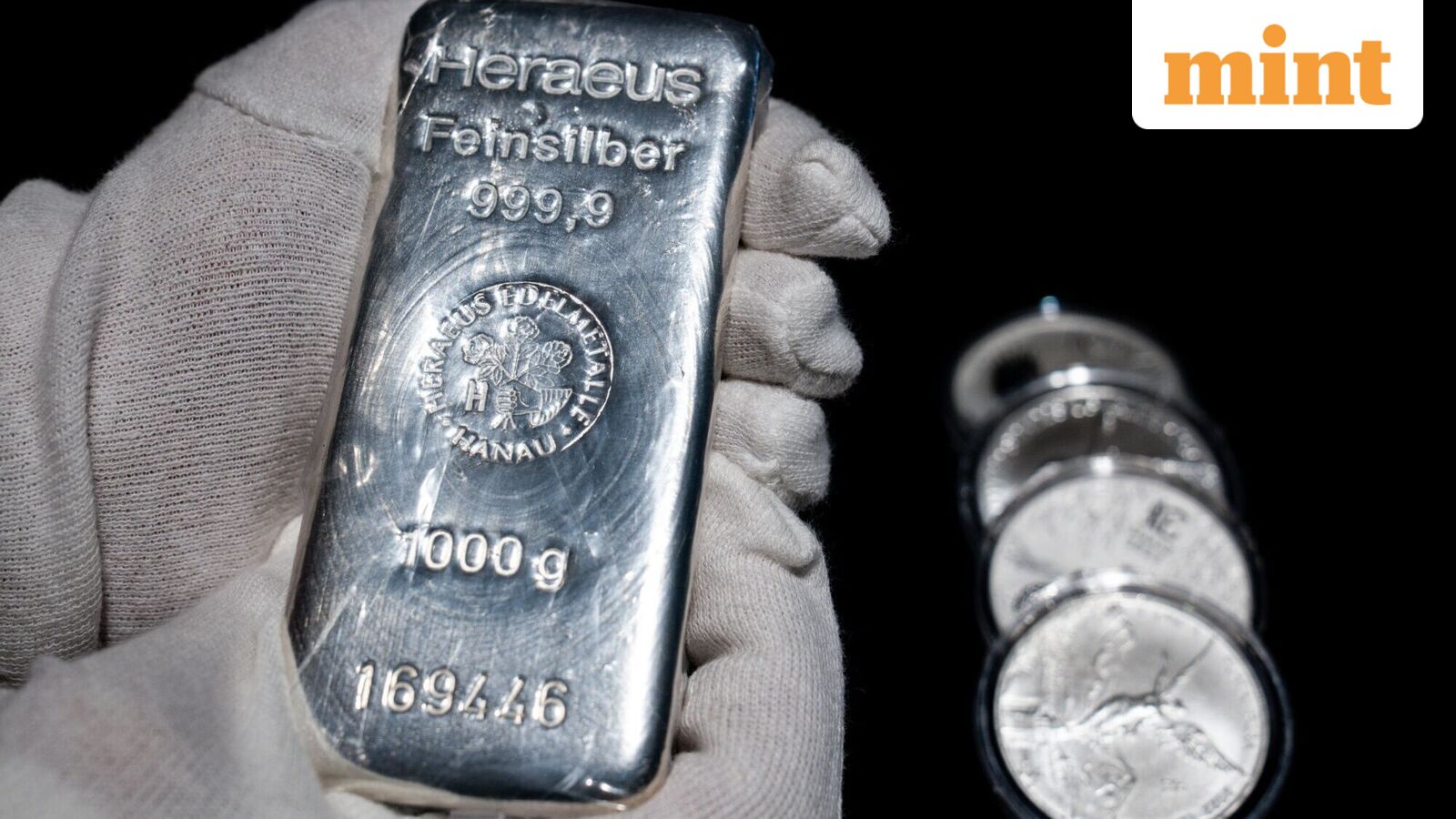
And what a reversal it was. The silver price experienced the sharpest crash in its history, almost 40% in just one week.
The fall was so sudden and deep that most investors were left shell-shocked. Many leveraged traders (who were long) suffered devastating losses. The metal has been trying to find a price level to settle down ever since.
So, how will the silver price fare in 2026? Let us discuss the price of silver and its prospects going forward.
View Full Image
Silver Price in 2026: Important points to watch
#1 Speculation
Make no mistake. There were a few reasons for the rising price of silver in 2025 but this reason was the biggest… without a doubt.
Traders – including new traders who were just ordinary retail investors – wanted to buy silver because the price was going up… and for no other reason.
In other words, it was nothing but old-fashioned speculation driving up the price. In 2025, people were buying silver only because they thought someone else would buy it at a higher price.
This was not surprising. Silver has a reputation for spectacular short-term gains and losses. It attracts momentum and speculation in abundance.
The sensible response would be not to chase the price. A reversal could have happened at any time…and so it did.
Of course, this is true in the other direction as well.
It’s possible that silver could reverse its recent losses and go up once again in 2026, but traders will have to practice extreme caution if they want to play that trade.
#2 The Interest Rate Aspect
Globally, central banks have been reducing interest rates, barring a few exceptions.
The idea is to support growth as inflation has declined meaningfully in many countries. Governments want to support growth rates and employment in 2026 and prevent a growth slowdown.
Thus, investors are positioning for a world where money gets cheaper again. Precious metals like silver don’t generate income, but they have the trust of the masses.
When the benefit of holding cash/bonds declines (falling interest rates), silver tends to do well. This is because demand shifts from fixed-income assets to precious metals.
However, the sentiment in financial markets has shifted over the last few weeks regarding interest rates. The belief in the market that the US Fed would implement slow, calibrated rate cuts in 2026 has all but disappeared.
The consensus now is that the Fed will either stop the cuts in its next meeting or signal very few rate cuts going forward.
The reason for this is not rapidly falling inflation but the fact that US economic growth is holding up quite well, despite all the disruption caused by tariffs. This means the US economy does not need the support of lower interest rates.
Only time will tell whether this expectation of the market will be proven correct.
If the rate cuts continue, silver will find price support.
#3 Industrial Demand
Traditionally, silver was viewed largely as a cheaper alternative to gold as a hedge against inflation. But over the past few years, silver’s identity has changed in investors’ minds.
Today, silver is perhaps the most unique commodity. The white metal is being recognized as a ‘green metal’, due to its critical role in the renewable energy revolution.
As the global economy adapts to energy transition, digitisation, and electrification, silver’s industrial relevance has become difficult to ignore.
It’s used extensively in EV batteries, connectors, and electronics. It’s also a key component in solar panels, accounting for about 20 gm of silver per panel. High-tech electronics, 5G infrastructure, and semiconductor components all use silver due to its superior conductivity.
This aspect of the silver bull market remains intact in 2026. It will likely remain intact for many years.
However, this alone cannot be the reason for the resumption of the bull market. After all, this wasn’t the main reason for the gains in 2025. That was speculation.
So while traders should continue to track industrial demand for silver, it doesn’t make sense to trade for this reason alone.
Long-term investors, on the other hand, should study this aspect of silver to get a deep understanding of the demand-supply fundamentals.
This knowledge will be very useful when investing in silver over years instead of weeks or months.
Words of caution that proved to be prescient
Here’s what we wrote about the silver price in January 2026…
When the entire market is talking about a rising price of silver, it’s easy to forget that the opposite can easily happen…as it has happened many times in the past.
In that case, it would trigger losses for leveraged traders who are long on silver today.
The factors that can cause a fall in the silver price are the same as the ones that are responsible for its rise…only in reverse.
Expectations of interest rate cuts moderate or come to an end.
Geopolitical tensions ease.
Industrial demand will remain strong, but the speculation behind it could moderate.
Investors should carefully watch for any potential changes to the underlying factors driving up silver, especially the speculative factor, as that has been the biggest driver of the price.
You can read this editorial here: Why silver price is rising.
Conclusion
At Equitymaster, we believe in maintaining a small exposure to silver as part of the precious metals component of your portfolio.
However, investors should not see silver as a potential substitute for any other asset, especially stocks. It’s highly unlikely that the price will multiply year after year.
It makes sense to hold some precious metals, including silver, in one’s long-term portfolio, but it does not make sense to speculate on their short-term price movements.
If you are seriously considering an investment in silver, have a time horizon well beyond 2026. Just because the price has tripled in the last year doesn’t automatically make silver a great investment.
Do your due diligence.
Happy investing.
Disclaimer: This article is for information purposes only. It is not a stock recommendation and should not be treated as such.
This article is syndicated from equitymaster.com

