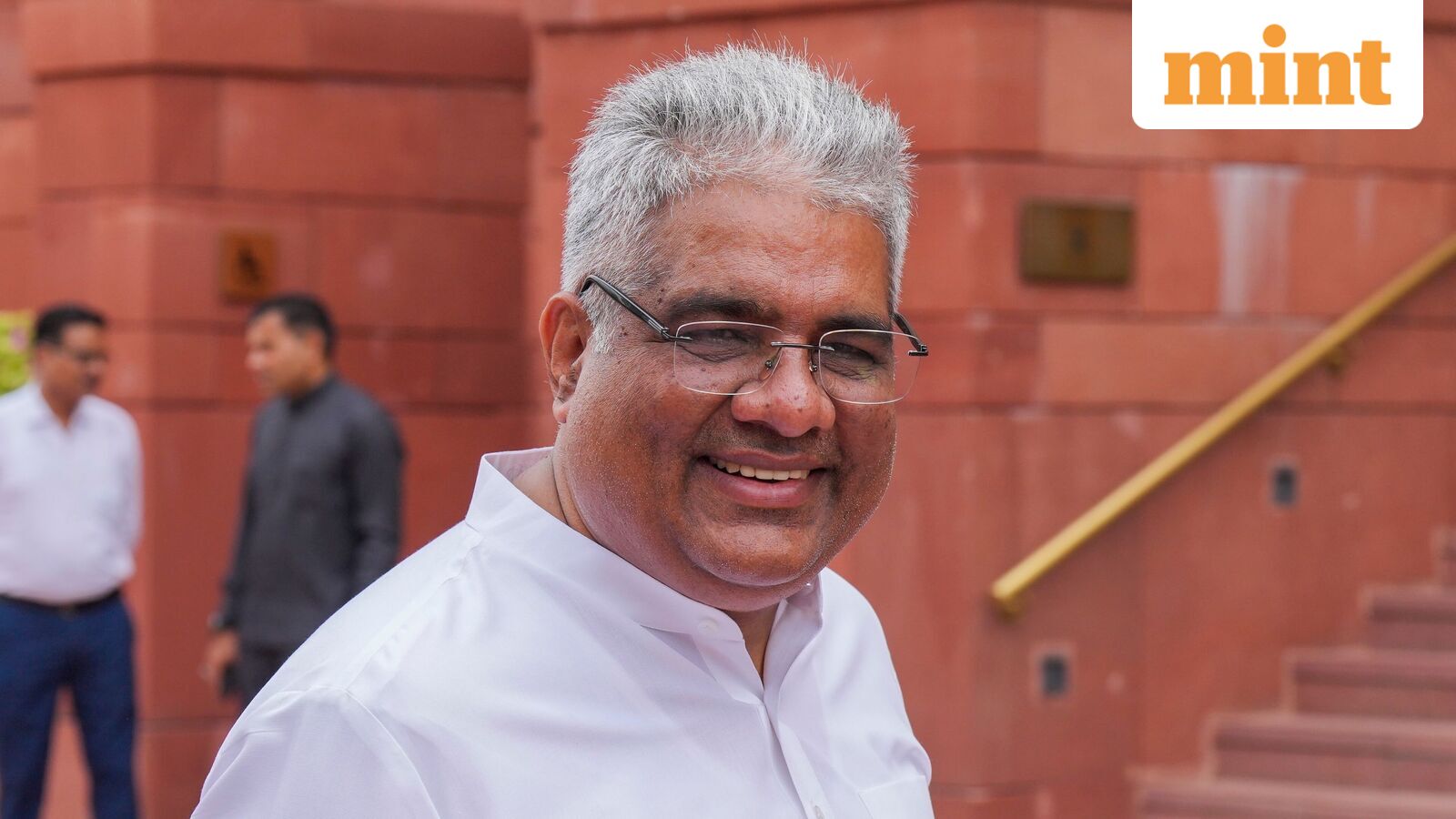
New Delhi: India’s environment minister on Wednesday called for a sharp acceleration in global climate action, urging countries to triple renewable energy capacity and increase adaptation finance.
Speaking at the silver jubilee edition of the World Sustainable Development Summit (WSDS) 2026 organized by The Energy and Resources Institute (Teri), Union minister Bhupendra Yadav said countries must step up efforts to fight climate change by expanding solar and wind power and doubling energy efficiency across industry, transport and households.
The minister said adaptation finance — money used to help countries deal with climate impacts like floods and droughts — must be scalewd up to match funds meant for reducing emissions.
He also urged reforms in multilateral development banks to unlock trillions of dollars in climate finance, stressing that ambition and finance must move together through transparent, predictable and inclusive financial systems.
Yadav reiterated India’s targets of achieving 500 GW of non-fossil fuel energy capacity by 2030, reducing GDP emission intensity by 45% from 2005 levels, and attaining net zero by 2070.
Warning that the world is not on track to limit warming to 1.5°C under the Paris Agreement, he said, “Emissions reduction remains insufficient, adaptation finance remains inadequate, SDG (sustainable development goals) implementation is uneven. This is not a crisis of science. It is a crisis of scale, speed and systematic alignment transformation; therefore, we must move beyond incremental policy refinement.”
He stressed that the coming decades must focus on delivery. “We must move from pledges to performance. From targets to trajectories. From ambition to accountability.”
Experts stressed that climate change should not remain limited to conferences or elite discussions.
“This is a time for action, it’s important that we democratize the language of climate change, it is not something which has to be restricted to conferences, to drawing room discussions, to boardrooms, it has to go to the masses, they have to understand how it impacts them and then we have to work on solutions which are rooted in the local context with equal emphasis given to adaptation as we give to mitigation,” said Siddharth Sharma, CEO, Tata Trusts.