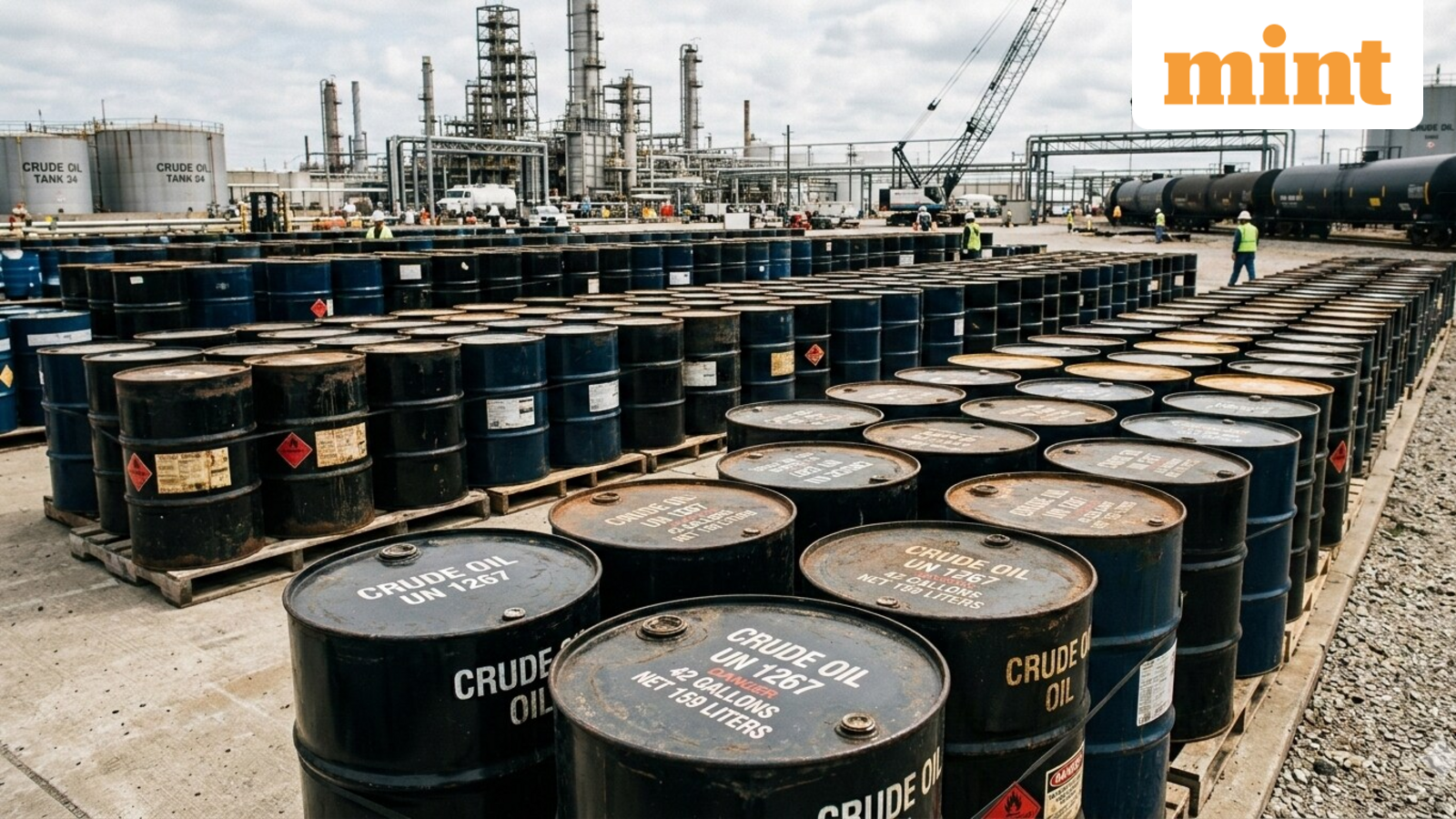
India currently has around 100 million barrels of commercial crude oil secured. This oil is not all stored in one place. Some of it is kept in large storage tanks, some in underground strategic reserves, while the rest is already loaded on ships voyaging towards the country.
This becomes important if oil flows through the Strait of Hormuz are disrupted. The Hormuz is a narrow but crucial sea route through which a large share of the world’s shipments pass. As recent geopolitical tensions have threatened to slow or stop traffic there, countries that rely on Middle East oil, including India, could face supply problems.
As the US and Israel escalate military operations against Iran, global markets are bracing for the shutdown of the Strait of Hormuz. Although Iran has claimed that it has already closed the Strait, it is still not clear if this is a complete closure, according to multiple reports.
How many days will India’s oil stock last?
With India’s current stockpile of crude oil, it can meet its requirement for about 40-45 days, according to estimates by energy analytics firm Kpler, quoted by PTI in its news report.
India imports about 88% of the crude oil it needs, with more than half of it being supplied by Middle Eastern countries. These shipments transit the Strait of Hormuz, whose flow has been disrupted amid the Iran crisis.
In case Middle Eastern crude supply is halted completely for a temporary period due to the regional disruptions, the immediate impact would be logistical and price-driven, news agency PTI reported.
What can India do to offset the impact of the closure?
India is the world’s third largest oil importer, as it receives roughly half of its crude needs through the narrow Strait. Its mainstay liquefied natural gas (LNG) supplier in Qatar also uses the strait to ship the fuel to India.
To offset the impact of the Strait’s closure, India could ramp up purchases from suppliers outside the Middle East. Countries in West Africa, Latin America and the US can make up for the potential shortfall. India could also tap Russian oil to make up for the deficit, the news agency said.
India had agreed to gradually scale down purchases of crude oil from Russia as part of a broader trade deal with the United States. The deal faces uncertainty after the US Supreme Court struck down US President Donald Trump’s country-based tariffs.
If the Strait of Hormuz, the narrow 33-kilometre passage connecting the Persian Gulf to the Arabian Sea, were disrupted or shipping were forced onto longer routes, India’s crude import bill would spike up, forcing India to either diversify its import sources or buy pricier oil.