

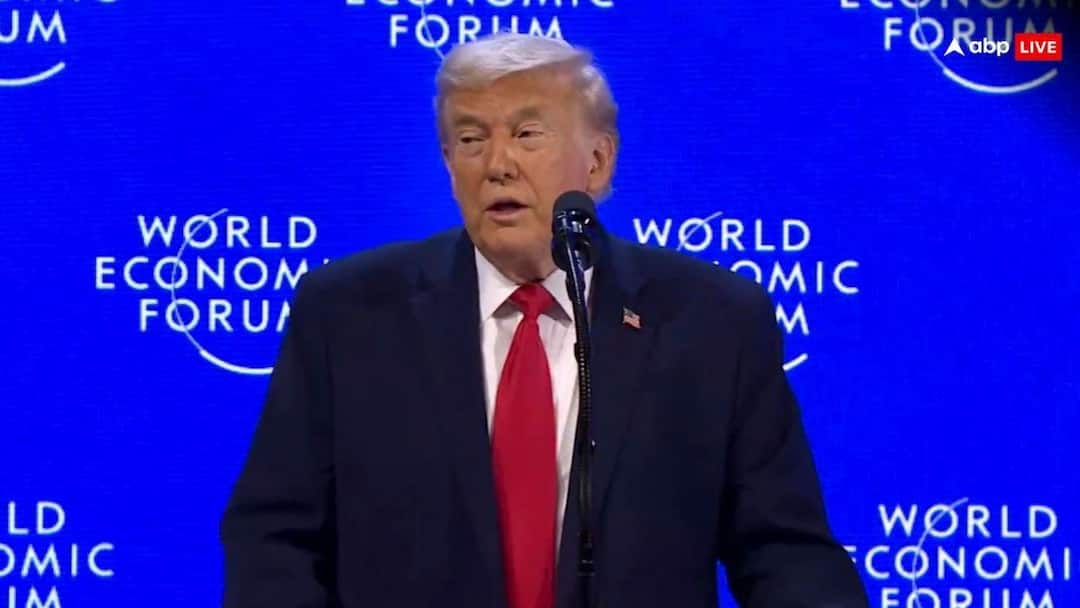
On February 7, Trump put his seal of approval on the trade deal signed between India and America on February 2, 2026, and also signed the executive order in which the 25 percent penalty tariff imposed on India was removed, but the conditions set by Trump in this executive order are very scary. Along with all the conditions, Trump has also put a condition that if India does not stop buying oil from Russia, then Trump will again impose a penalty of 25 percent and then the tariff will become 43 percent. The question here is that when the terms of this trade deal are not public then how can Trump make these threats and if Trump is making these threats, then why is no one from India responding to them. After all, what is there in this trade deal, that less is being told and more is being hidden, today there will be a clear cut discussion on this issue.
When US President Trump announced this trade deal on Truth Social on February 2, primarily two things did not seem to be in India’s interest. The first was to open India’s market to American agricultural products and the second was to ban India from buying oil from Russia. While most of the uproar and most of the questions were regarding agricultural products, most of the clarifications have also come regarding farming. Commerce Minister Piyush Goyal has made it clear that India has not compromised even an iota with any national interest in this deal and apart from benefits, Indian farmers are not going to suffer any loss from this deal. During an interview, when Piyush Goyal was asked whether this deal would harm Indian farmers, he said-
‘Whatever Indian farmers produce and for which India is not dependent on imports from any other country, all those products have been kept out of this deal. Meat, poultry, all dairy products, genetically modified products, cereals i.e. rice and wheat, sugar, soya, corn, millets like jowar, millet, ragi, kodo, amaranth, fruits like banana, strawberry, cherry, pulses like green peas, chickpea, mung, oilseeds, animal feed, groundnuts, honey, ethanol, tobacco and everything that Indian farmers produce in sufficient quantities. They have been kept out of this trade deal.
While listing the names of agricultural products kept out of this deal, Piyush Goyal asked what is left, what is there to fear. Whatever grain is produced in India and which we do not have to buy from outside to meet our needs, is not a part of this trade deal. Agriculture Minister Shivraj Singh Chauhan has also reiterated Piyush Goyal’s point in a press conference and said that no product that harms Indian farmers is included in this deal.
The second question is whether India will stop buying oil from Russia, which US President Trump has talked about, but there is no clear cut answer from any Union Minister on that. Piyush Goyal himself, who has given a lengthy clarification on agricultural products and has described this deal as necessary for the determination of a developed India, is also saying on the issue of stopping oil purchases from Russia that the Ministry of External Affairs will answer it.
Even though External Affairs Minister S Jaishankar has not responded to this on behalf of the External Affairs Ministry, External Affairs Ministry spokesperson Randhir Jaiswal has made it clear in a press conference on February 5 that the first priority of the Government of India is to meet the energy needs of 140 crore people of India.
Trump’s post on Truth Social on February 2 and then the executive order signed on February 7 say that India will stop purchasing oil from Russia and will continue to buy energy needs from America. In this executive order, Trump has also clearly written that the US Commerce Department and the State Department will constantly monitor that India does not buy crude oil directly or indirectly from Russia. If India starts buying oil from Russia again, an additional 25% tariff can be imposed again as a penalty. Even after the signing of this executive order and the conditions put forward by America, Piyush Goyal is still sticking to his old statement and saying that the trade deal does not discuss who will buy, what and from where.
Trump’s executive order says that if India does not stop buying oil from Russia and if America comes to know about this, then Trump will again impose a penalty of 25 percent on India. Trump has named this executive order MODIFYING DUTIES TO ADDRESS THREATS TO THE UNITED STATES BY THE GOVERNMENT OF THE RUSSIAN FEDERATION. This executive order says-
‘The Secretary of Commerce, the Secretary of State, the Secretary of the Treasury, and other senior officials of the Secretary of Commerce will monitor that India does not purchase oil directly or indirectly from Russia under Section 7 of Executive Order No. 14329. If the Secretary of Commerce finds that India is directly or indirectly purchasing oil from Russia, then the Secretary of State, the Secretary of the Treasury, the Secretary of Commerce, the Secretary of Homeland Security, the US Trade Representative, the President’s National Security Advisor, and the President’s Trade and Manufacturing Counselor will meet to tell me what action I should take on India, including reinstating the 25 percent tariff that had been removed. Implementation is also included.
There is no such threat in the joint statement on the trade deal that has come out from India and America, but separately in the copy of the executive order published by the White House on its website, this threat has been made and no one from India has yet responded to this threat of Trump. All this is when despite so much talk, the terms of this trade deal are not public.

