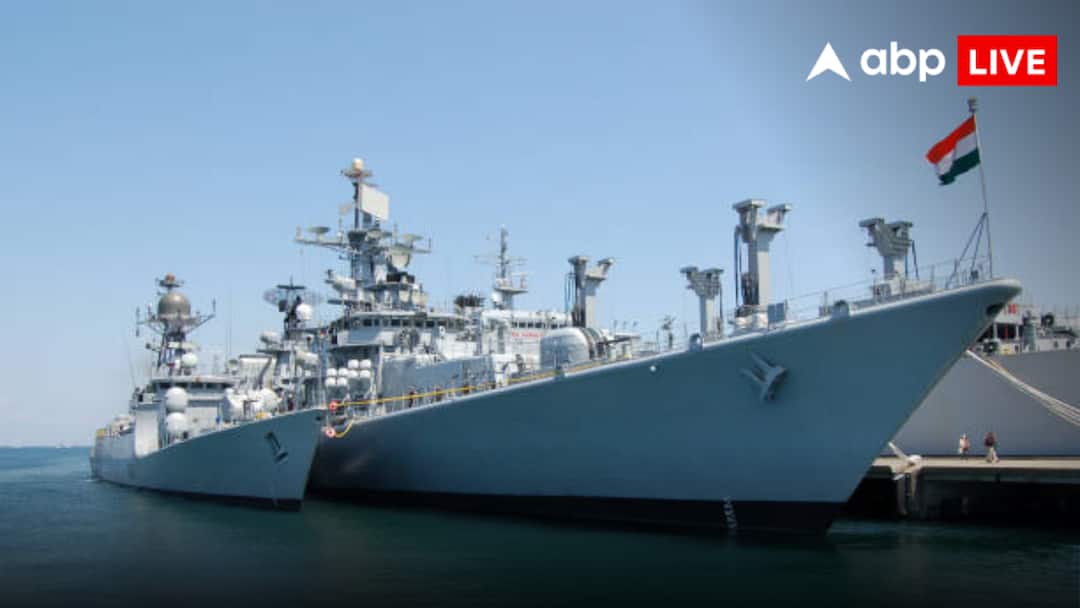
Amidst the increasing tension in West Asia and the crisis around the Strait of Hormuz, the Indian Government is considering deploying the Indian Navy to protect the ships stranded in the Persian Gulf. According to a senior government official, a decision in this matter can be taken within the next two days. If this decision is taken, then Indian Navy ships can escort the merchant ships stranded in the Persian Gulf to get them out safely.
According to shipping industry sources, about 10 percent of the oil tankers and gas carrying ships stranded in the Persian Gulf are related to India. These ships also include Shipping Corporation of India, which is one of the largest shipping companies in the world. According to data from Lloyd’s List Intelligence, such ships of the company are stranded whose total cargo carrying capacity is more than 8 lakh tonnes. This quantity is believed to be equivalent to approximately 60 lakh barrels of oil. According to the estimates of the International Maritime Organization, there are currently about 20,000 sailors present on ships stranded in the Persian Gulf. India is a major supplier of sailors to the world, so thousands of Indian sailors are likely to be included in these.
What is Operation Sankalp?
The Indian Navy has already conducted many major operations for the security of merchant ships. Among these, Operation Sankalp is prominent, which was started to ensure maritime security in the Gulf region. During this operation, the Indian Navy saved many ships from attacks by Houthi rebels and Somali pirates. Meanwhile, a statement has also come from Iran due to which the situation is expected to improve. Iranian President Masoud Pezheshkian has said that Iran will not attack unless neighboring countries attack first. According to another government official, this statement can give confidence to the ships stuck on one side of the Strait of Hormuz to move forward and it can also reduce the pressure on oil supply.
India has arranged for oil
According to government sources, India has currently made alternative arrangements for oil. Now about 70 percent of India’s crude oil is being supplied through routes that do not require passing through the Strait of Hormuz. Therefore, the government says that at present there is no plan to increase the retail prices of petrol and diesel. Meanwhile, Iran’s Deputy Foreign Minister Saeed Khatibzadeh said that Iran is not stopping Indian ships in the Strait of Hormuz. He said that if there is any threat then India should ask America why it is targeting Iranian ships in the Indian Ocean.
New Standard Practice for India’s Ports
The Union Ministry of Ports and Waterways has issued a new standard procedure for ports in India to deal with the disruptions in shipping due to the West Asia crisis. Under these rules, Indian ports have been allowed to temporarily store goods bound for West Asia as transshipment cargo. According to these instructions, special officers will be appointed at the ports who will handle this situation. Ships which do not have to reach the ports of West Asia will be allowed to stop temporarily and unload cargo at Indian ports. It has also been asked to give priority to perishable goods. The government believes that these steps will provide relief to shipping companies and help in reducing the impact on global maritime trade due to the West Asia crisis.